

THE PUNCH • IMPACT PORTRAIT
Alila Villas Uluwatu
Built to Belong
Researched and written by The Punch
Representing : Bali
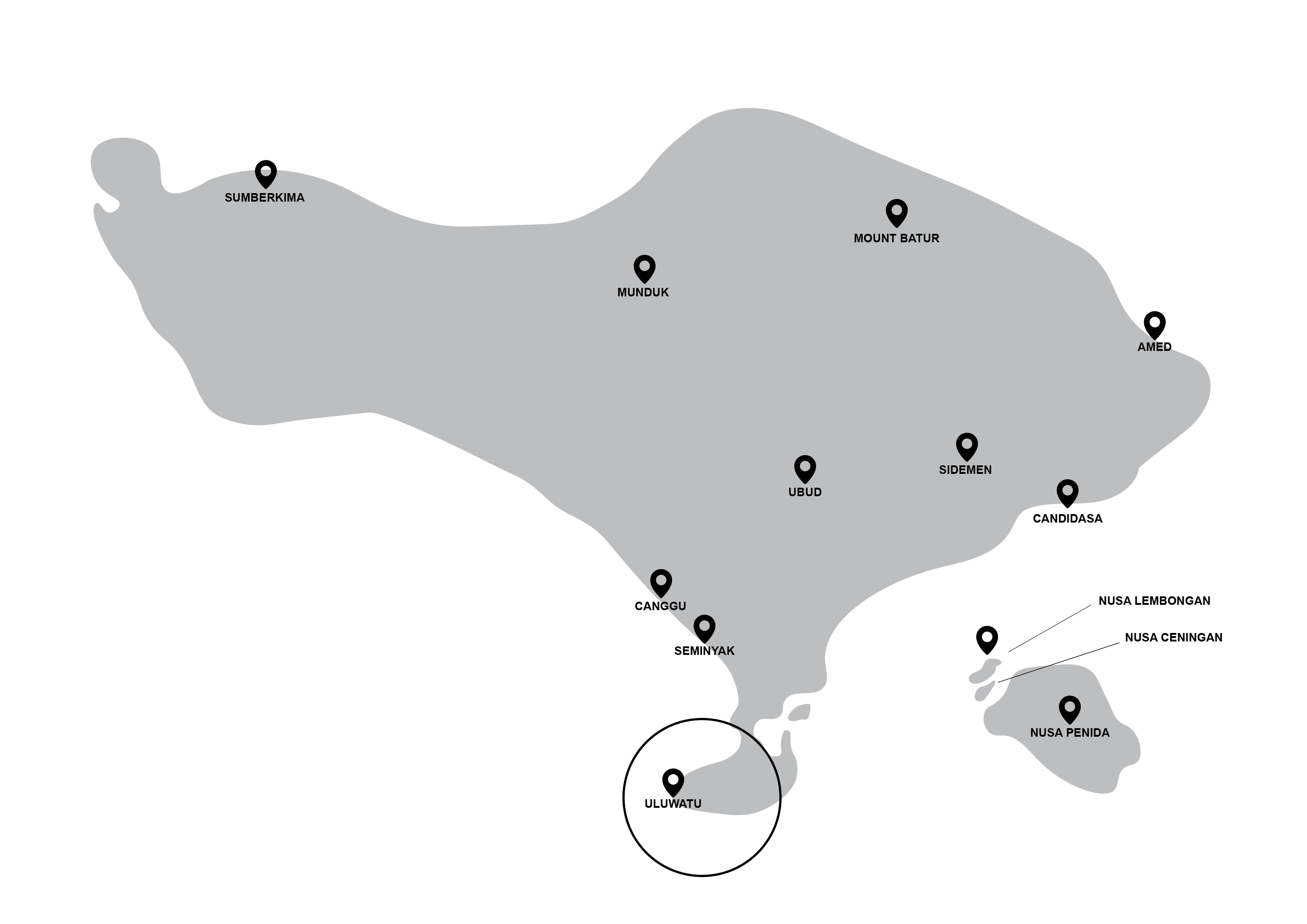
Location : Uluwatu Bali
Category: Luxury Resort
Impact focus: Zero waste
Opened: 2010
Structure: 65 Private Pool Villas
Grounds: 14.4 hectares, clifftop
Architect: WOHA Architects
Certification: EarthCheck Platinum
Local Team: 40% Uluwatu Community
Led by: Vincent Durier, General Manager
There are hotels that arrive in a landscape and hotels that belong to one. On a limestone plateau above the Indian Ocean, fifteen minutes from Uluwatu Temple, Alila Villas Uluwatu was designed from the first sketch to be the second kind.
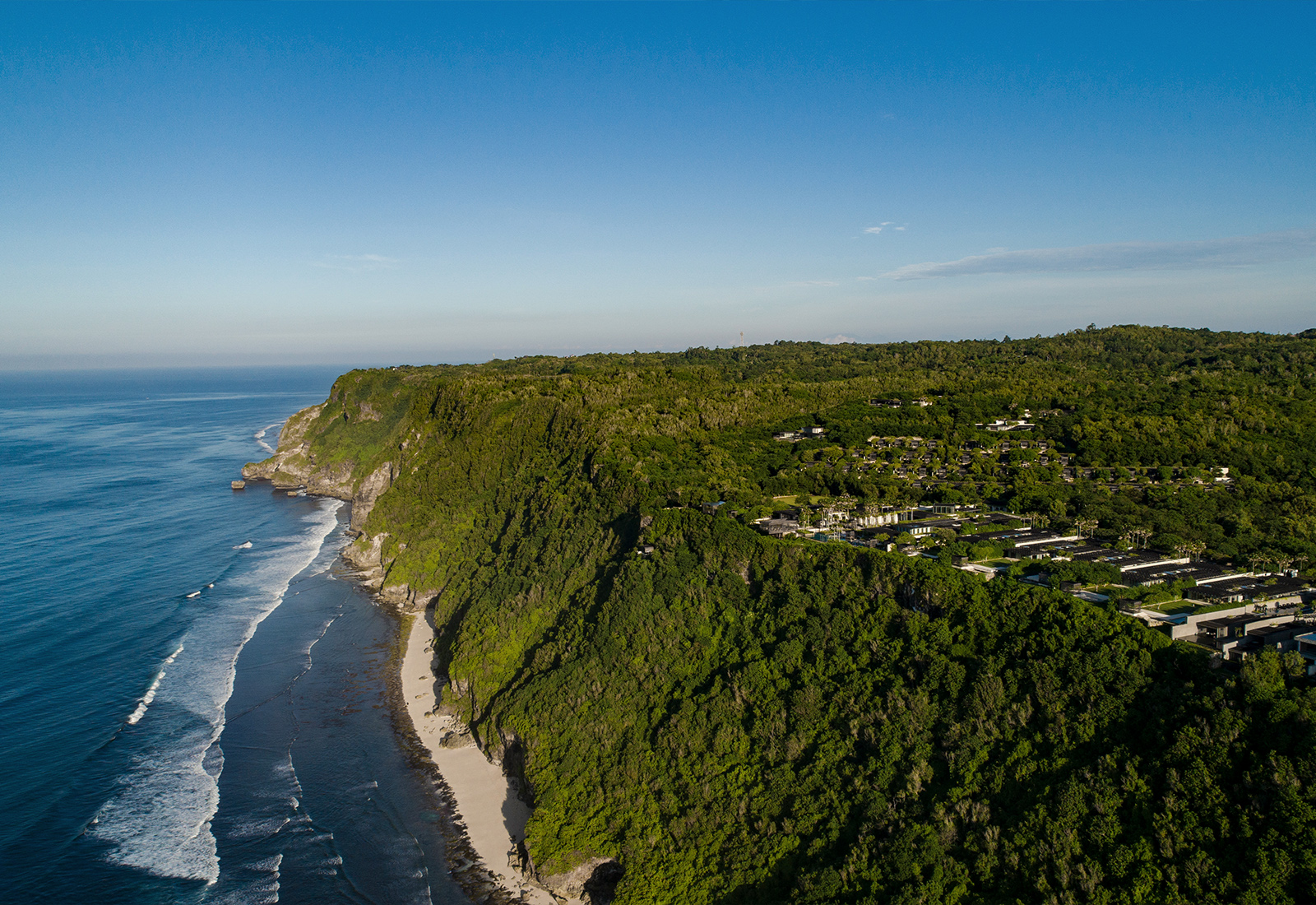
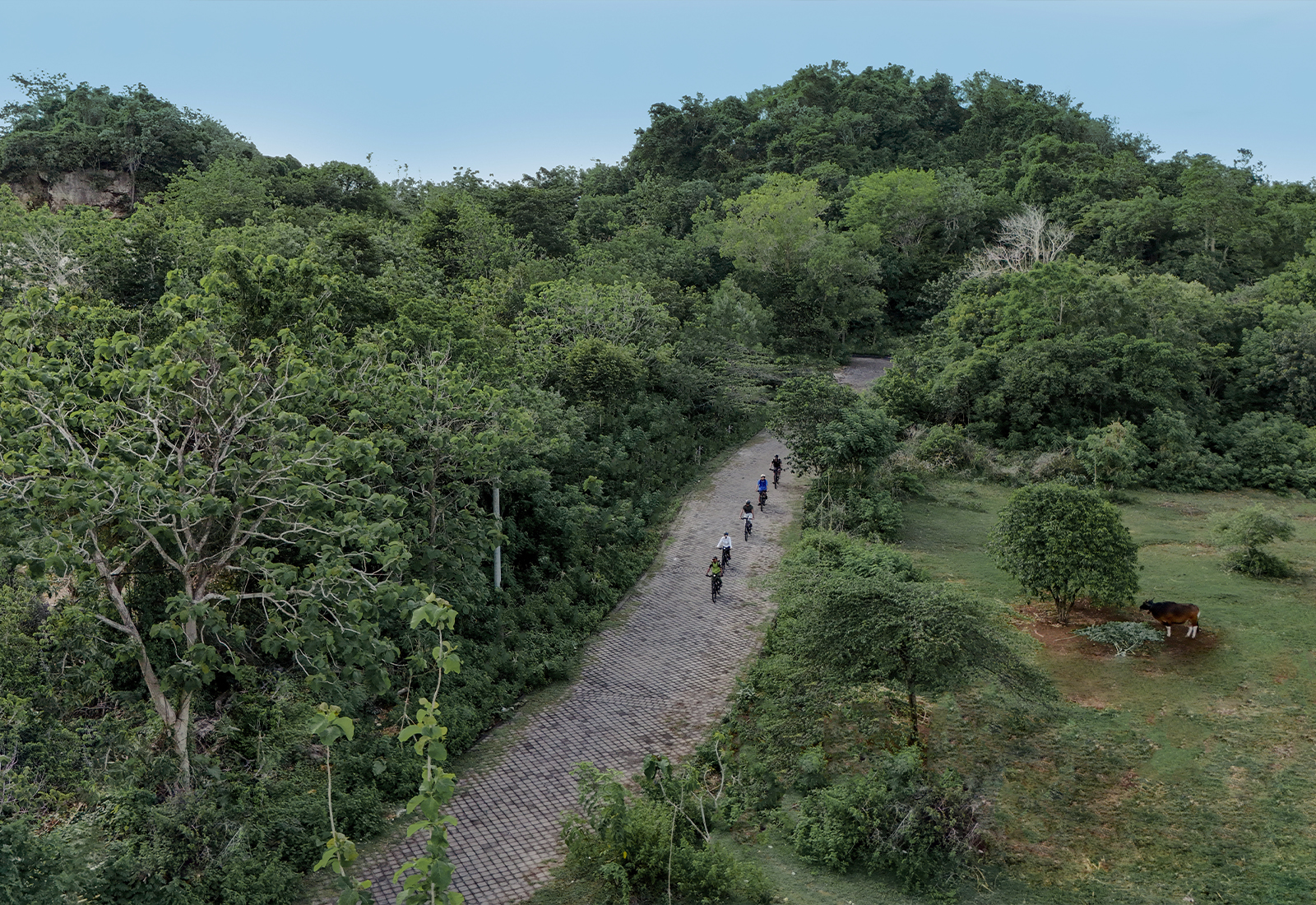
On the clifftops of Uluwatu, at the southern tip of Bali, Alila Villas Uluwatu was designed to belong to its landscape rather than sit on top of it. Its terraces follow the land, its stone, bamboo and lava rock come from Indonesia, and more than 40% of its team comes from the surrounding community.
What sets it apart is what it leaves behind: nothing. None of the waste it produces goes to landfill. It took three years to get there, from a public goal to a result, and 64 twenty-foot containers of waste have been kept out of the ground.
More than fifteen years after opening, it remains one of the clearest proofs in Asia that luxury can take less from a place and give more back, without asking the guest to give anything up.
This is the story of how it does it, the leader who carries it forward, and the evidence behind each of its commitments.
The figures are the same as in your original intro and the impact summary on the page. As before, confirm the period the 64 containers cover.
IMPACT SUMMARY
Zero waste sent to landfill
64 twenty-foot containers of waste kept out of landfill
3 years from a public goal to zero waste to landfill
40%+ of the team from the Uluwatu community
1st resort in Indonesia certified by EarthCheck
Platinium EarthCheck status today
14.4 ha of clifftop grounds planted with native species
1 of 13 buildings worldwide to win a RIBA Award
PART OF A GLOBAL COLLECTIVE
Alila Villas Uluwatu represents Bali in The New Luxury, a celebration of twenty of the world’s leading hotels placing positive impact at the heart of excellence. Each hotel is invited for the form of impact it leads; for Alila Villas Uluwatu, it is zero waste. Together, the twenty portraits will be unveiled in January 2027, showing twenty ways luxury can do good.
THE IMPACT STORY
A brief that asked for restraint
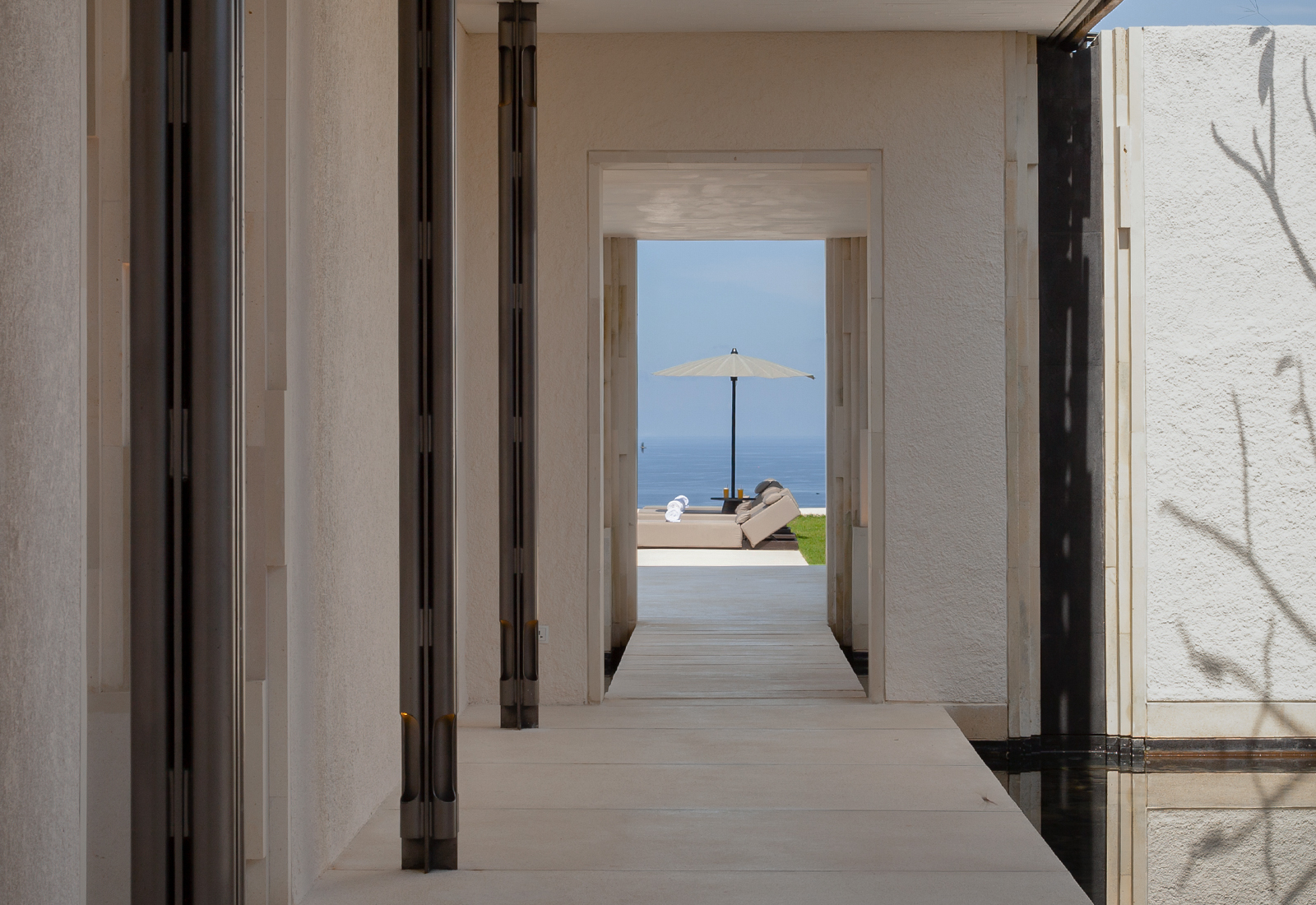
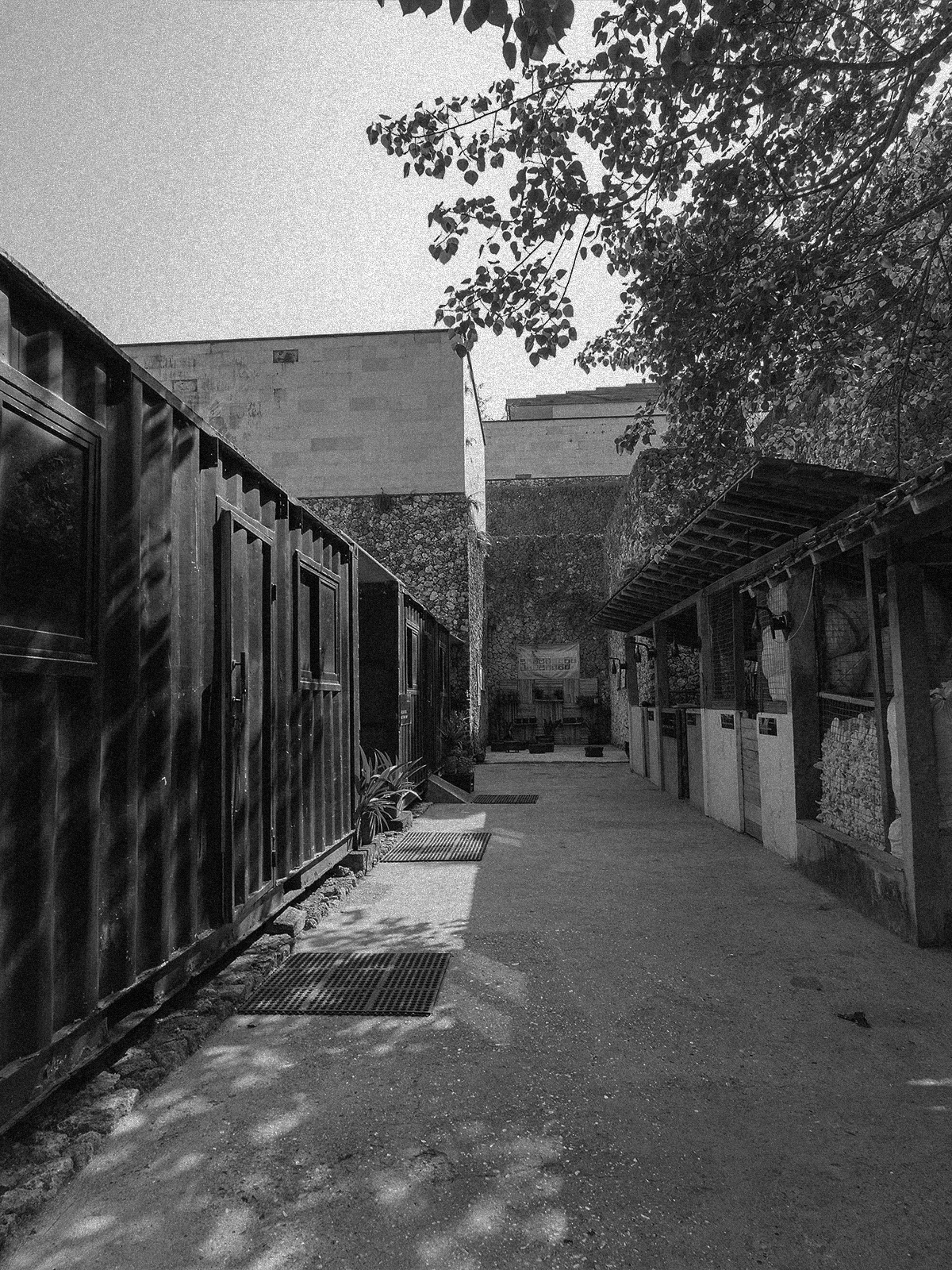
In the mid-2000s, much of the Bukit Peninsula was still open, dry savannah: thin soil over limestone, wind off the ocean, very little shade. The brief given to the Singapore architects WOHA was unusual for a luxury resort. It did not ask for the building to dominate the cliff. It asked for the building to belong to it. WOHA answered with low pavilions and stepped terraces that echo the rice fields of Bali, roofs of lava rock that read from the ocean like scattered stones, and gardens planted to protect the native landscape rather than replace it. Before the first guest arrived in 2010, the resort had been certified by EarthCheck for its planning and design, the first resort in Indonesia to reach EarthCheck’s highest level at that stage. A year later, the Royal Institute of British Architects gave Alila Villas Uluwatu a RIBA International Award. Of the thirteen buildings recognised worldwide that year, it was the only hotel.
A building that cools itself
Most of the resort’s environmental work is invisible to guests, because it was built into the walls. Stone from Yogyakarta, local bamboo and rattan, reclaimed wood and limestone cut on site were chosen because they suit the climate and the place. Lava-rock roofs and bamboo ceilings insulate the villas from the heat. Windows are placed to draw sea air through all 65 villas, so the buildings cool themselves before any machine has to. Water is treated with the same care. Rain is captured, greywater is recycled, and the gardens are planted with native species that need little or no irrigation, grown in the resort’s own nursery.
Nothing goes to landfill
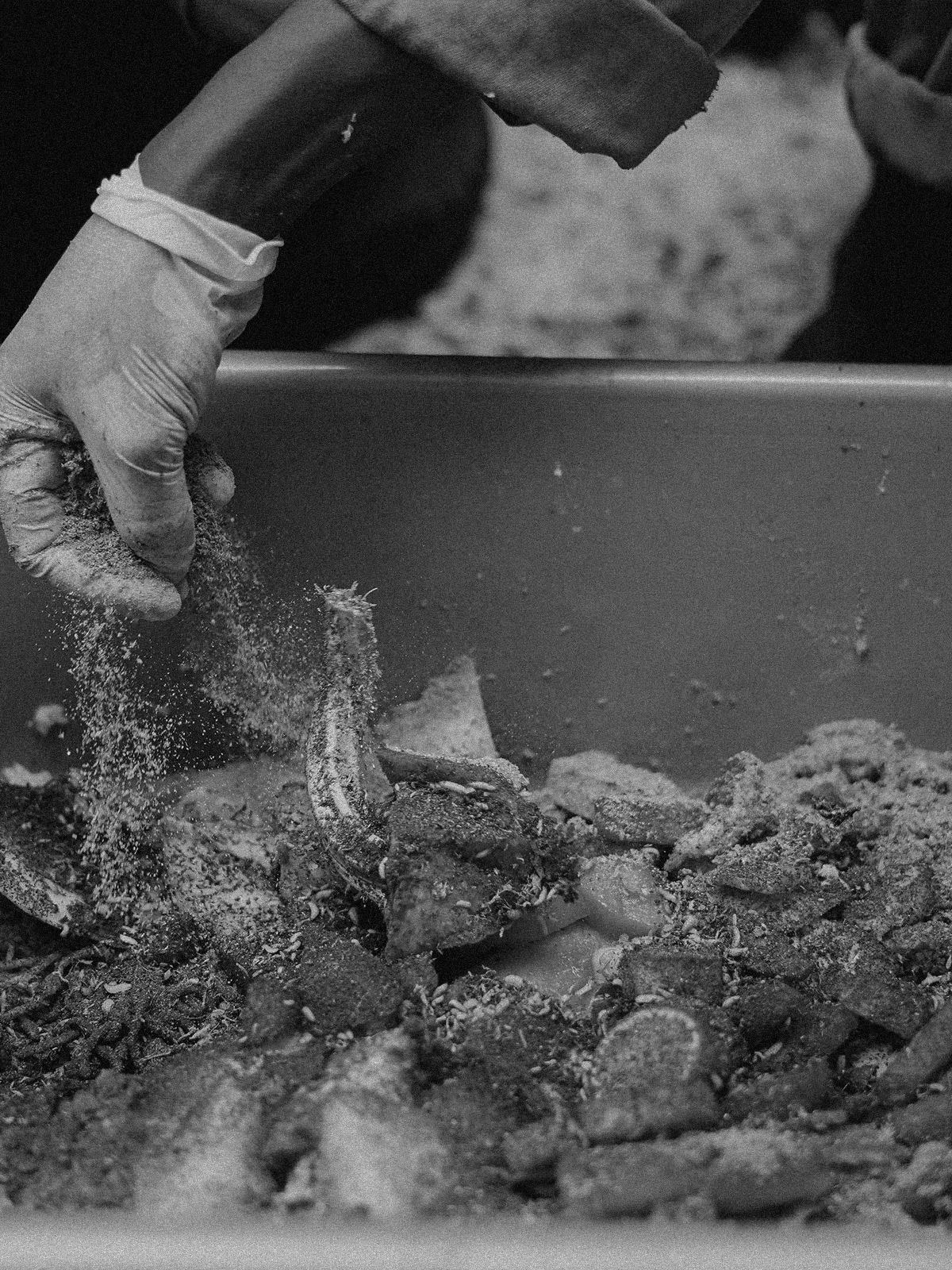
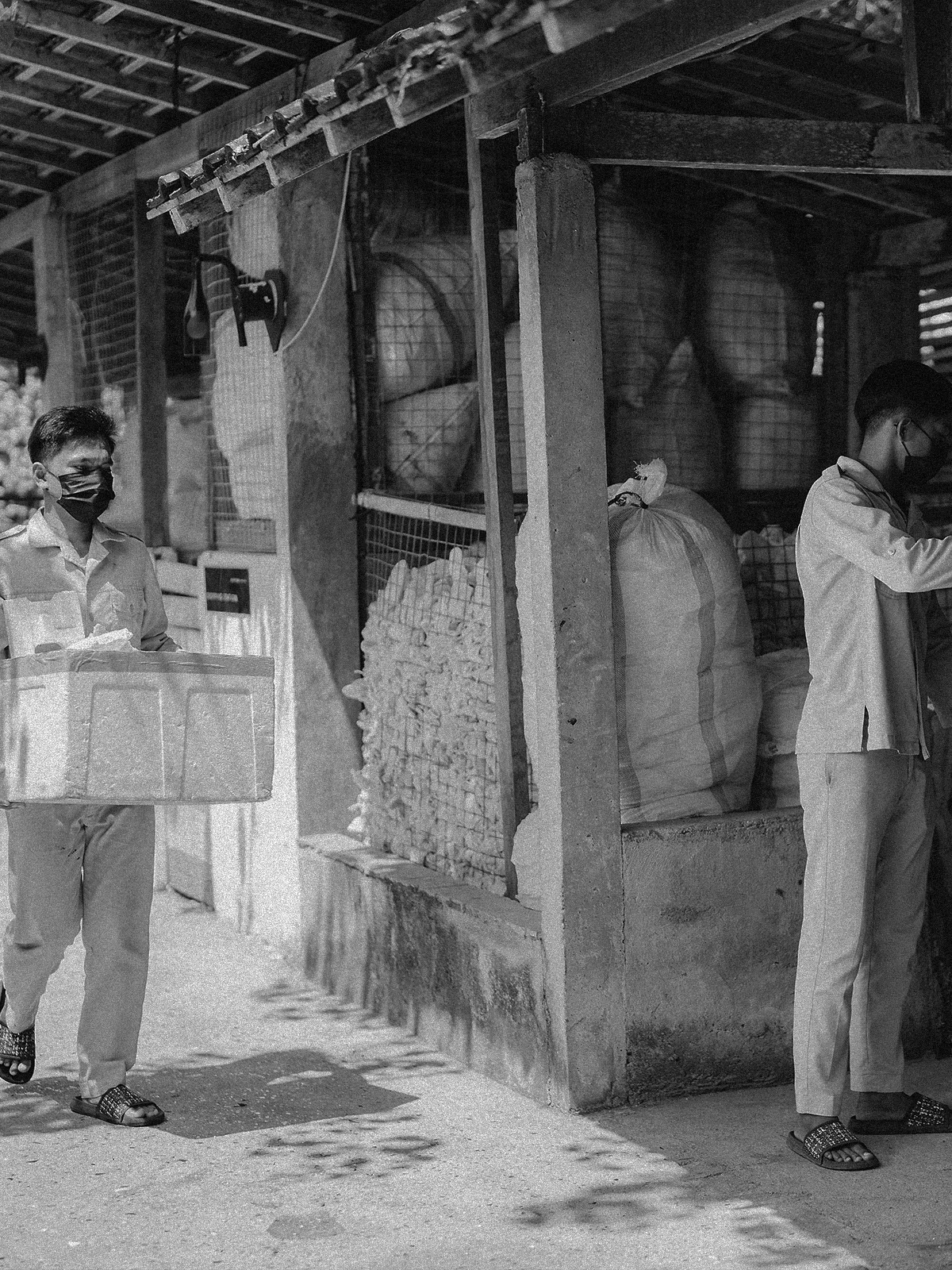
In 2016, Alila set itself a goal that most hotels still consider out of reach: to send nothing from its Bali resorts to landfill. On an island where waste is one of the most visible pressures of tourism, it was a public promise with a date attached. By 2019, Alila’s four Bali resorts had reached it, keeping the equivalent of 64 twenty-foot shipping containers of waste out of landfill. At Uluwatu, the work happens in the Sustainability Lab: organic waste becomes compost for the gardens, glass is recycled into new glassware for the resort, and an upcycling workshop finds a second life for much of what remains. Guests are invited in to see how it works. Plastic was tackled at the source. Alila was among the first resorts in Bali to replace plastic amenities with biodegradable and compostable alternatives, and drinking water is purified and bottled on site, so guests drink from reusable glass bottles.
The people of the Bukit
The resort’s most valuable resource is not built into its walls. More than 40% of the team comes from Uluwatu and the villages around it, bringing a knowledge of local traditions that no training manual could provide. Temple visits, dance lessons and encounters with artisans are led by people who grew up with them. Beyond its own team, the resort works with local social enterprises, including the R.O.L.E. Foundation, and runs a community employment programme designed to keep opportunity close to home. Guests can take part too: with the Gift to Empower stay, 5% of the nightly villa rate supports the R.O.L.E. Foundation, which gives women in Bali skills training and business education.
Preservation & progress
The Bukit has changed enormously since 2010. Villas, beach clubs and new resorts now line roads that were once quiet. For a long-standing presence on the peninsula, the question is no longer how to build responsibly, but how to keep evolving without losing what made the place special. Durier does not pretend this is simple. “The challenge,” he says, “is finding the right balance between preservation and progress.” His answer is to let the resort grow in the direction it was designed for: more personal experiences, a deeper wellness and culinary offer, stronger environmental commitments and closer ties with the community, so that tourism helps the destination rather than “simply consume it.”
THE LEADERSHIP INTERVIEW

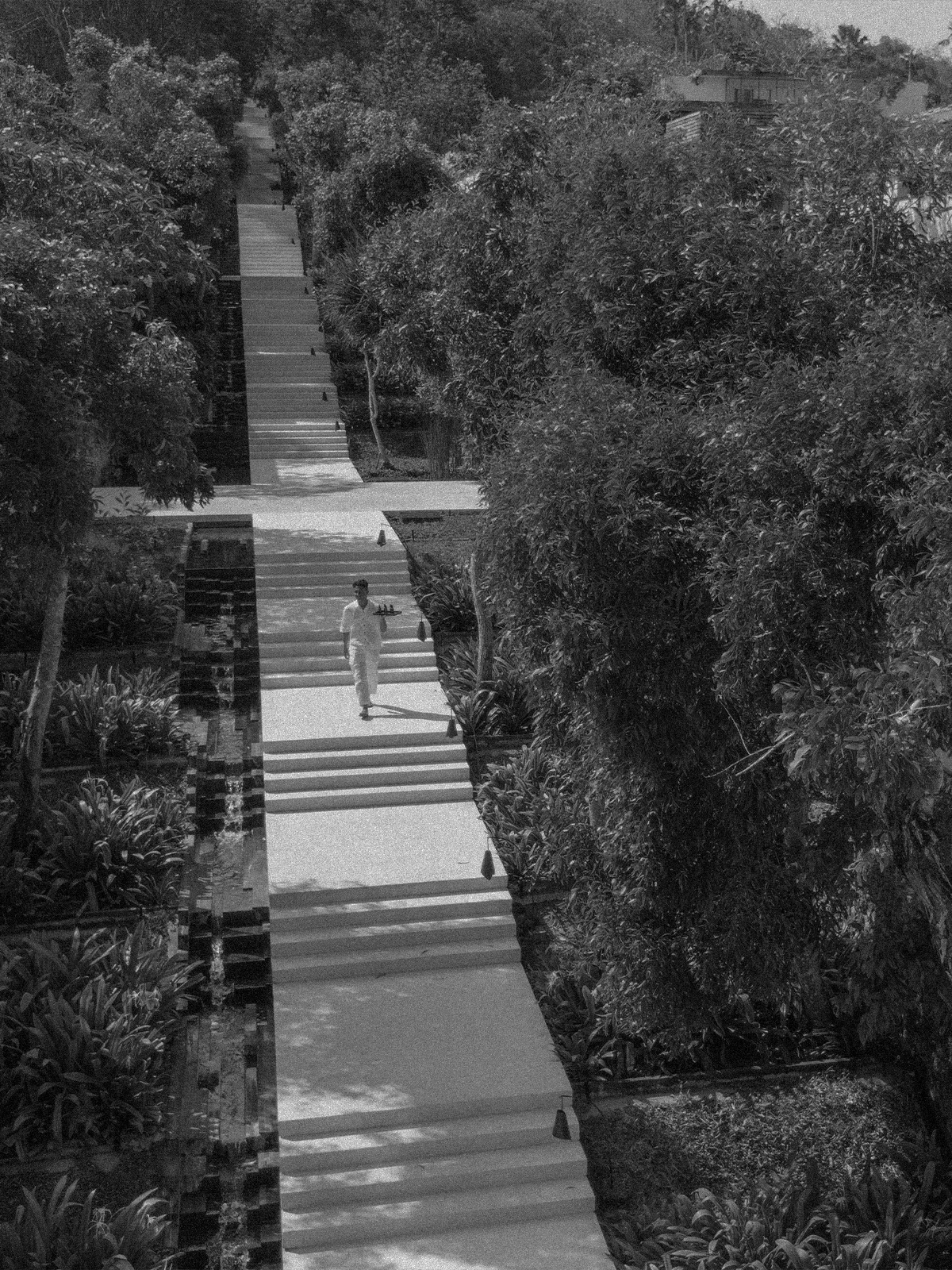
'True luxury today is not about excess.
It is about quality, longevity, authenticity,
and thoughtful choices.'
Vincent Durier, General Manager
Raised in Gascony, in the south-west of France, Vincent Durier first dreamed of becoming a baker
like his grandfather. A waiter’s internship changed his course, and over two decades he has led
resorts in Bora Bora, Hong Kong, the Maldives and Phuket. At Alila Villas Uluwatu, he took on a
place whose soul was shaped long before he arrived, and he says he listens before he changes
anything.
In this conversation with The Punch, he explains why luxury today means quality, longevity and
authenticity rather than excess, and why the resort is “not interested in greenwashing”. He
describes how a team rooted in Uluwatu gives guests an authenticity that “simply cannot be
taught”, and speaks openly about the hardest part of his role: “finding the right balance between
preservation and progress”.
He also shares his belief that tourism should help a destination rather than “simply consume it”,
and his ambition for Alila Villas Uluwatu to “remain one of Asia’s most inspiring resorts”.
THE IMPACT PROFILE
The Punch looks at every business in two ways. The first is Excellence: the quality, design, service, originality, reputation and cultural relevance that make a place exceptional. The second is Impact: the good a business does for the land, the people and the culture around it. At The Punch, we believe the businesses people admire most should excel at both.
To make impact easy to understand, we look at it through 15 clear commitments, grouped in five pillars that spell P.U.N.C.H.: Purpose, how a business holds itself to account; Upstream, where its food, materials and products come from; Nature, how it cares for the land, the water and the climate; Circularity, how it makes sure nothing goes to waste; and Humanity, how it supports its people, its community and local culture.
Each commitment below begins with its key points, followed by a short explanation of what Alila Villas Uluwatu does and why it matters. A label shows where the information comes from: an independent certification, a published third-party source, or information shared by the hotel with The Punch.



P. PURPOSE | How the resort holds itself to account
1. Governance & Accountability
• Independently certified since before opening
• EarthCheck Platinum
• Led by the General Manager, every day
Governance answers two simple questions: who checks the work, and who is responsible for it? At Alila Villas Uluwatu, the answer has been clear from the start. The resort was certified by EarthCheck, an independent programme that audits hotels around the world, while it was still being designed, and was the first resort in Indonesia to reach EarthCheck’s highest level at that stage. It has stayed in the programme ever since and now holds Platinum status, which is only awarded after many years of audited results. Sustainability is led by the General Manager and his leadership team, as part of how the resort is run every day.
2. Targets & Measurement
• A public goal: zero waste to landfill
• Set in 2016, reached in 2019
• 64 containers of waste kept out of landfill
A good intention becomes a real commitment when it has a number and a date. In 2016, Alila set a clear goal for its Bali resorts: send nothing to landfill. On an island where waste is one of the most visible pressures of tourism, it was a bold promise to make in public. Three years later, Alila announced that its four Bali resorts, including Uluwatu, had reached it. A goal, a deadline and a published result: that is what makes progress easy to understand and easy to trust.
3. Transparency & Engagement
• Guests can visit the Sustainability Lab
• See the work, not just read about it
• Challenges discussed openly
Transparency means letting people see for themselves. At Alila Villas Uluwatu, guests are welcome in the Sustainability Lab, where they can watch food waste being turned into compost, used glass being made into new glassware and discarded materials being given a second life. Instead of asking guests to trust a label, the resort shows them how it works. Its leadership is just as open in conversation: the General Manager speaks plainly about what is still difficult, including how to protect the resort’s identity while it continues to evolve.
U. UPSTREAM | Where things come from
4. Responsible Sourcing
• On-site farm and garden
• Seasonal, Indonesian and Balinese cooking
• A shorter journey from soil to plate
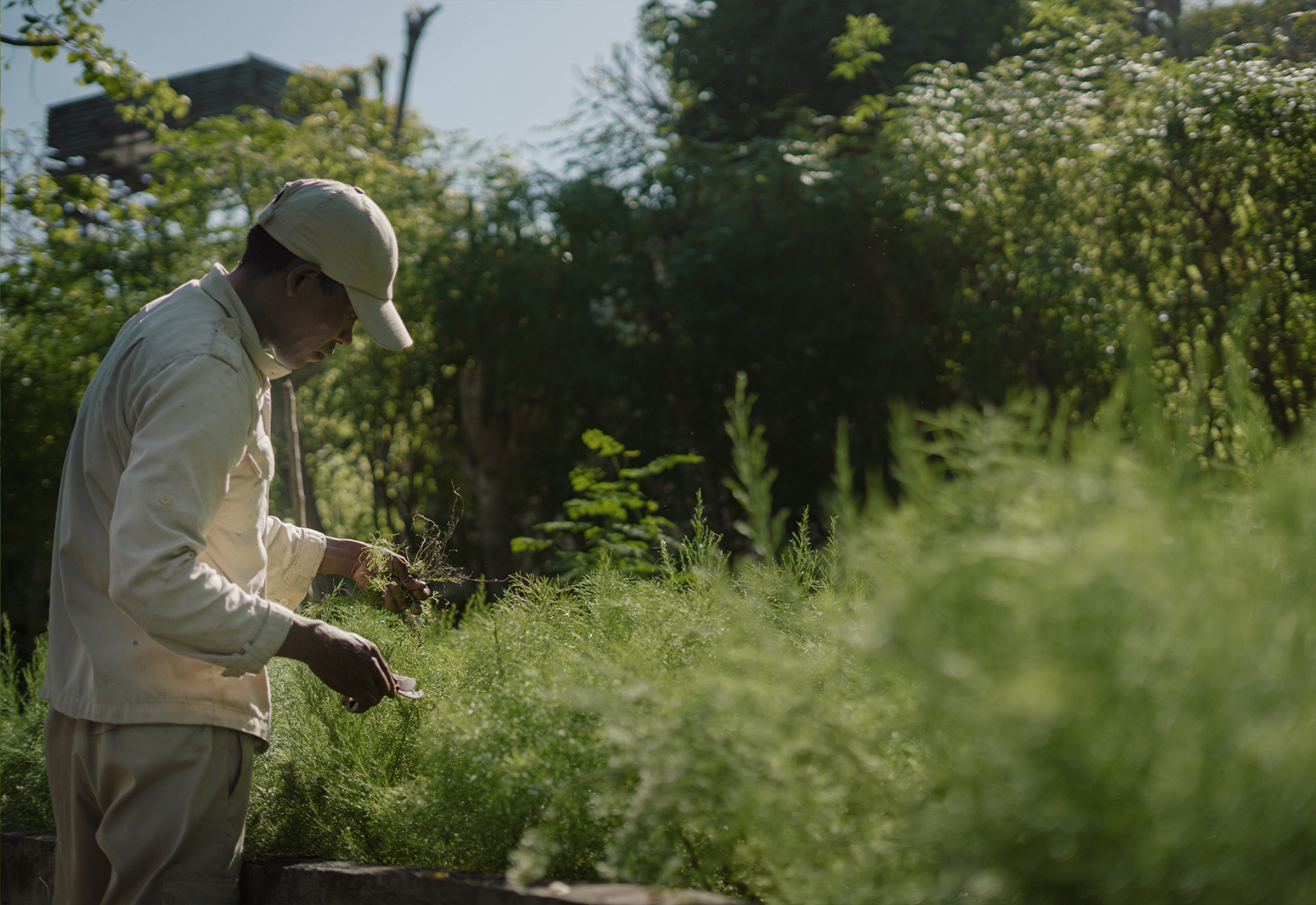
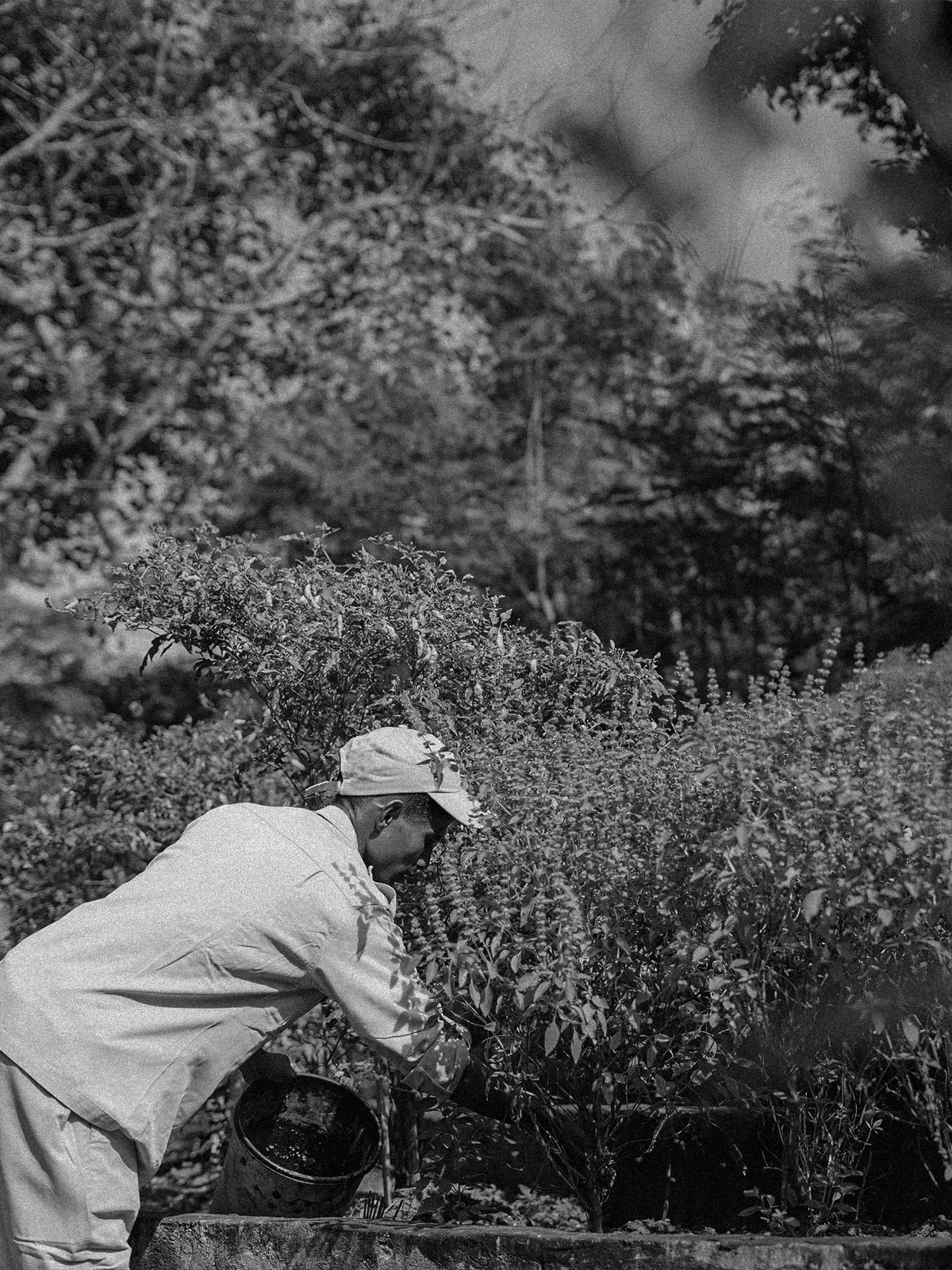
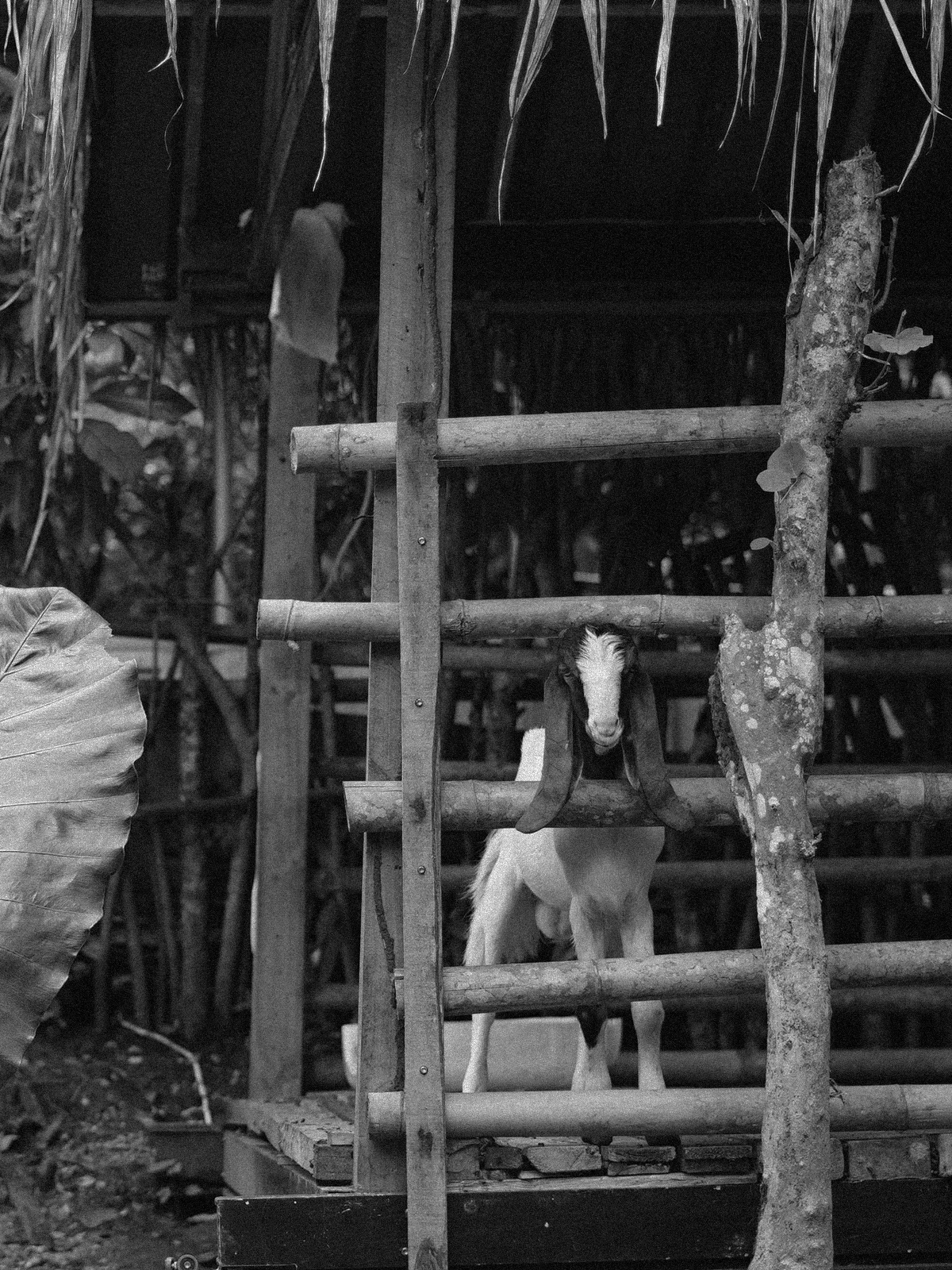
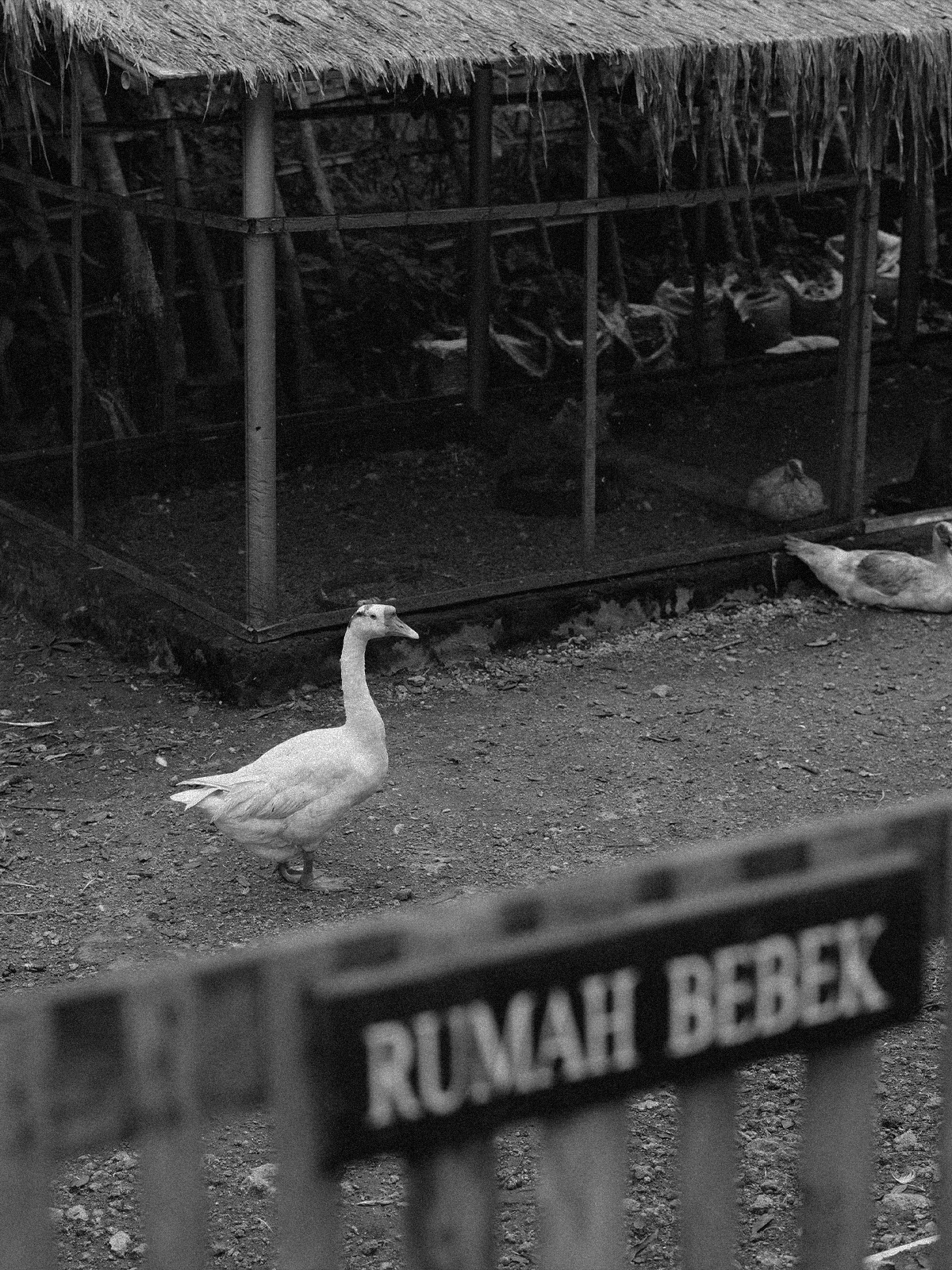
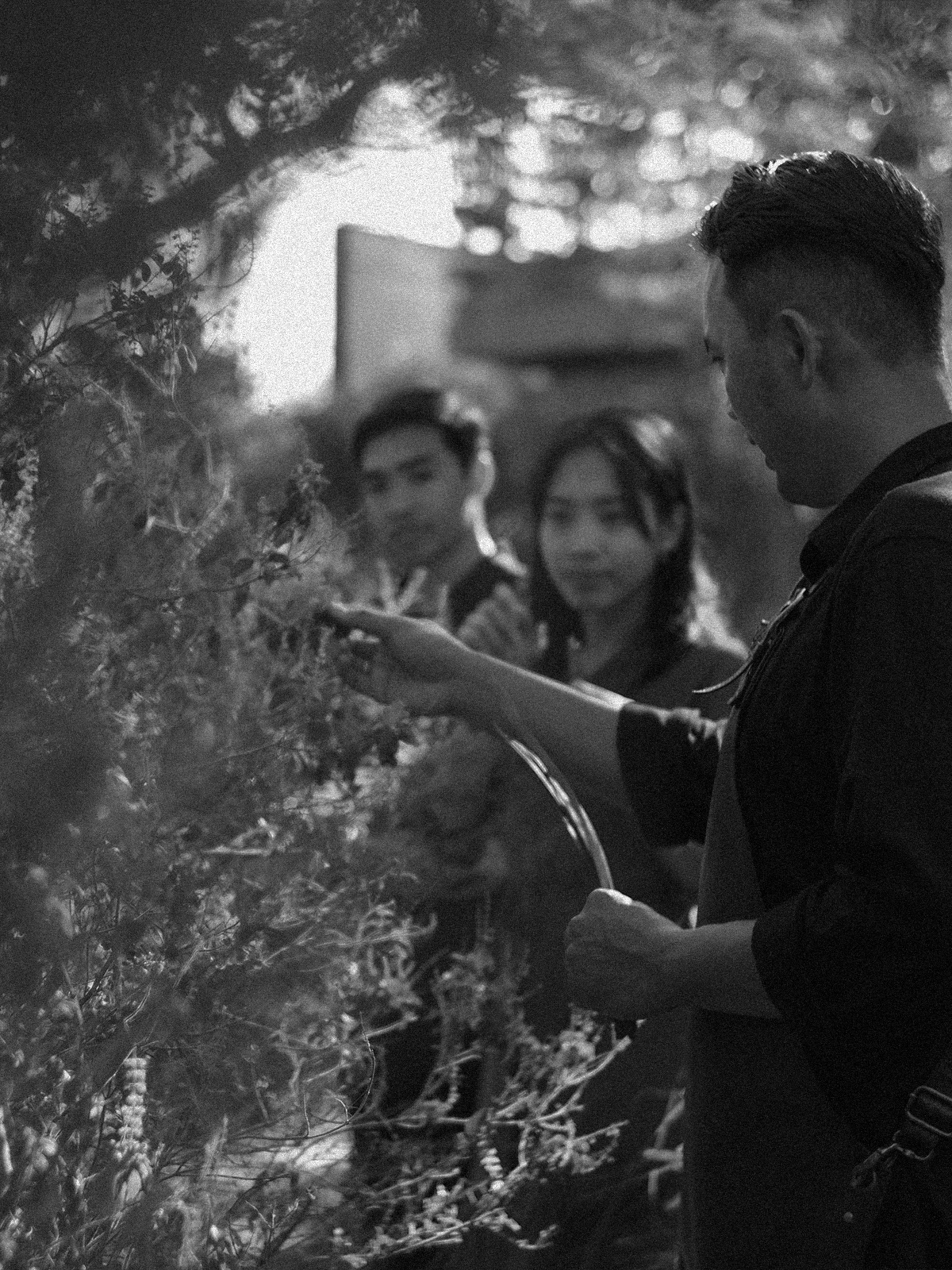
Responsible sourcing starts with a simple question: where does the food come from? At Alila Villas Uluwatu, part of the answer is a short walk from the kitchen. The resort grows its own produce in a farm and garden on site, and its chefs build menus around what grows well in the dry climate of the Bukit. The restaurants celebrate seasonal ingredients and Indonesian and Balinese cooking. Food that travels a shorter distance arrives fresher, needs less transport, and keeps more of what the resort spends close to home.
5. Provenance & Origin
• Built with Indonesian stone, bamboo and lava rock
• Reclaimed railway sleepers and telephone poles
• Limestone cut from the site itself
Every building tells you where it comes from. Alila Villas Uluwatu was built almost entirely from Indonesian materials, chosen by the architects WOHA for their origin as much as their beauty: stone from Yogyakarta, local bamboo and rattan, volcanic lava rock for the roofs and limestone cut from the site itself. Old railway sleepers and telephone poles were reclaimed and given a new life as timber. Using materials from the region supported Indonesian craft, reduced the distance they travelled and gave the resort a character that could only belong to Bali.
6. Traceability
• Produce guests can see growing on site
• Every main building material has a known origin
• Natural, handmade products in the spa and villas
Traceability means being able to follow something back to where it began. For the produce grown at the resort, the answer is as simple as it gets: guests can see where it comes from, sometimes from their table. The same thinking shaped the building itself, where every main material has a known origin, from the stone of Yogyakarta to the limestone of the site. In the spa and the villas, natural, handmade products take the place of anonymous mass-produced ones. Knowing where things come from is the first step to choosing them well.
N. NATURE | The land, the water, the climate
7. Climate & Energy
• Villas designed to cool themselves
• Lava-rock roofs and bamboo ceilings
• Sea breezes before air conditioning
The cleanest energy is the energy you never need to use. At Alila Villas Uluwatu, this idea was built into the architecture. Roofs of lava rock and ceilings of bamboo protect the villas from the tropical sun, and windows are placed to let sea breezes flow through every villa. The result is buildings that stay cooler on their own, so air conditioning is needed less often. Because these choices were made at the design stage, they save energy every single day, without anyone having to remember to switch anything off.
8. Water
• Rainwater captured and stored
• Greywater cleaned and reused
• Native gardens that need little watering
Fresh water is precious on the Bukit, where the ground is limestone and the dry season is long. The resort treats every drop as a resource. Rainwater is collected and stored, and greywater, the lightly used water from showers and basins, is cleaned and used again. The gardens are planted with native species that are adapted to the local climate and need little or no watering. Using less water at the resort leaves more for the farms and villages around it, which depend on the same limited supply. Drinking water is purified and bottled on site, so guests drink from reusable glass bottles instead of plastic.
9. Biodiversity & Ecosystems
• Native savannah protected
• On-site nursery of native plants
• 14.4 hectares of living local landscape
Biodiversity is the variety of life in a place: its plants, insects, birds and animals. When the resort was designed, the Bukit was dry savannah, and protecting it was part of the plan from day one. Instead of planting a typical tropical garden, the resort grows native plants in its own nursery and has brought native species back across its 14.4 hectares. The grounds now support local wildlife and look like the landscape they belong to. As the peninsula has been rapidly developed, the resort has become one of the places where the original Bukit can still be seen.
C. CIRCULARITY | Nothing goes to waste
10. Responsible Materials
• Chosen to last for decades
• Reclaimed timber and local stone
• Natural, handmade amenities
Responsible materials are ones that last, come from nearby and can be reused. The resort chose its materials for the long term: reclaimed timber, local stone and volcanic rock that age beautifully in the sea air and do not need replacing every few years. In the villas, guests find natural, handmade amenities rather than conventional single-use products. As the General Manager puts it, true luxury is about “quality, longevity, authenticity, and thoughtful choices”. Materials chosen to last for decades mean less to replace, and less to throw away.
11. Waste Prevention
• Zero waste to landfill
• Food waste turned into compost
• Compost feeds the farm and gardens
Alila Villas Uluwatu sends zero waste to landfill. The goal was set in 2016 and reached in 2019 across Alila’s four Bali resorts, which together kept the equivalent of 64 twenty-foot shipping containers of waste out of landfill. The simplest part of the system is also the most powerful: food and garden waste is composted on site and returned to the soil of the farm and gardens, which in turn grow food for the kitchens. It is a closed loop that guests can see for themselves. Very few hotels anywhere in the world have reached zero waste to landfill.
12. Resource Efficiency
• Used glass made into new glassware
• An upcycling workshop on site
• Waste reduced where it starts
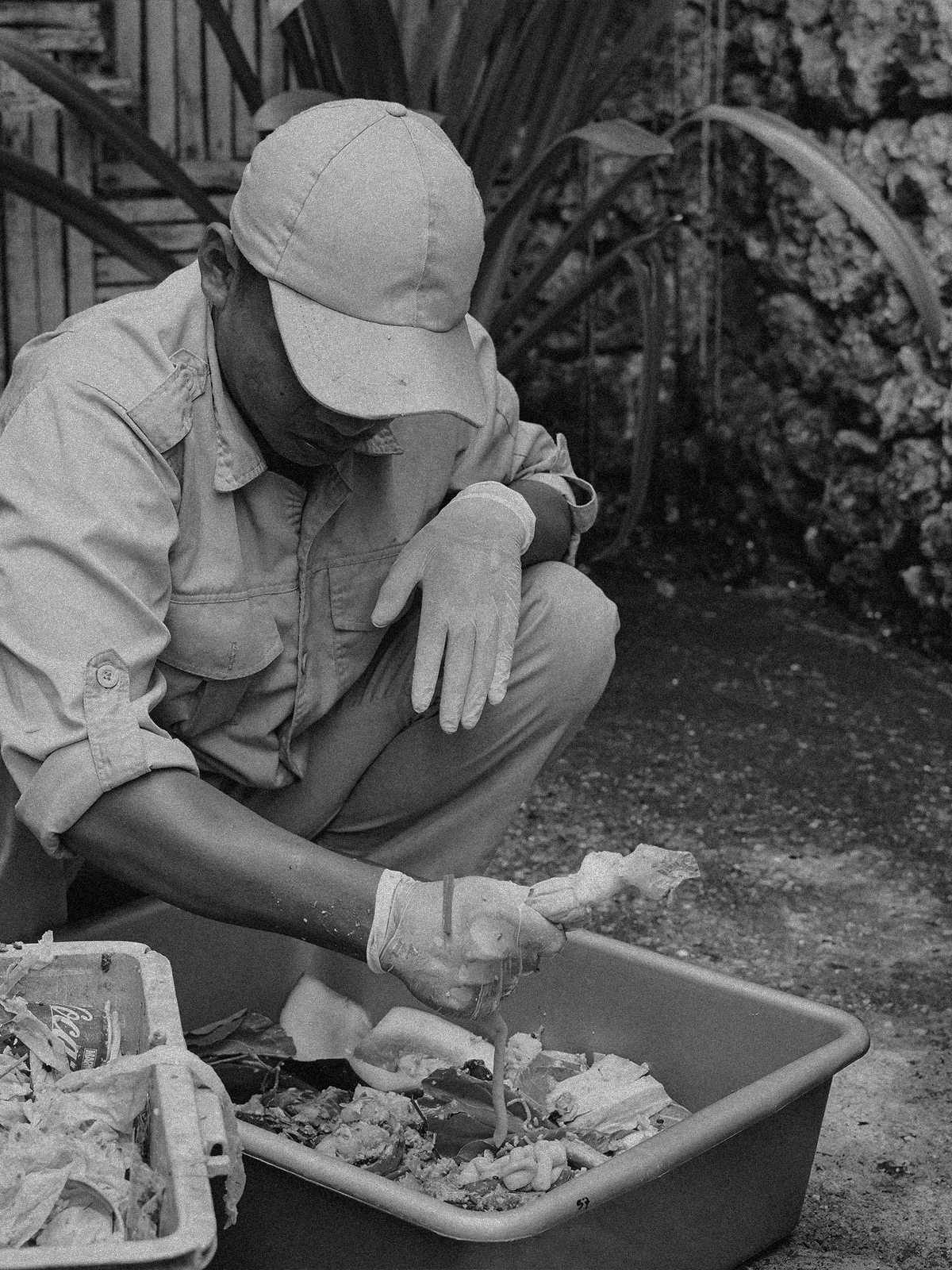
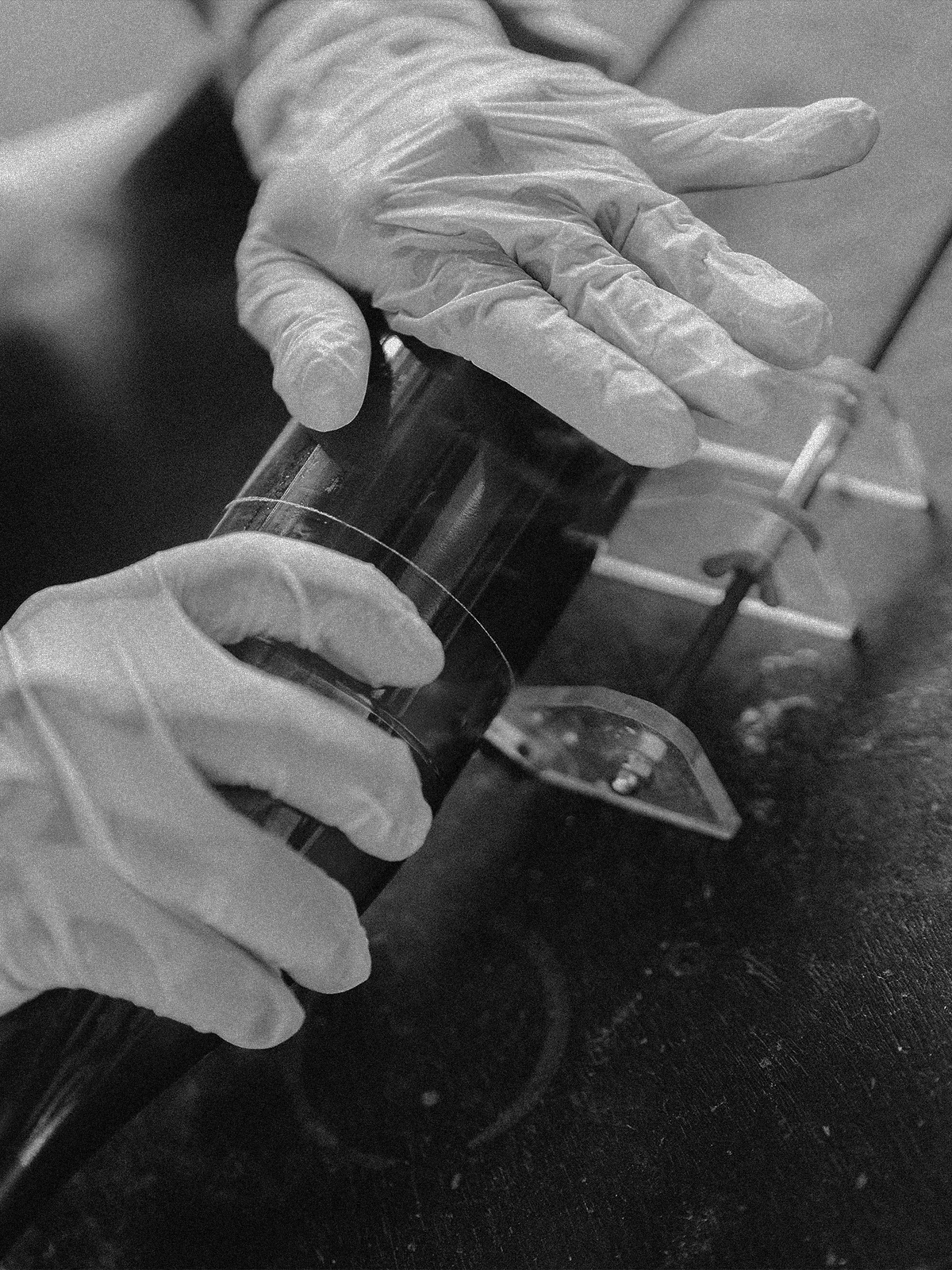
Resource efficiency means getting the most out of everything the resort uses. The Sustainability Lab is where this happens. Used glass is recycled into new glassware for the resort’s own tables, and an upcycling workshop turns other discarded materials into useful objects. Because the work happens on site, the team can see exactly what is thrown away and find ways to reduce it where it starts. For guests, it is one of the rare places where they can watch a hotel close the loop with their own eyes, rather than read about it in a report.
H. HUMANITY | People & Place
13. People & Fair Work
• More than 40% of the team from Uluwatu
• Jobs and income kept local
• Knowledge that cannot be taught
A resort is only as good as the people who run it. More than 40% of the team at Alila Villas Uluwatu comes from Uluwatu and the villages around it. Hiring locally keeps jobs and income within the community, and it changes the experience for guests: the people who welcome them know the ceremonies, traditions and landscape of the Bukit because they grew up with them. In the General Manager’s words, “It brings a level of authenticity that simply cannot be taught.” It is one of the resort’s most valuable and least visible strengths.
14. Community
• A community employment programme
• Partnership with the R.O.L.E. Foundation
• Tourism that gives back to the Bukit
Being a good neighbour goes beyond the resort’s own walls. Alila Villas Uluwatu runs a community employment programme and works with local social enterprises, including the R.O.L.E. Foundation, a Bali organisation that helps local people gain education, skills and work. As one of the longest-standing resorts on a peninsula that has changed fast, the resort sees its role as helping the destination rather than, in the General Manager’s words, to “simply consume it”: creating local jobs, supporting communities and caring for the environment they share. Guests can contribute directly: with the Gift to Empower stay, 5% of the nightly villa rate supports the R.O.L.E. Foundation.
15. Culture & Heritage
• Temple visits, dance and artisan encounters
• Led by people from the community
• Architecture rooted in Balinese forms
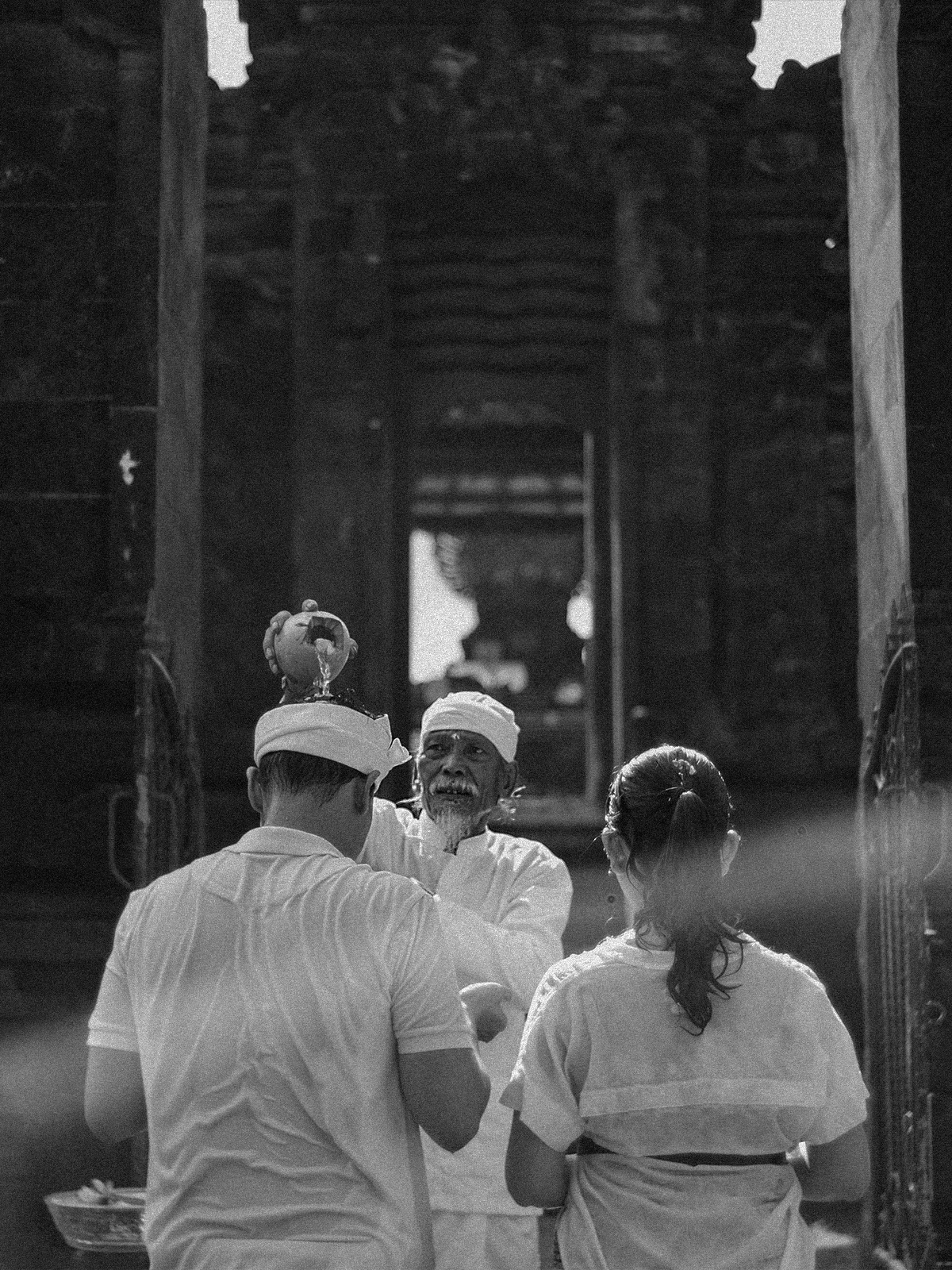
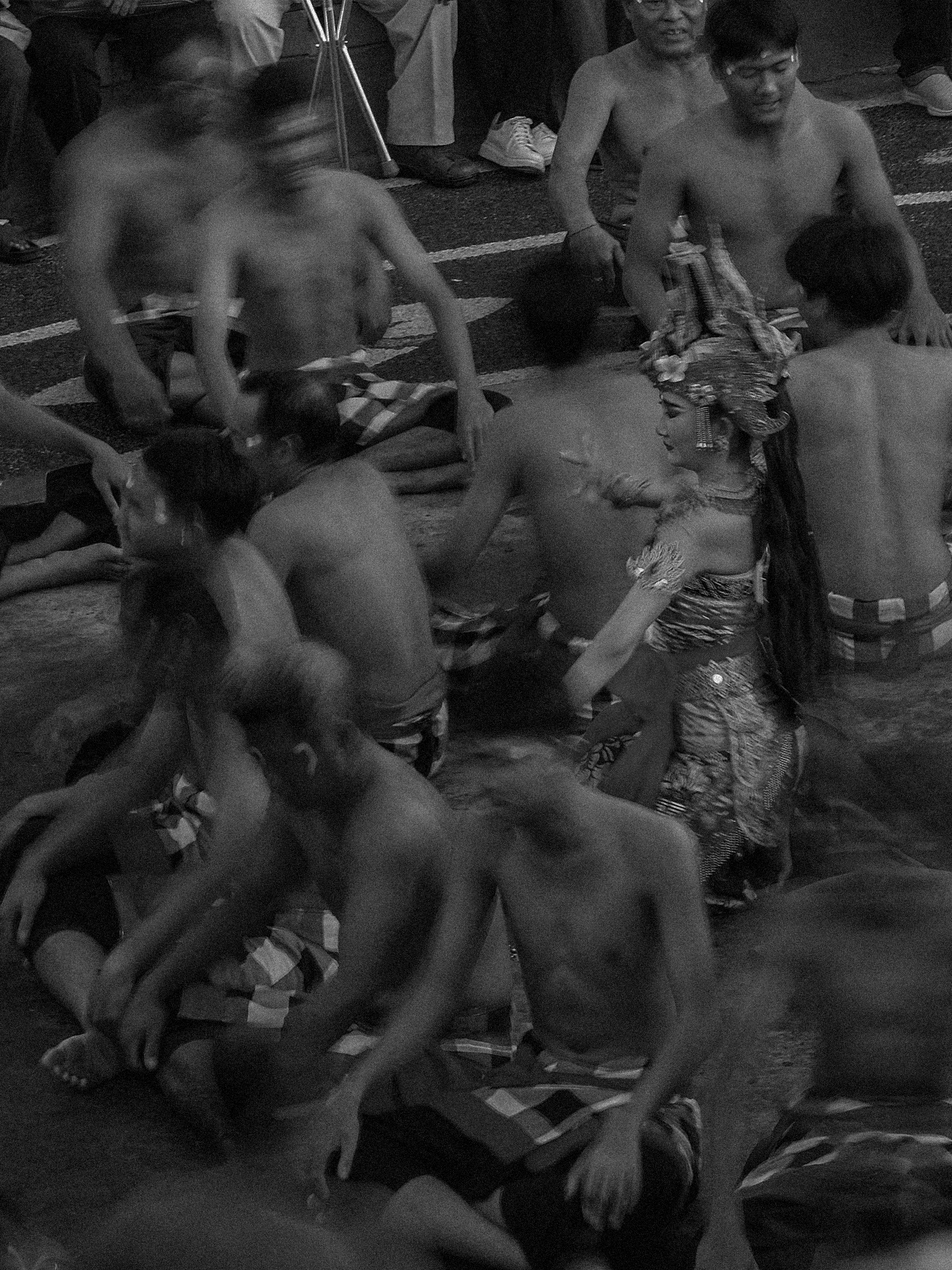
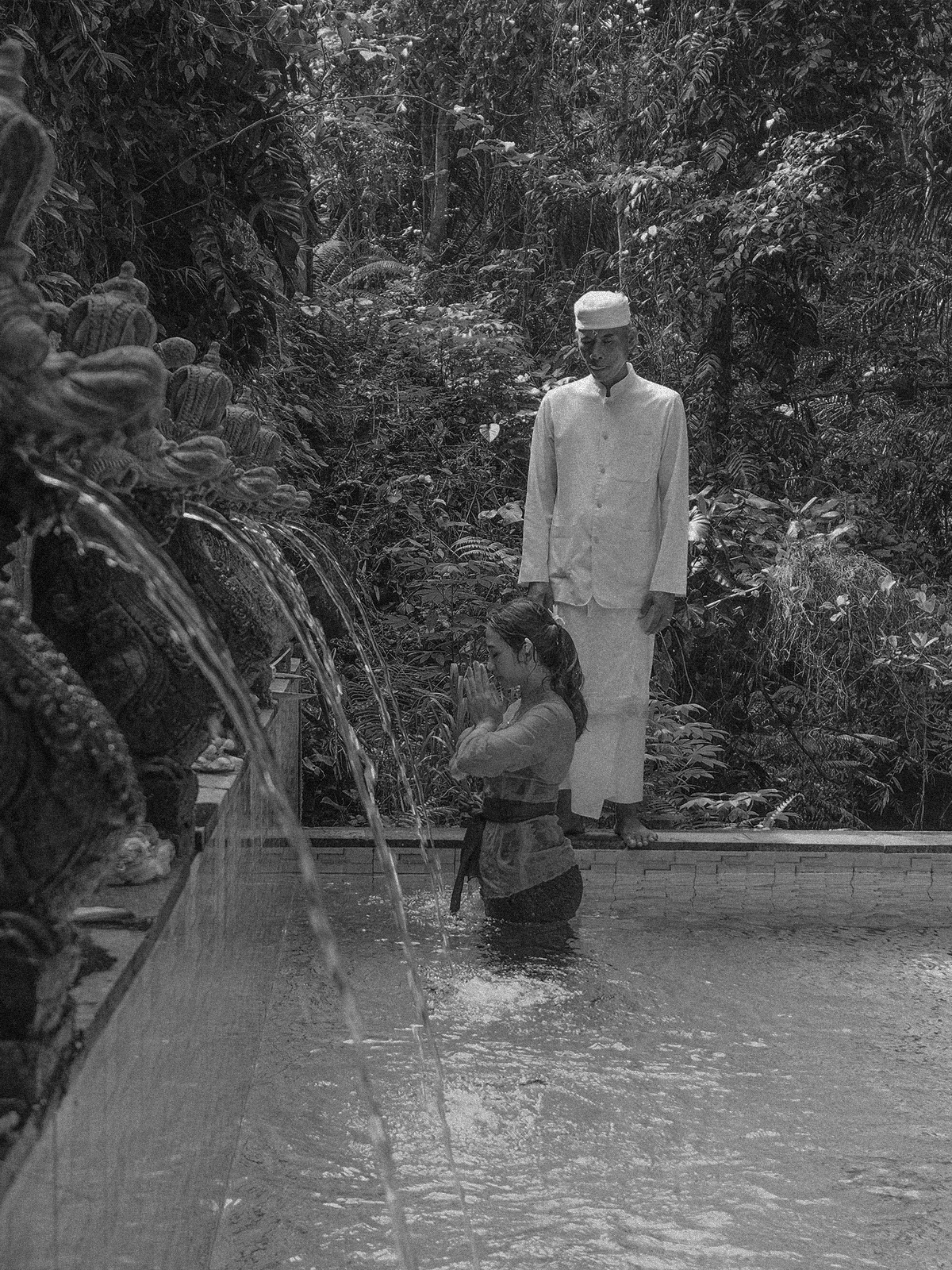
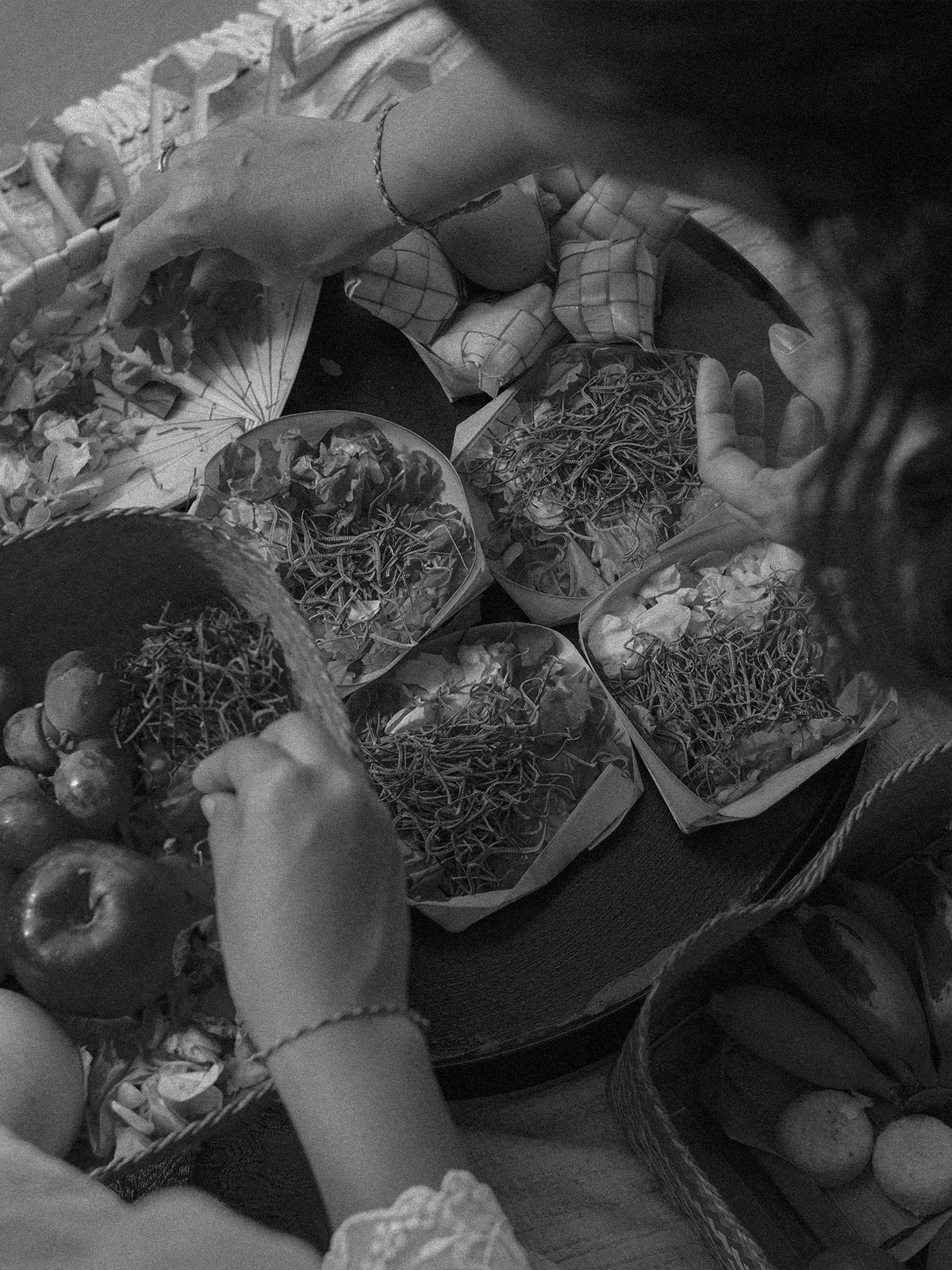
Uluwatu is home to one of Bali’s most sacred sea temples, and its culture is part of every stay. The resort offers temple visits, Balinese dance lessons and time with local artisans, led by people from the community who share their own traditions rather than perform them. The architecture carries the same respect, from terraces that echo Bali’s rice fields to traditional materials and craft. The aim is simple: that guests leave understanding the place they stayed in, and that its culture is shared on the community’s own terms.
HOTEL FEATURES
The Resort
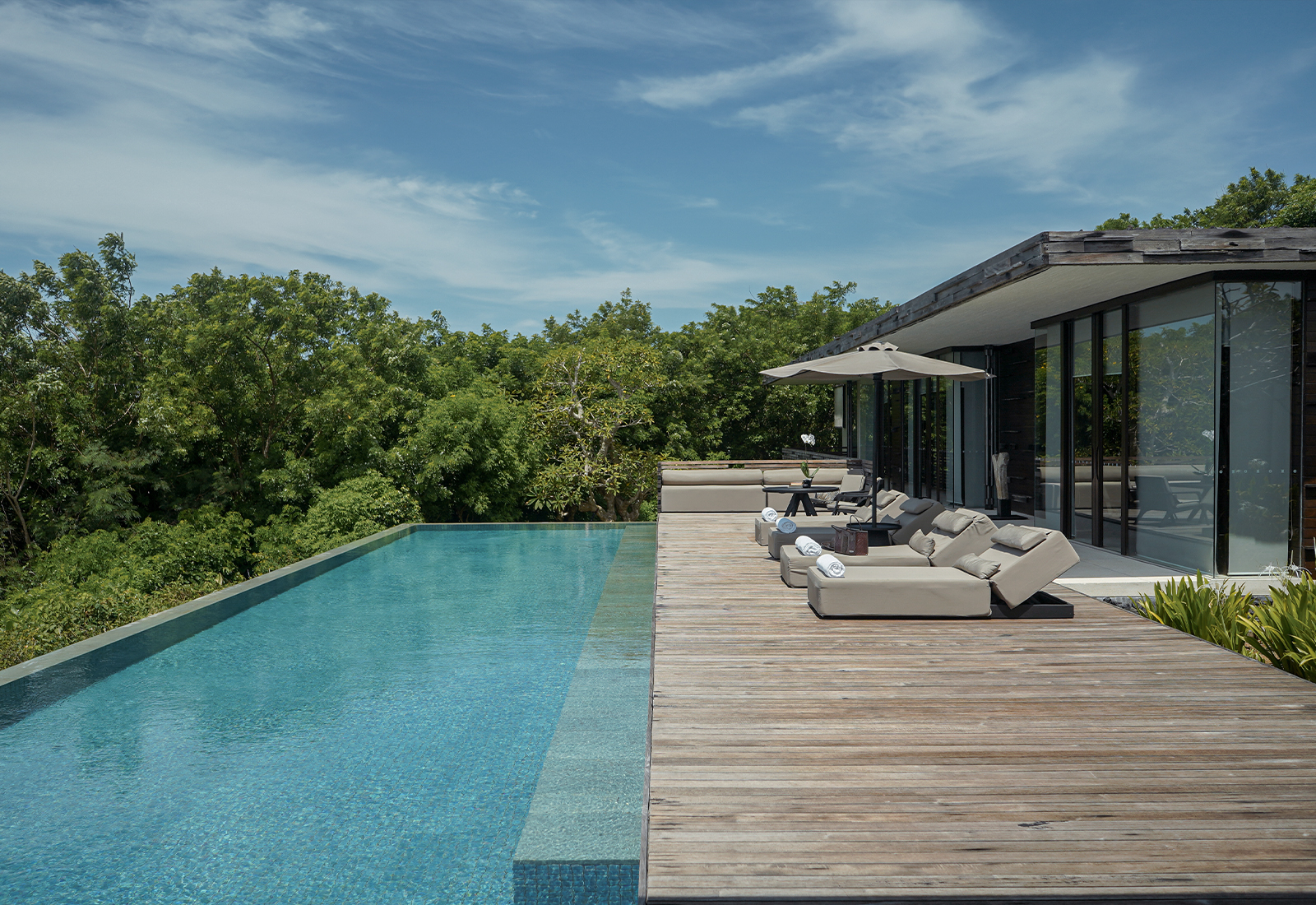
Alila Villas Uluwatu occupies 14.4 hectares of elevated clifftop plateau on the Bukit peninsula, poised where limestone cliffs sweep down to the Indian Ocean. Located 45 minutes from Ngurah Rai International Airport and 15 minutes from the Uluwatu Temple, the resort sits just moments from Savaya Bali, one of the island's most celebrated cliffside destinations. An in-house medical team is available daily with a doctor on call 24 hours.
The Villas
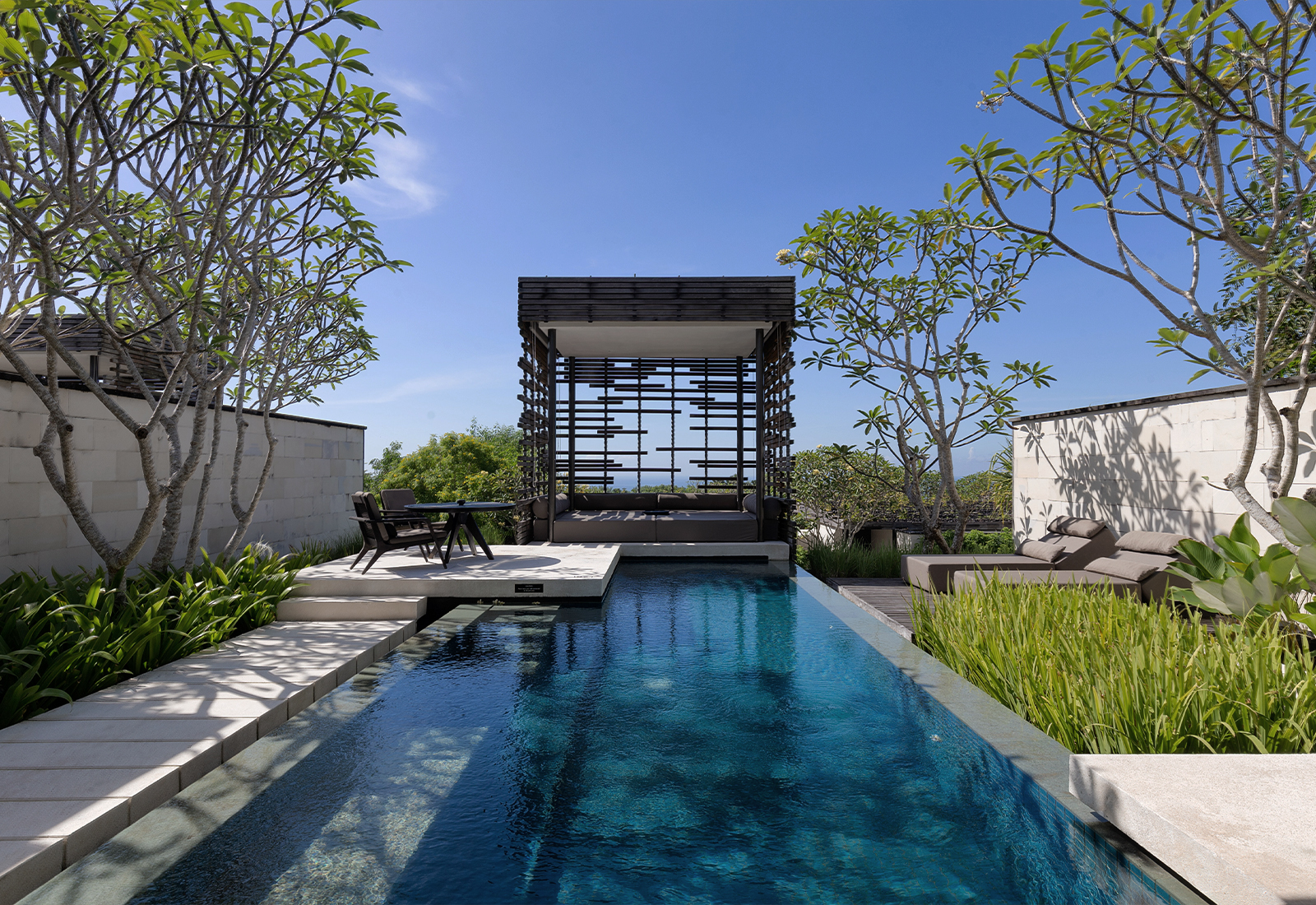
65 private pool villas across six categories, each individually designed and constructed to an environmentally sustainable framework. Every villa features its own pool and private cabana with uninterrupted Indian Ocean views, open-plan living areas connected by walkways and bridges, flat volcanic lava rock roofs, bamboo ceilings, and the resort's signature natural ventilation throughout. Contemporary interiors are enhanced with traditional Balinese accents reflected in planes of wood, water, stone, and rattan.
In-Villa Amenities
• Private infinity pool and cabana
• Outdoor dining area
• Espresso machine and tea-making facilities
•
Indoor and outdoor rain shower and jet shower
•
Bathtub
•
Locally sourced organic Alila bathroom amenities
•
Handcrafted beeswax candles and bath ritual experience
•
Linens by Ploh, 300 thread count
•
Outdoor activity kit including sun block, after-sun gel and face spritzer
Dining
CIRE leads with the sea, serving fresh seasonal seafood alongside local produce through simple, honest preparations open from breakfast through to dinner. The Warung offers wholesome traditional Indonesian and Balinese fare in a warm convivial atmosphere throughout the day and evening. Batique is a hidden speakeasy lined with over 100 premium and rare whiskies from across Asia, complemented by a curated humidor, open from late afternoon into the night. The Sunset Cabana Bar sits directly over the cliff edge with unparalleled ocean views and the sound of waves below — artisanal cocktails and an Uluwatu sunset, open from midday.
Wellness
Spa Alila offers soulful, personalised wellness journeys in a serene contemporary setting, guided by intuitive therapists and built around handmade products crafted from pure, natural ingredients. Daily yoga is available on the property. The resort's position above the limestone cliffs and within a carefully maintained natural landscape makes it one of the most genuinely restorative environments in Bali.
• Spa Alila: Open daily 9am to 10pm
• Personalised treatments
• Natural and handmade products
• Daily yoga
• Clifftop wellness setting
Weddings & Events
Five distinct spaces for weddings, celebrations, and corporate retreats, from the intimate Library accommodating 25 guests and the Three Bedroom Cliff Villa Living Room for 20, to the Cliff Edge Cabana and its outdoor lawn for up to 400 guests, the Clifftop Outdoor Lawn for 40, and the Pavilion Outdoor Lawn for 150. Every event unfolds with the Indian Ocean as backdrop.
About this profile: This portrait was researched and written by The Punch, in partnership with Alila Villas Uluwatu, for The New Luxury. It draws on information supplied by the hotel, a leadership interview and published third-party sources. The hotel checked factual details before publication; The Punch retains full editorial control. This portrait is not an award or a certification, and participation has no influence on nomination or selection for The Punch 100 or The Punch Awards.
EXPLORE THE PUNCH
Celebrating Remarkable
Businesses with Impact