

FEATURES • BRANDS
Lovejoy: The Soft
Weight of Simplicity
& Stillness
Words & Photography by The Punch
On a warm afternoon in Canggu, Poornima Lovejoy steps into her shop with the ease of someone who’s spent years listening to the rhythm of the Balinese island. The doors are open, the fabrics breathe, and the clothes–linen, silk, shades of ocean and earth–hang quietly in the filtered light. Nothing shouts for attention. Lovejoy is a whisper, a slow exhalation.
Before Bali, there was Madrid. Before the natural dyes and fabric rolls, there were late nights and turntables. Poornima once lived by sound. She DJed in Spain and Switzerland, chasing music through cities she loved. Then came the pivot: one of those unplanned detours that start with a conversation and end with a life elsewhere.
A call to a friend, Will, who would later become her husband, led her to Bali 14 years ago. She arrived with €700 and a loose plan to stay two months. The island, of course, had other ideas. Within a week, she was playing sets at La Plancha and falling into the island’s unhurried current. Time stretched and eventually, she built a home there, got married, had a daughter, and slowly turned the volume down on nightlife to listen for something quieter.

The Earth, Breathing
Lovejoy started not from a business plan but a vision: a single image that came to her during a coaching session in the stillness of 2020: the Earth, breathing. The moment stayed with Poornima and it wasn’t a metaphor. It felt alive, pulsing, asking her to do something gentler with her hands and her time.
The next day, she walked into her shop, which was a jumble of consignment goods, and cleared everything out. Racks emptied, boxes opened, the clutter spilled onto the street. By nightfall, it was gone. In its place came the first outlines of Lovejoy: a handful of pieces for men and women, simple shapes in natural fabrics. She called it a restart, but in truth, it was a grounding. A promise to the Earth she saw in that vision. A commitment to make clothes that would last, biodegrade, and remind people to take care of what they own and where it comes from.

Simplicity as a Practice
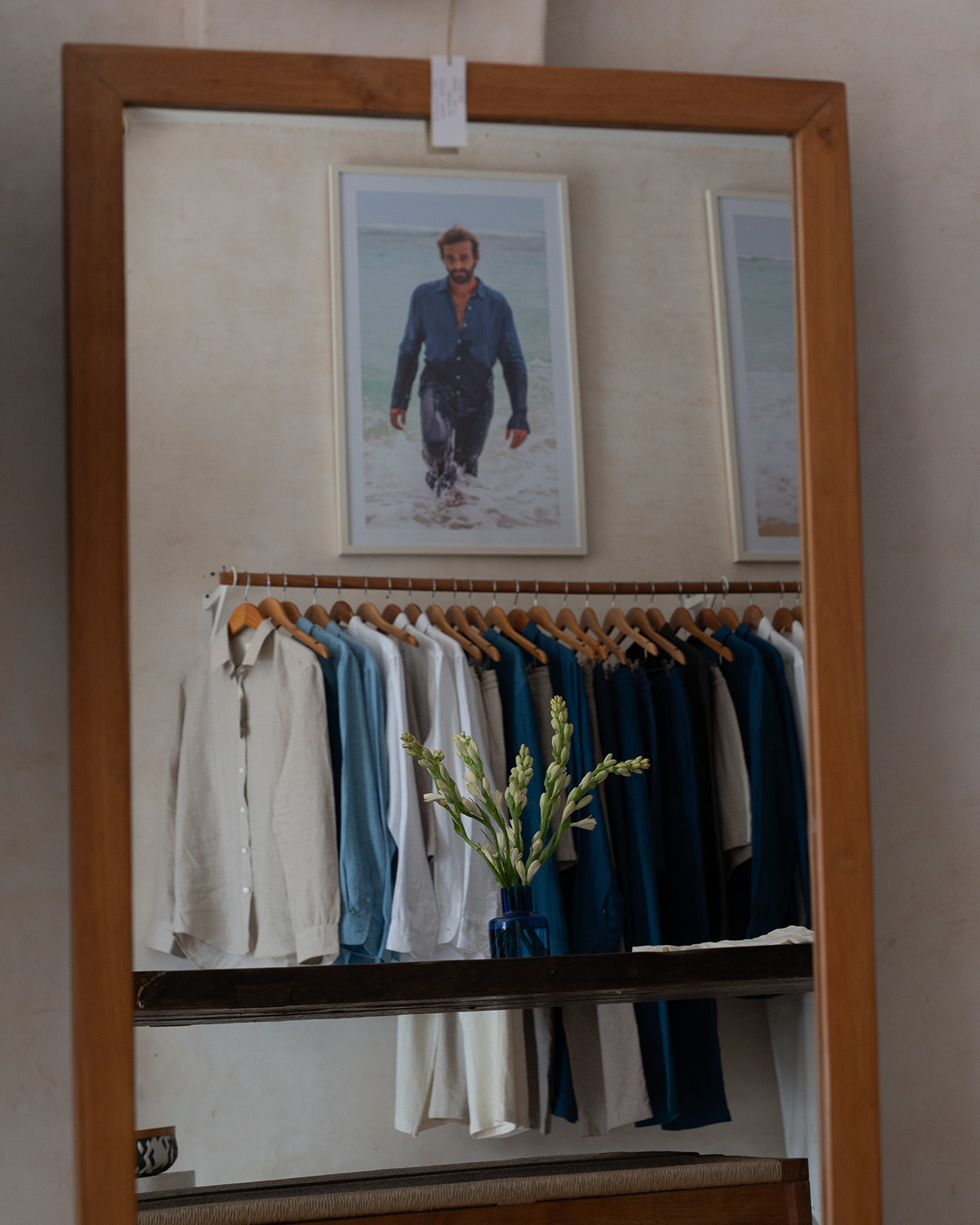
Poornima doesn’t use “simplicity” as a design trope. For her, it’s a worldview. It’s a morning surf on a single board. It’s camping in the mountains. It’s the clarity of owning less, making less, wasting less. When she rebuilt the brand, she stripped it to the bone: wardrobe essentials only, which meant linen shirts, cotton tees, and trousers that move. No embellishments, no excess. The colors came from plants and minerals: indigo, clay, rose, seaweed green. Every piece could pair with another, building what visitors now call a capsule wardrobe without realizing it’s intentional.
Lovejoy doesn’t follow seasons or participate in flash sales. There’s no Black Friday, no Valentine’s rush. The absence of noise is deliberate, almost rebellious. “I’d rather have a few perfect pieces that live a long time,” she says, “than chase fads that end up in a bin.”
Her obsession with waste isn’t abstract. It’s personal. Years earlier, she helped her family’s restaurants (Lacalita and others) cut their waste by up to 80%, introducing composting, recycling, and glass solutions. Then she began advising other restaurants, working toward a larger-scale waste operation. It’s all connected: food, fashion, and the cycle of materials we forget we depend on.
The Process, Not the Production
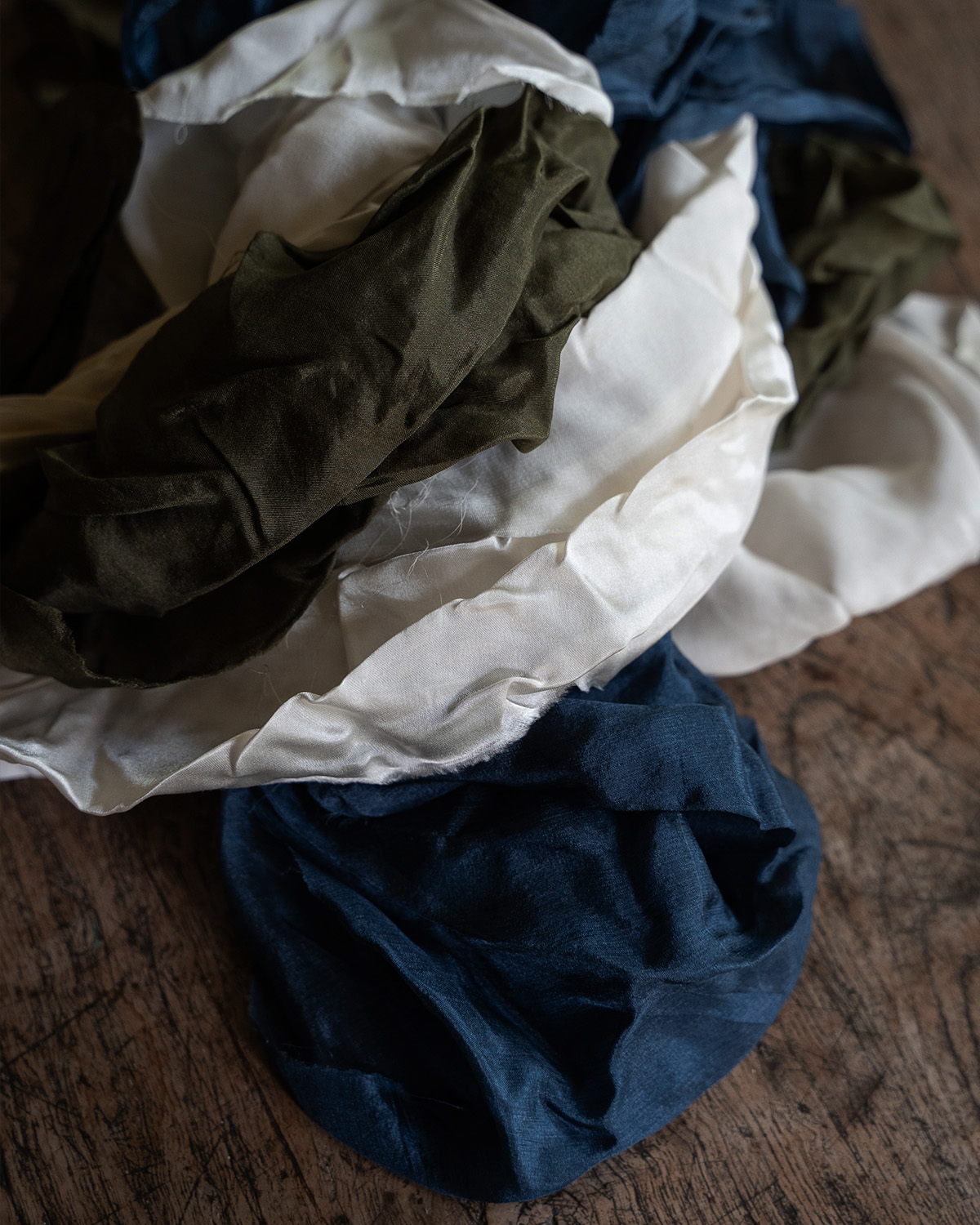
Lovejoy’s entire operation could fit on a napkin. Fabric arrives in Bali–certified linen and 100% silk, sourced carefully for quality and traceability. Some rolls go to the tailor; others travel north to Singaraja, where Andika’s natural dye studio transforms them into color.
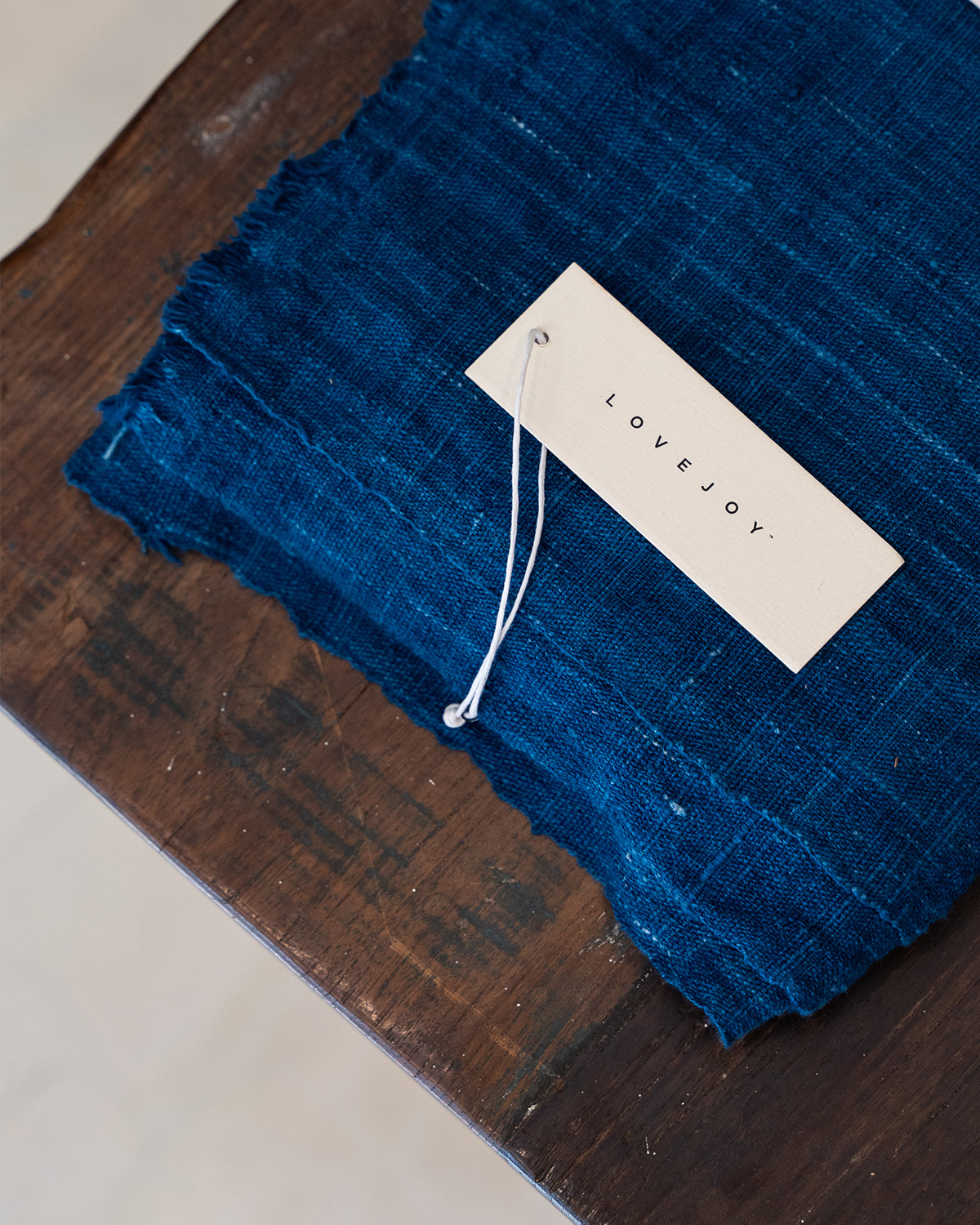
The dyeing process is elemental. Rolls are divided into four or five meters, submerged in indigo vats, or layered with leaves and bark that are derived from pigments of the earth. No two pieces are ever identical–a truth Poornima embraces. If the color turns out different from expected, she’ll reimagine the fabric for something else. Salmon becomes the new rose, and variation becomes value.
The tailor is the heart of Lovejoy–meticulous, humble, and devoted. He cuts every piece by hand, then passes them to a small network of sewers he supervises. Nothing is rushed. Each stitch carries the pace of the island. Offcuts are saved and repurposed. Patterns evolve through wear and instinct, not trend forecasting.
When floods recently damaged the tailor’s studio, production paused, but there was no panic, no pressure. Poornima sent quiet help, the team rebuilt, and the work resumed. “We live by miracles,” she says. “Somehow, it all keeps flowing.”
Living Color, Honest Fabric
To wear Lovejoy is to understand patience. Linen breathes and softens with time. Silk is dense and luminous, it feels both light and protective, cool in Bali’s heat, warm in a breeze. Colors deepen with washing; each shade tells its own story. A blue shirt becomes a memory of sea and sky, a green dress slowly fades like leaves under the sun. The beauty of natural dye is that it refuses control. Each piece carries traces of chance–a reminder that perfection isn’t uniform. Lovejoy’s staff sometimes joke that the shop is like a living organism, forever shifting in hue. That quiet evolution is what keeps the clothes human. “I want people to wear them to death,” Poornima says. “That’s the point. To buy less, love more, and use what you have.”
An Island Network
In Bali, collaboration is its own kind of sustainability. Lovejoy’s ecosystem is made of artisans, dyers, and craftspeople who understand the rhythm of slow work. Every roll of fabric passes through Balinese hands–dyed, cut, sewn, steamed, folded. There’s a pulse to it, one that mirrors Poornima’s original vision of the Earth breathing. Keeping production local also means keeping emissions small. Lovejoy doesn’t ship internationally unless absolutely necessary. Most sales happen in-store, where customers can touch the fabric, hear its story, and leave with something made a few kilometers away, not a continent apart. She rotates stock between Canggu and Ubud instead of producing more. If something sells out, it’s remade only when needed. That’s the advantage of being a small business–agility without waste.
Design, Repetition, and Memory
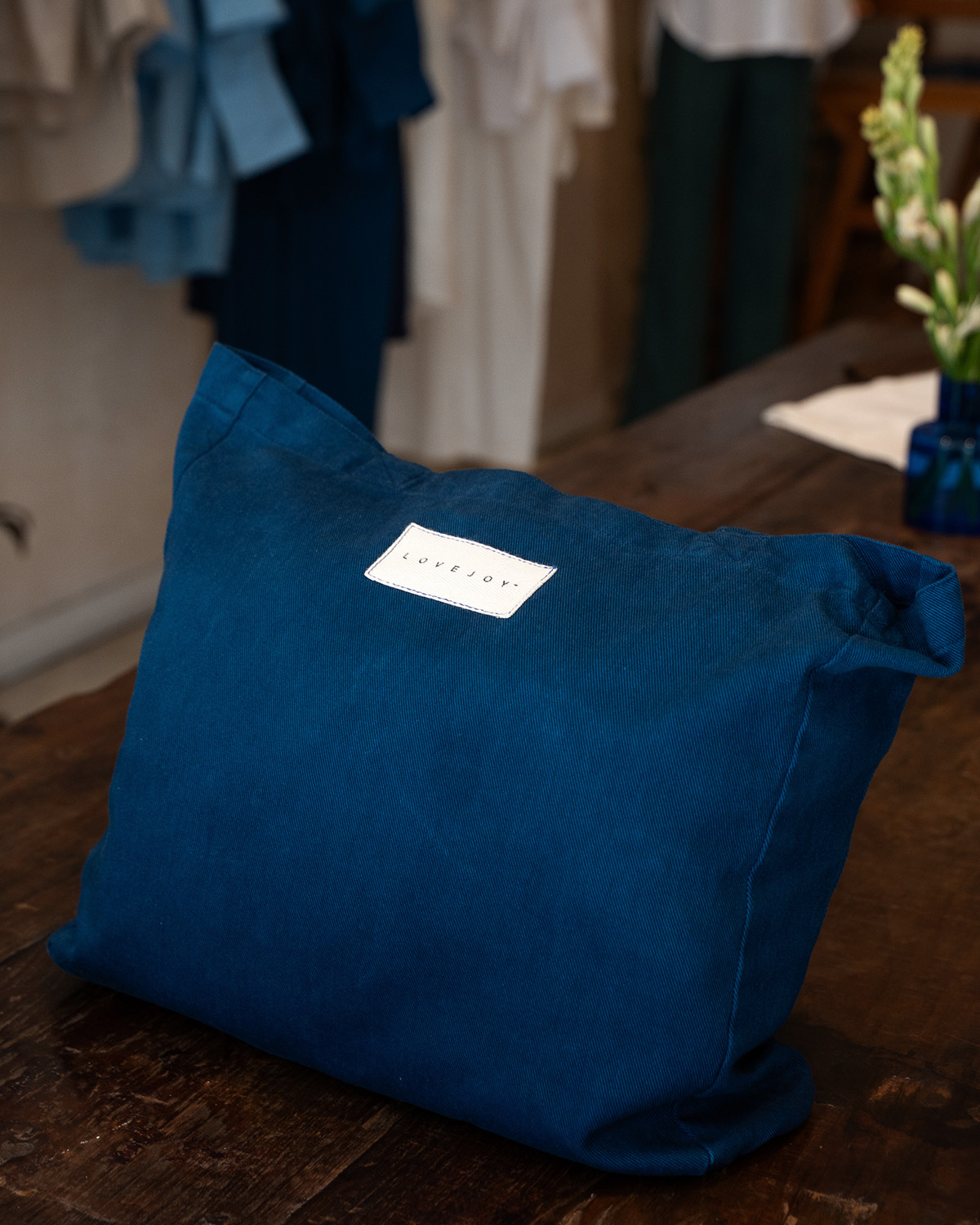
Each design in the store carries a story. Some are refinements of favorite pieces Poornima has owned for decades–a cardigan she’s worn for 20 years, reinterpreted for modern life; a playsuit inspired by Bali’s motorbike culture, easy to slip on, impossible to dislike. There are roughly 30 styles at any given time–trousers, shirts, silk tops, jumpsuits–made in limited runs, sometimes as few as two pieces per model. Sizing follows UK and Australian standards, rejecting the too-small molds common in Bali’s boutiques. The idea is inclusivity, not vanity. Clothes that move, breathe, fit. Nothing here is trend-driven. The pieces return season after season, slightly evolved, like songs replayed with new meaning. “I don’t want to chase endless novelty,” she says. “I’d rather perfect the essentials.”
Waste, in the Bigger Picture
Outside fashion, Poornima’s mind keeps returning to waste–where it goes, who deals with it, what it says about our priorities. She’s fascinated by what happens after we throw things away, by the invisible systems that could be repaired with care and imagination. Her hope is that big brands, the ones shaping mainstream habits, start setting examples: fewer fads, fewer plastic-heavy holidays, less disposable decor. “Even the decorations,” she says, shaking her head. “The world spends so much money on temporary beauty that ends up in the bin.” For her, Lovejoy is a counterweight to that frenzy, it’s a small brand proving restraint can be beautiful, that commerce can coexist with conscience.
The Future, Rooted in Enough
There are plans ahead, but they’re gentle ones. Perhaps a slightly larger shop in Canggu, so the fabrics can breathe. More collaborations with dyers like Andika. A deeper exploration into new materials–nettle, maybe–the kind of fiber that grows fast and leaves little trace. Madrid will always be calling; she’d like to return there each year for small pop-ups, connecting her two worlds. Beyond that, she has no grand expansion strategy. Growth, to her, is not a ladder but a garden–tended slowly, season by season.
What she truly wants is subtler: for people to think before they buy. To feel the difference between a garment made by human hands and one churned out by machines. To find pleasure in the long life of an object. Lovejoy’s clothes do not ask to be collected. They ask to be lived in–worn through, repaired, remembered. The linen softens. The colors shift. The Earth, once again, breathes.
EXPLORE THE PUNCH