

THE PUNCH • STORIES
Kubu Sidem
The Slowest Blue in Bali
Curated by The Punch Editors
Words: The Punch
Photography: Jonathan Leijonhufvud
Ubud lets you go slowly. The scooters thin out, the smoothie-bowl signage is scarce, and the road north begins to curl though jungle towards Payangan, an agricultural district of Gianyar that climbs up to 700 meters. Mornings are cold enough for sleeves. At first light, Gunung Batukaru shows itself above a valley loud with frogs and running water, and the final stretch is a narrow village lane in which the owners send you a pin for, because you will not find it otherwise.
At the end of it sits a timber house that never has a lock on the door.
Kubu Sidem now takes bookings. It’s a recent development, and it deserves saying carefully, because for almost all of its existence, this was not a property in the hospitality sense. It was a family home, a working indigo studio and a plantation, and it remains all three. Guests are being let into somebody else’s life rather than checked into a room.
A House Built at the Speed of Wood
Sebastian Mesdag, known to everyone as Seba, first landed in Bali in 1989 as a 14-year-old kid visiting his uncle with a considerable backstory. The man had lived on the island in the late 1930s, was captured by the Japanese and spent three years in a prisoner-of-war camp, then returned at the age of 80 to build the house he had been thinking about ever since. Seba slept in an open loft reached by a ladder and woke to a volcano and rice fields. By his own account, walls have always felt optional to him ever since.
He grew up in Andalusia on a farm, in a Dutch family who called their parents by their first names and treated the shepherd as kin. He studied painting at Central Saint Martins and then Parsons, and abandoned oils on the grounds of what was in them. That took him to India, to Santiniketan in rural West Bengal and a village whose name roughly translates to the land between the forest and the pond, where he fixed up a derelict house in exchange for tending its garden. He stayed there three years on the strength of a single lightbulb.
Working alongside a community of women who hand-embroidered fabric over eight-month stretches, natural dyeing stopped being an interest and became a discipline.
He came back to Bali for good with instruction from his uncle ringing in his ears: get well away from Ubud. The search for land where he could neither hear a road nor see an electricity pole, and it took a while. He bought it in 2003 and started planting immediately, years before anything was built on it. Somewhere in this period, his path crossed with Ayu Purpa, a jeweler’s daughter from central Ubud. They have been together since 2009. Marrying into her family required his conversion to Hinduism and a ceremony that involved the entire village.
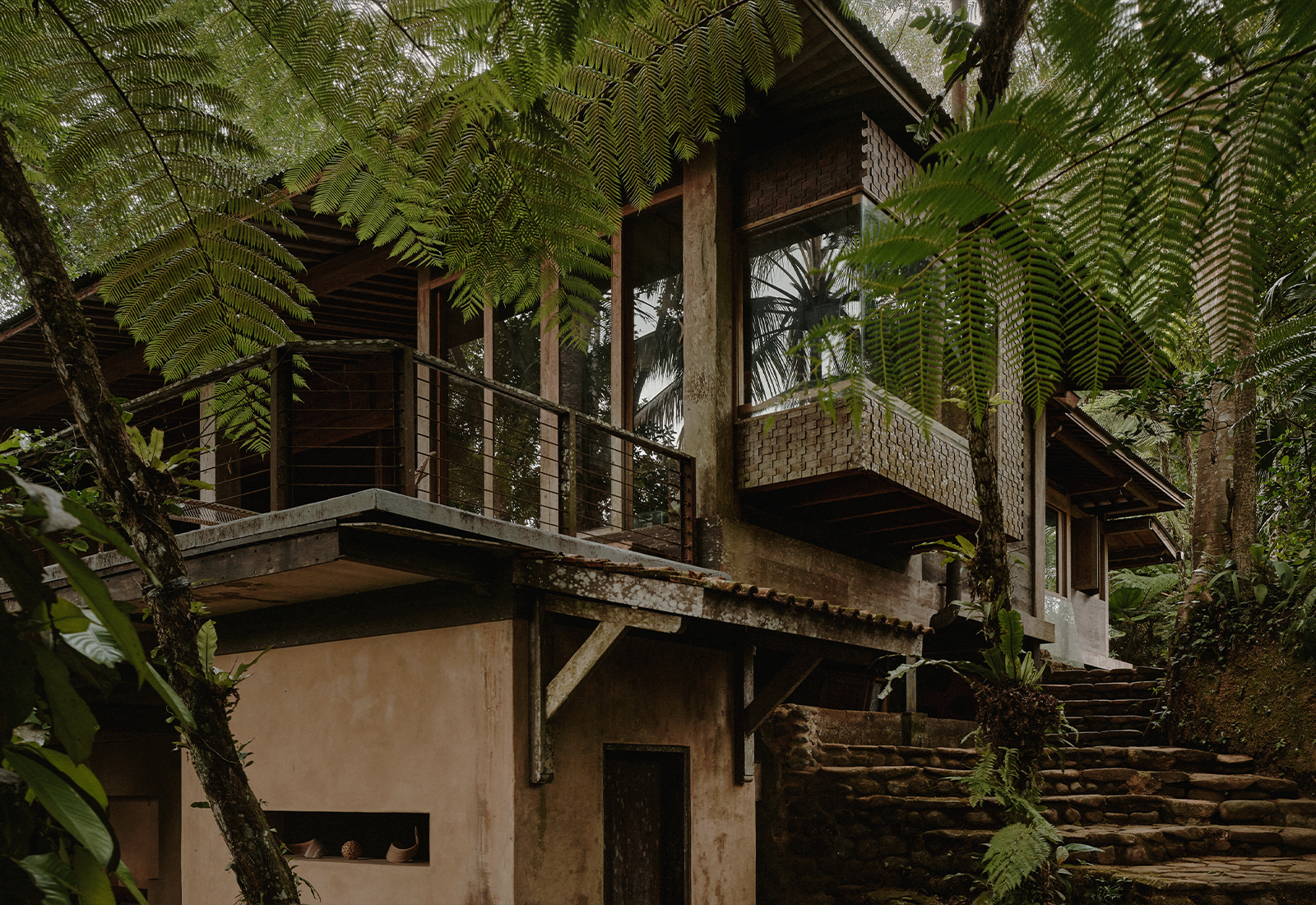
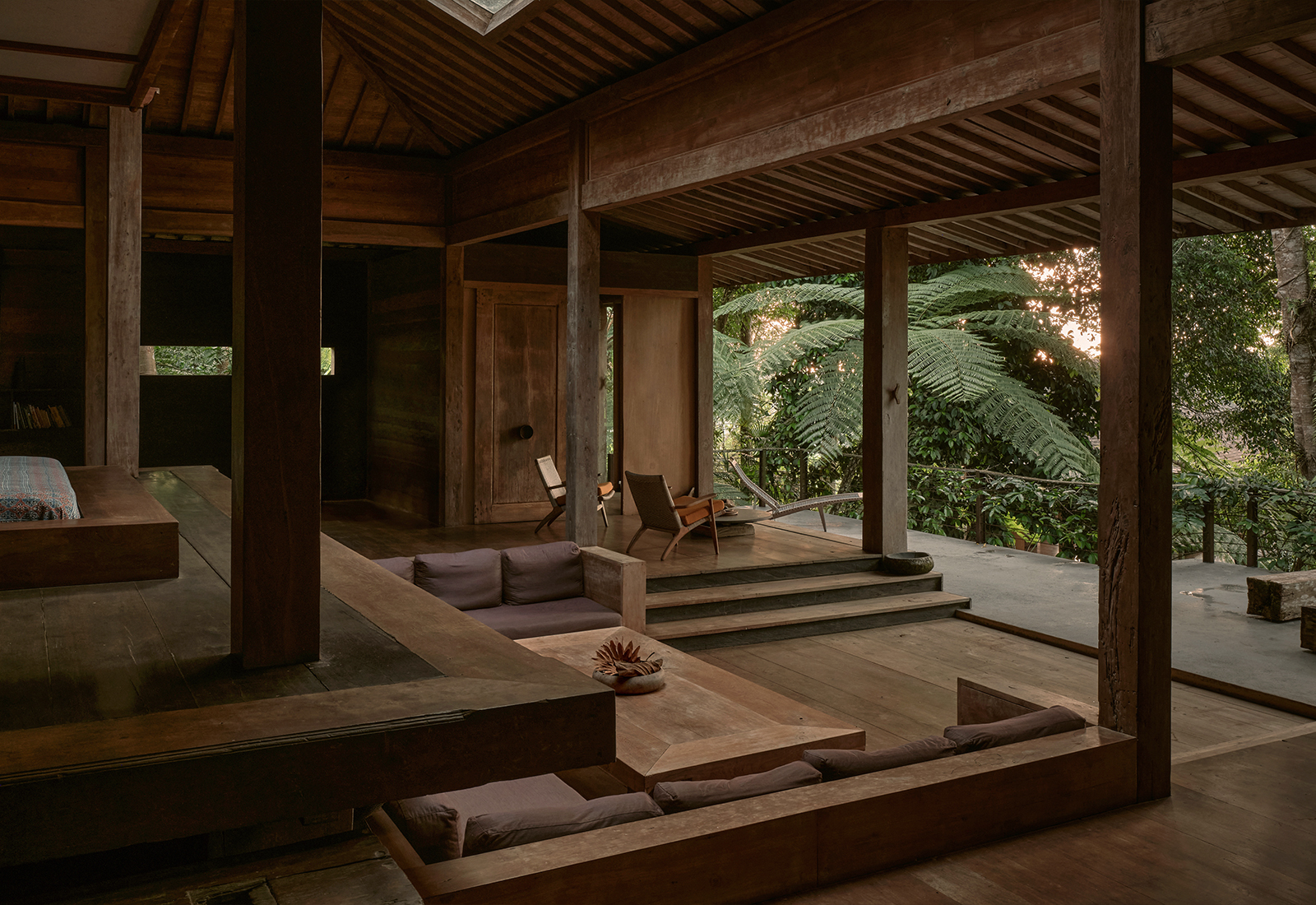
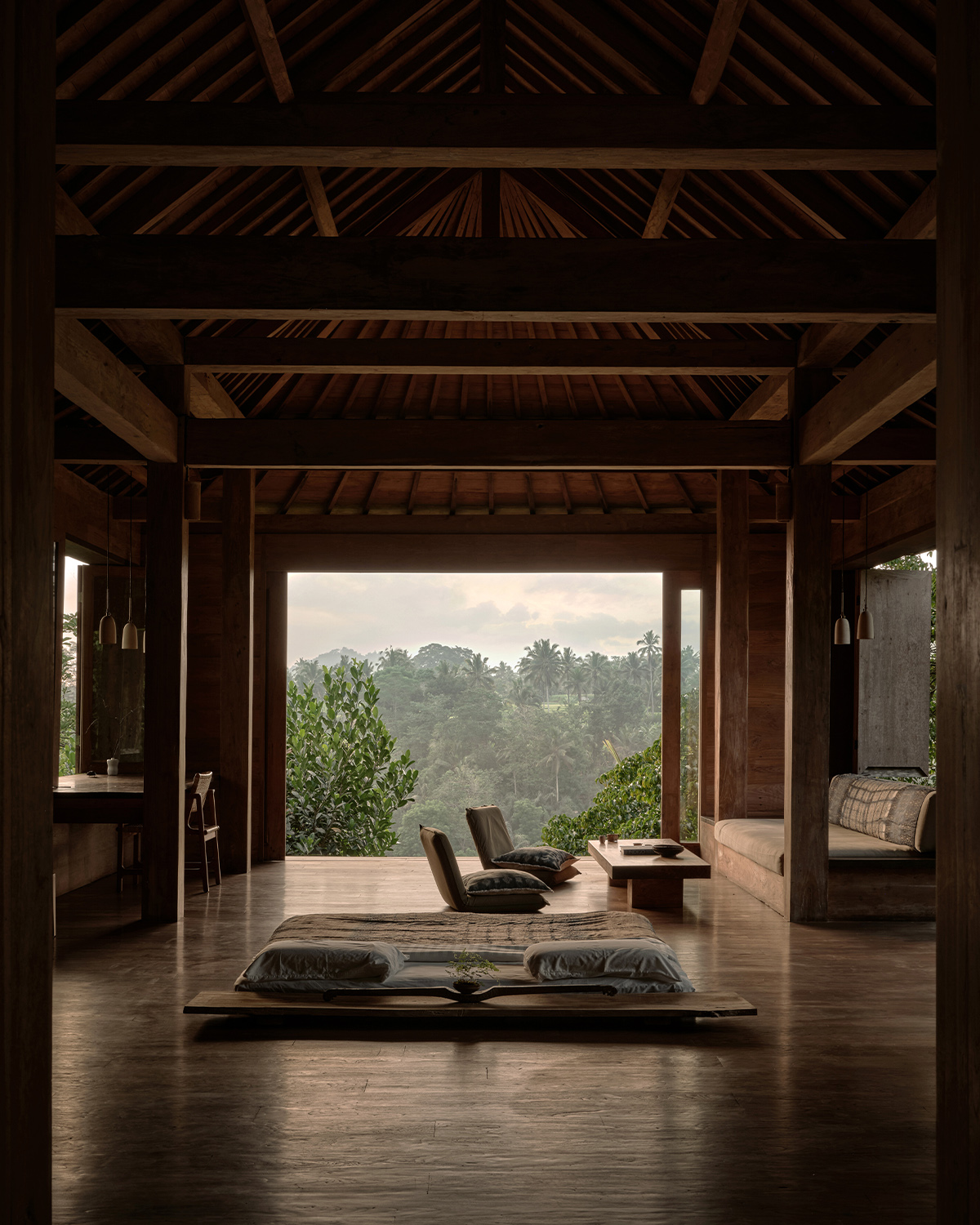
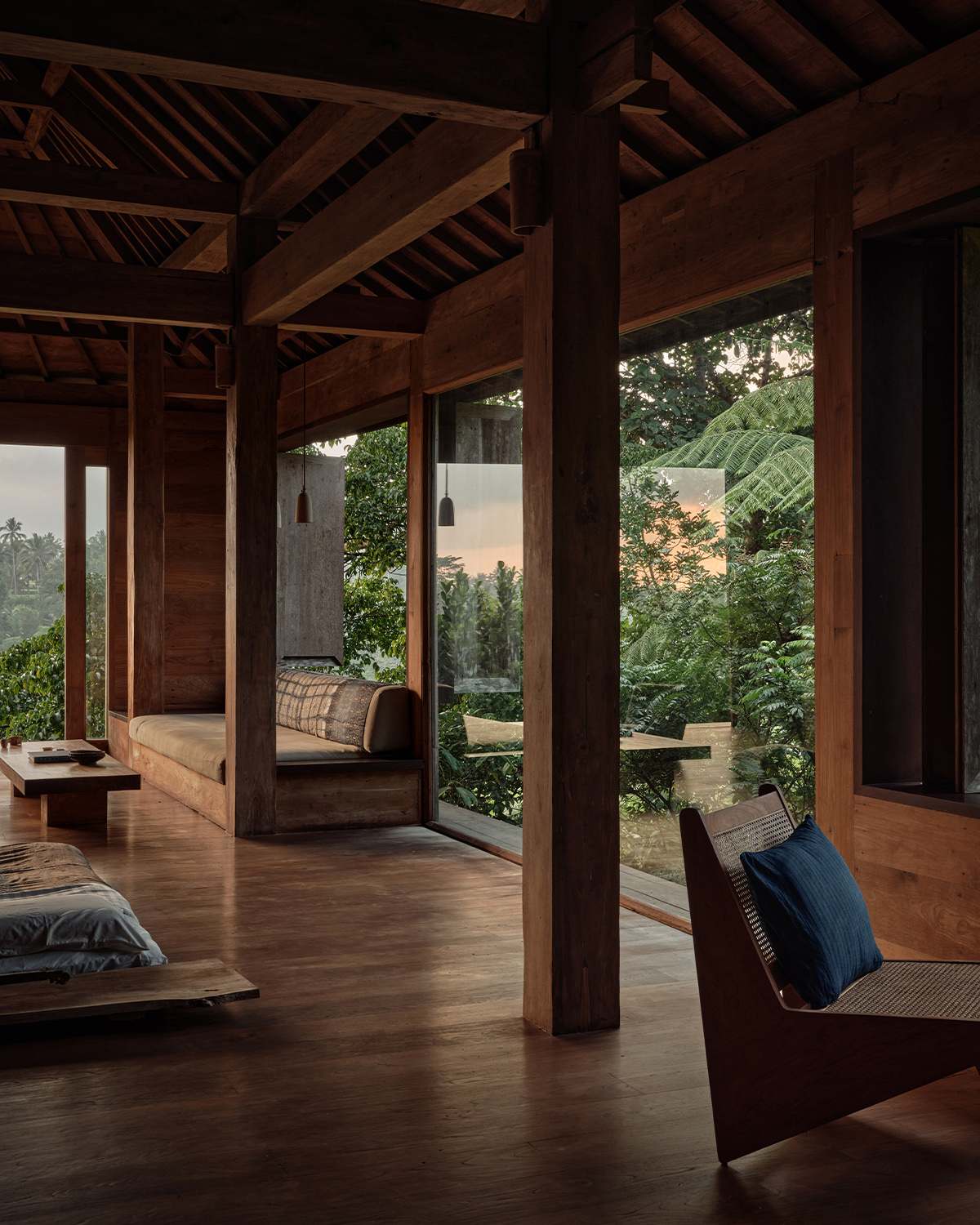
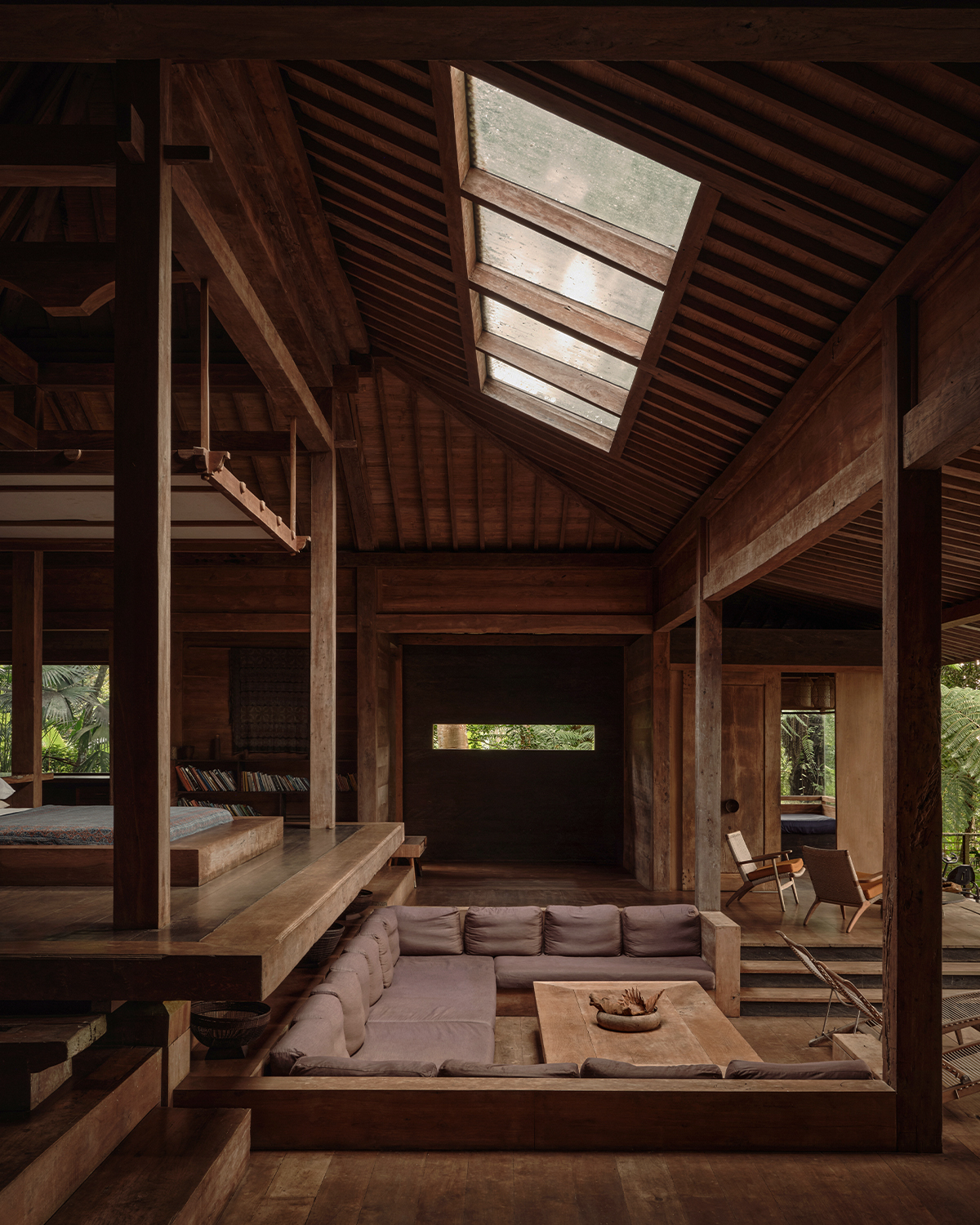
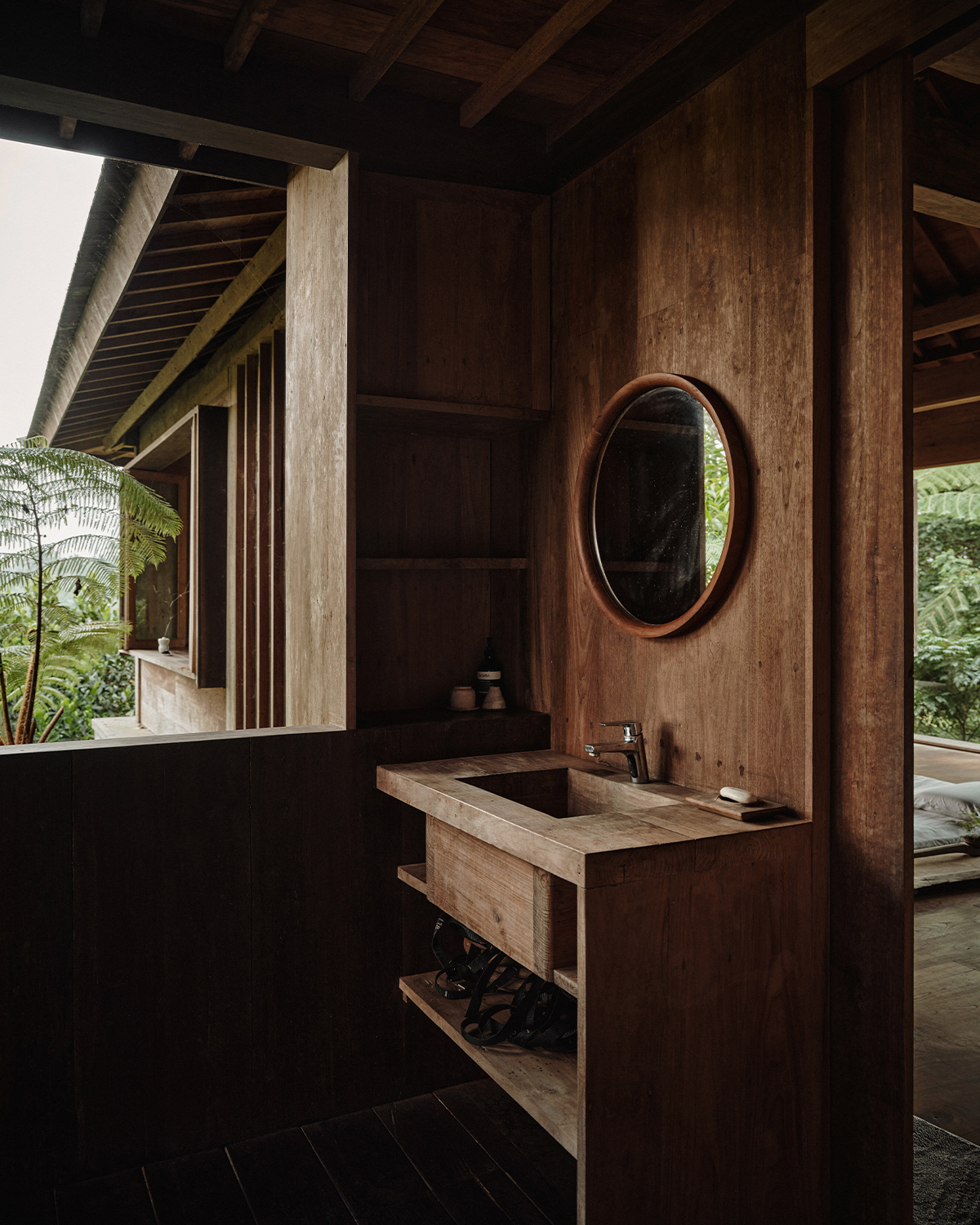
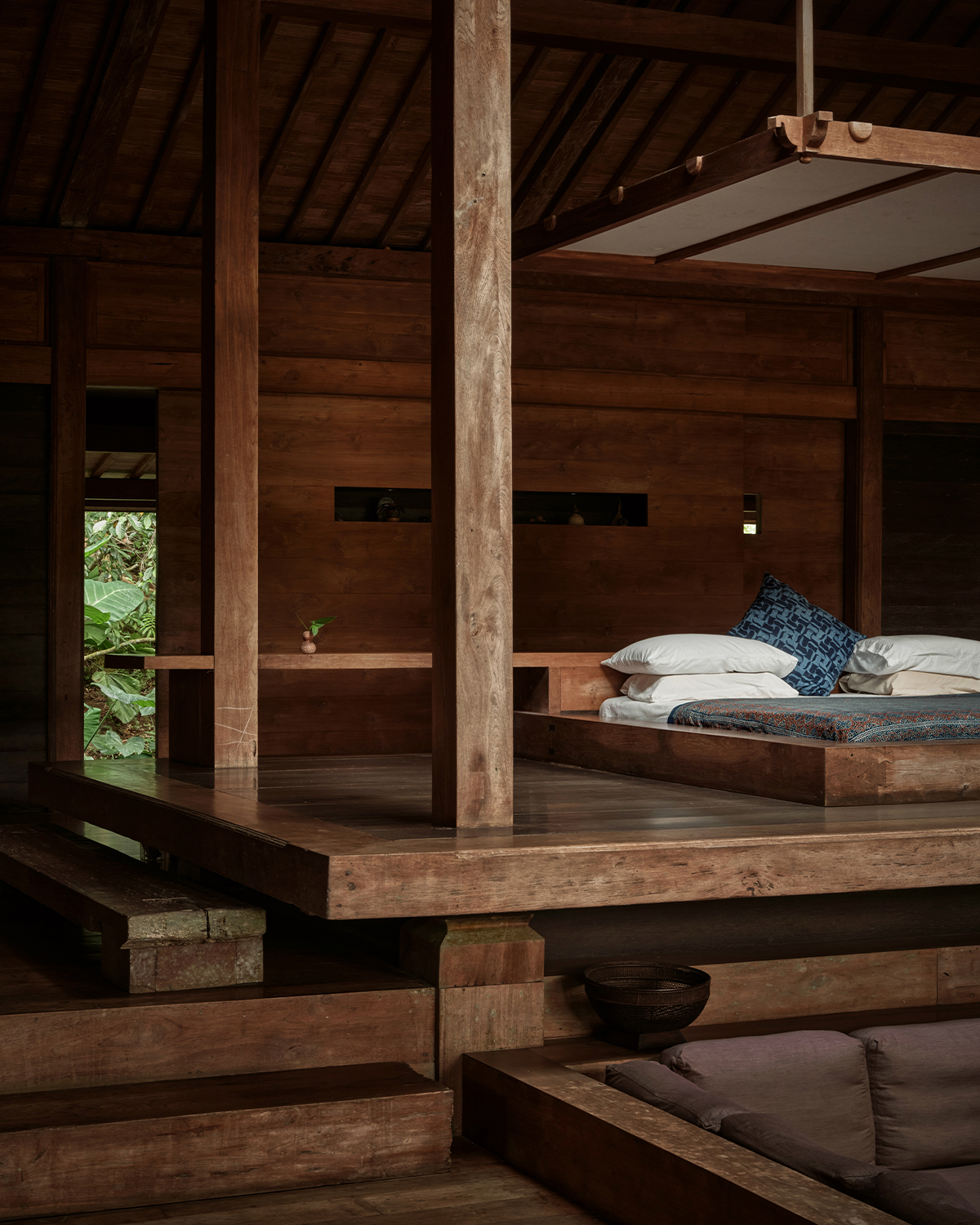
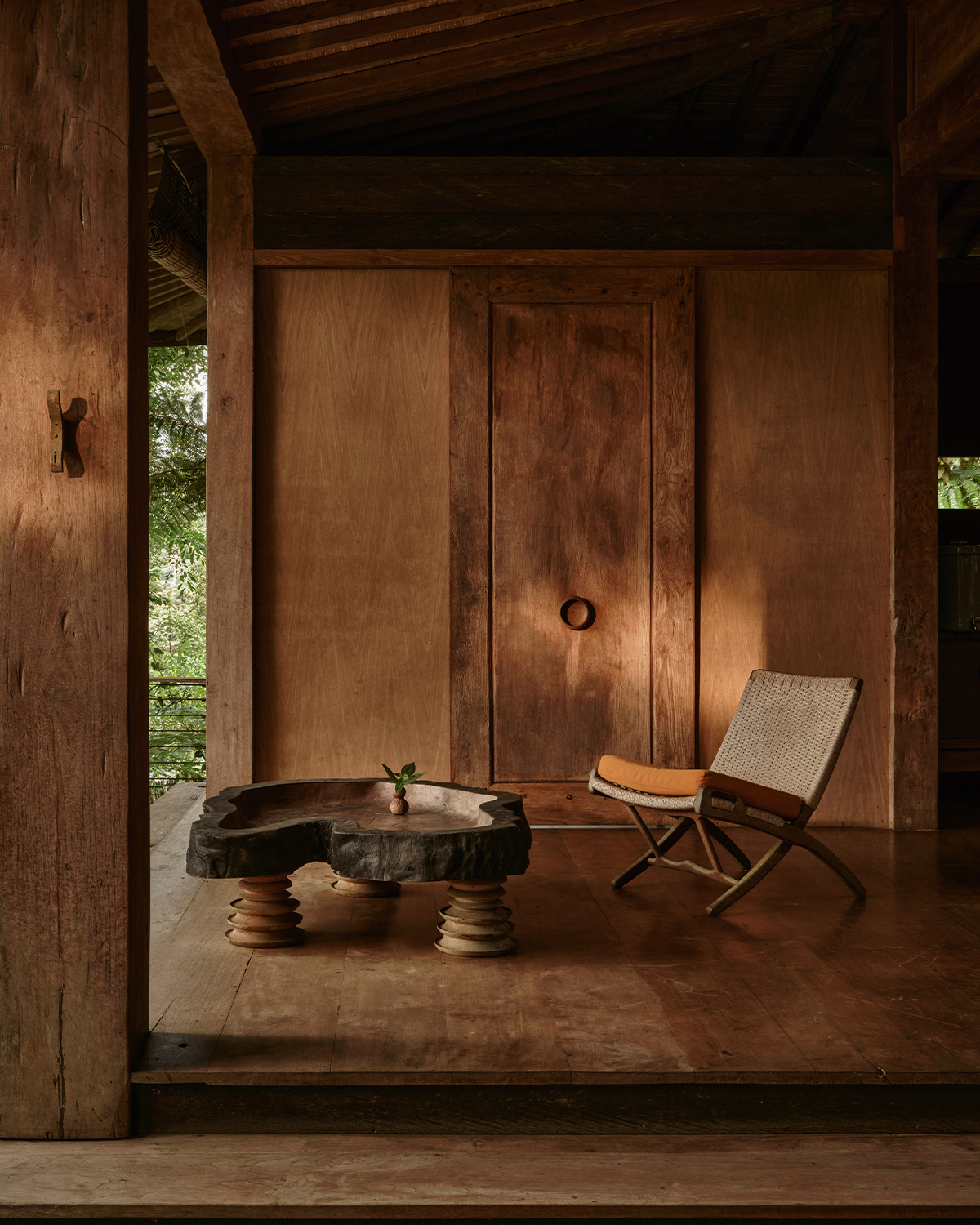
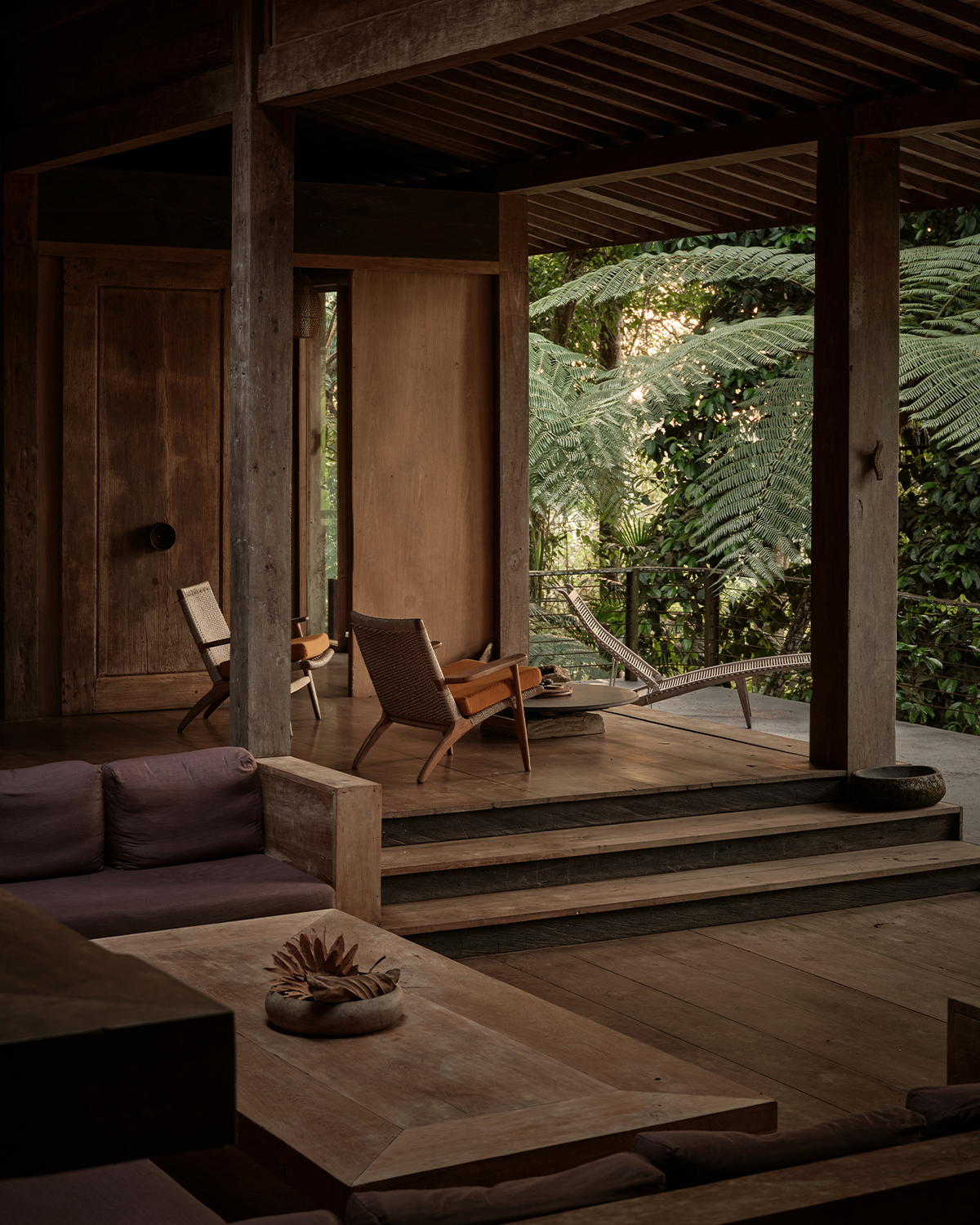
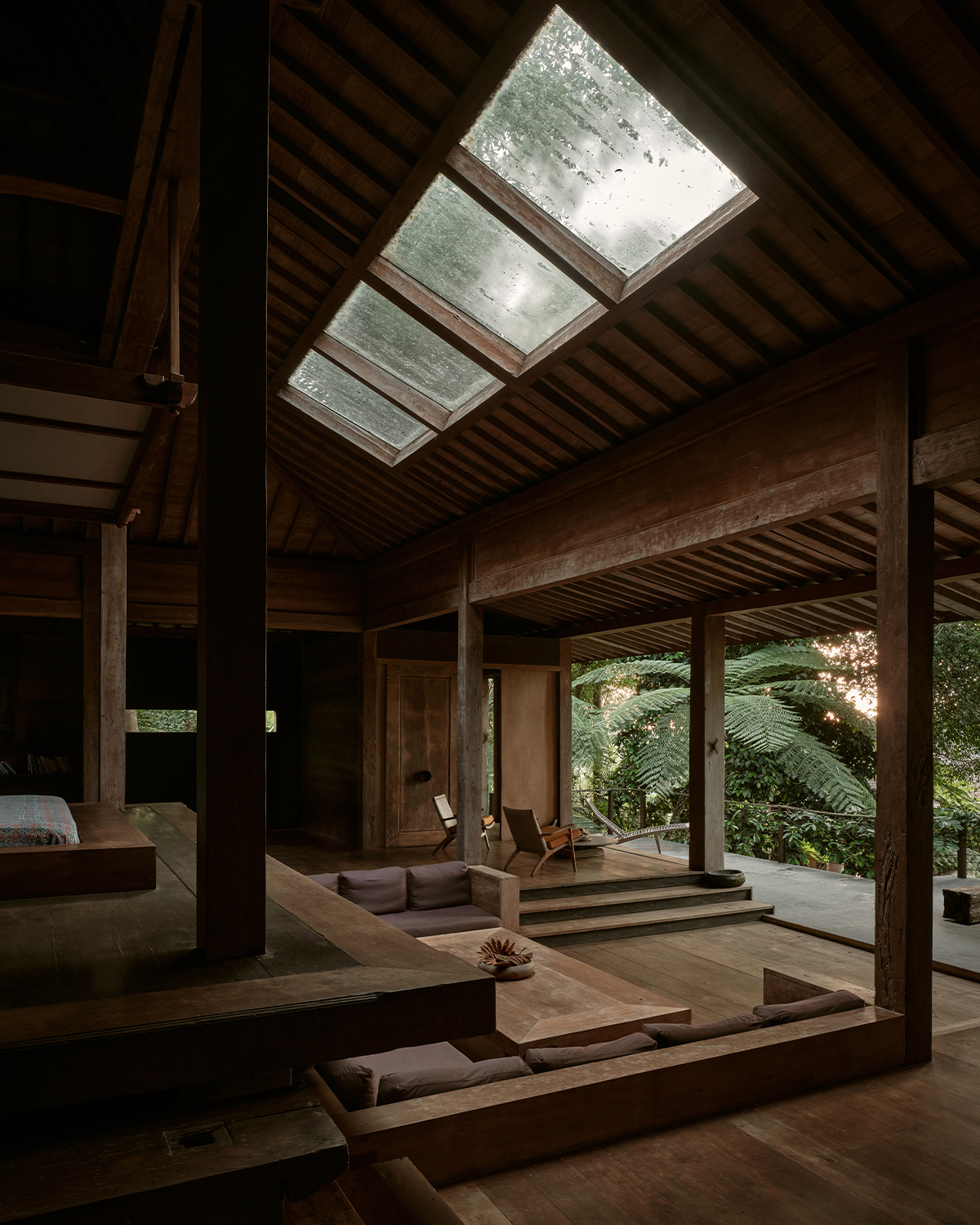
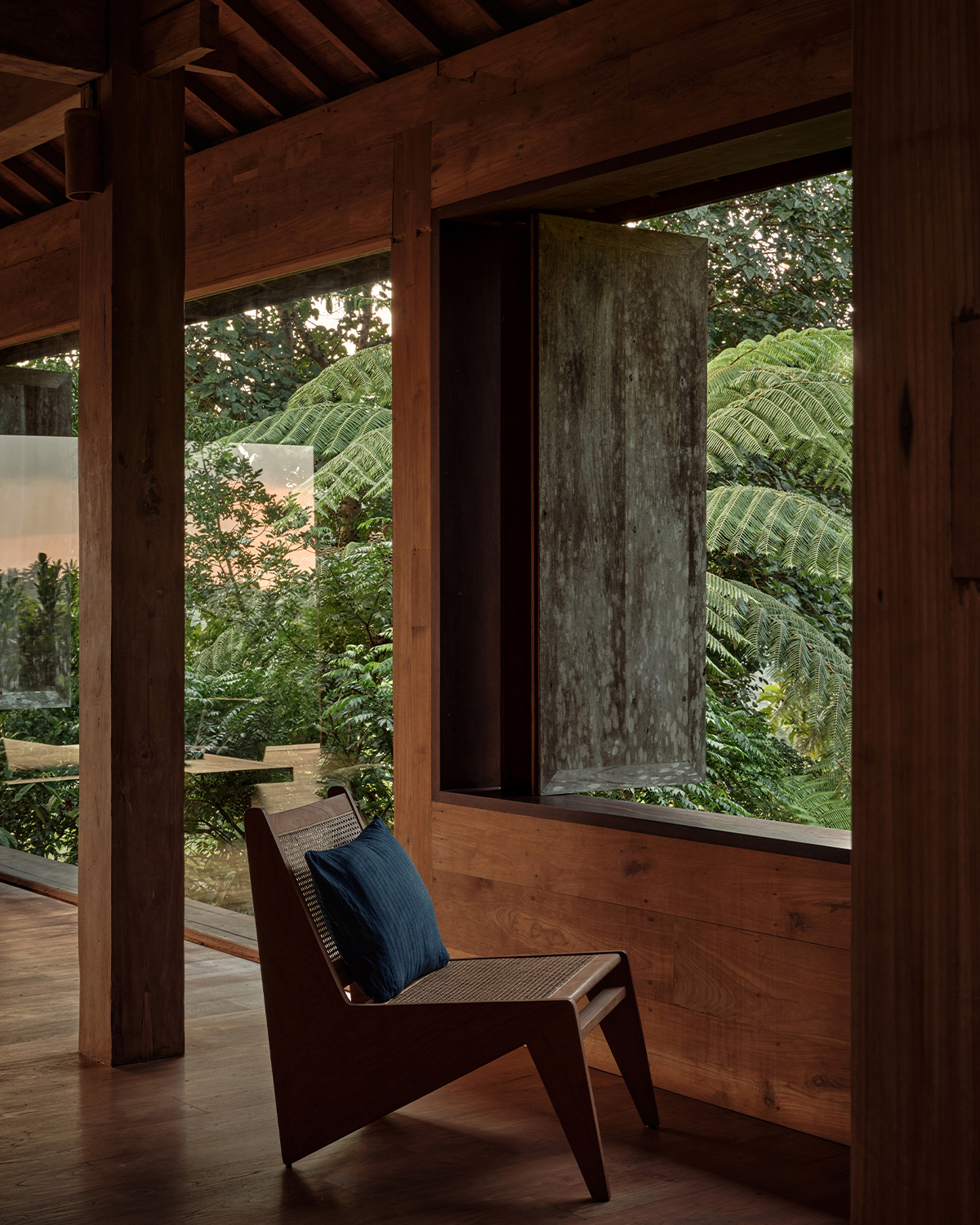
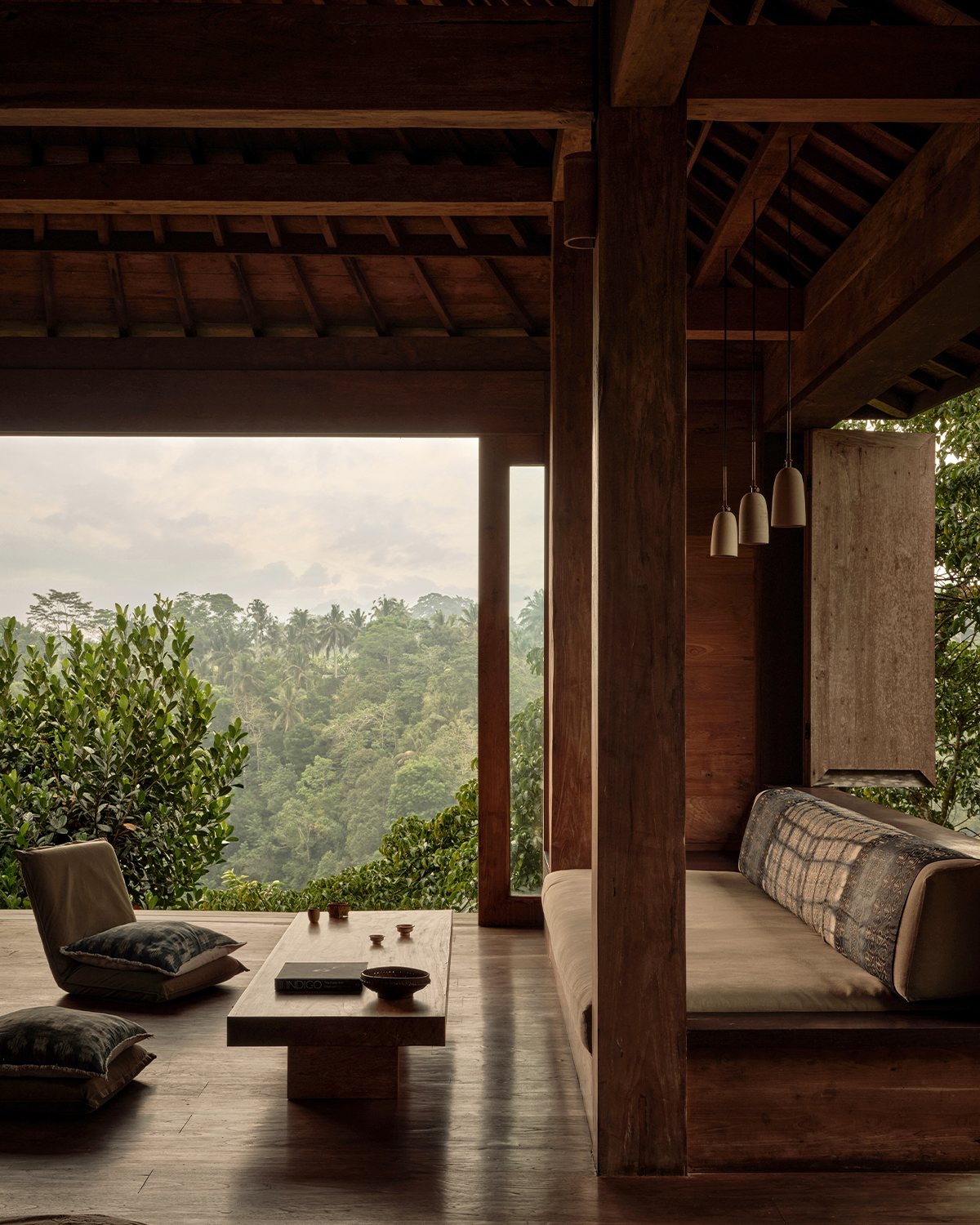
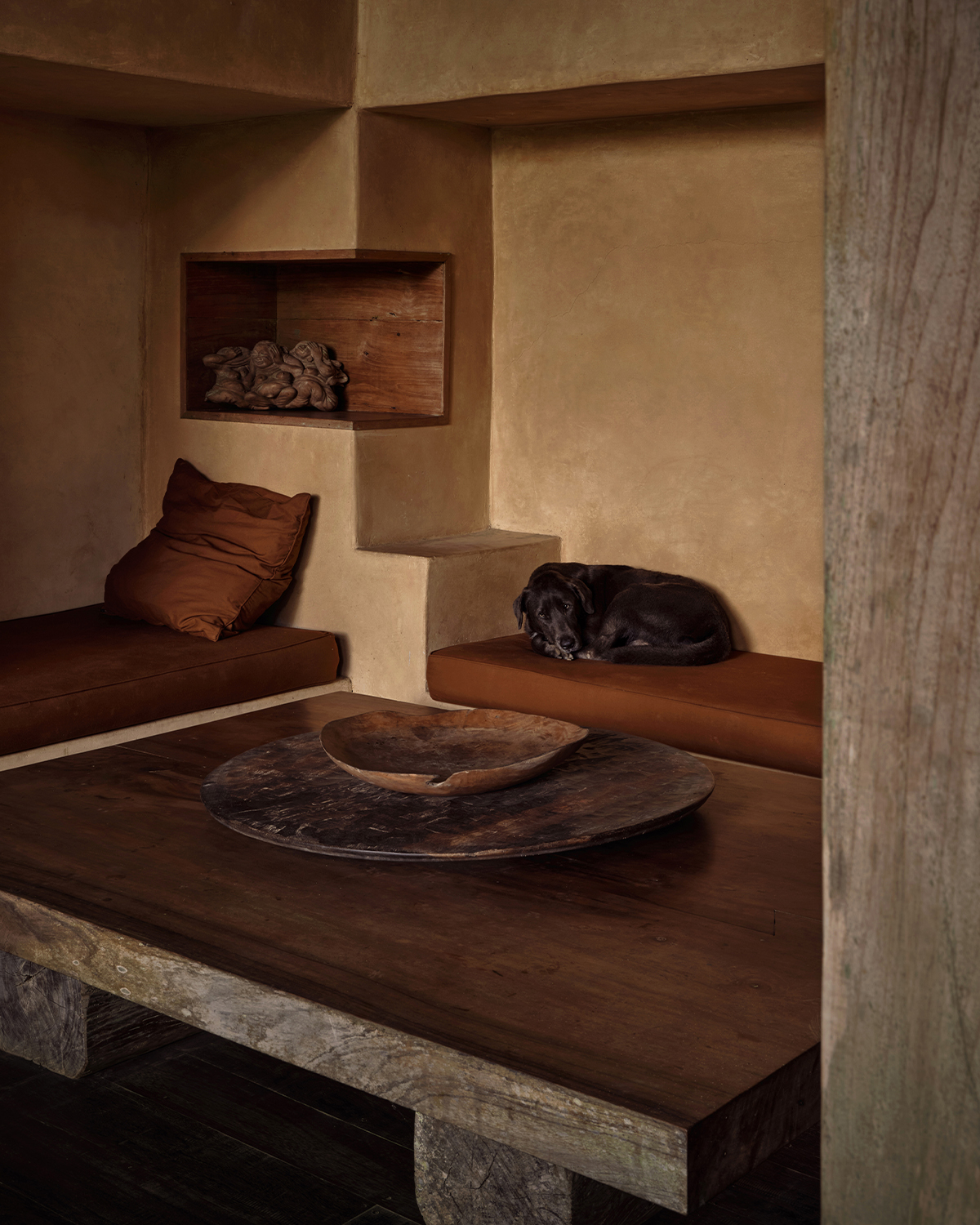
The house the two of them designed together follows the Javanese Joglo typology: pyramid roof, open interior, no doors. Ironwood and teak were salvaged from old Javanese buildings, some close to a century old, carried up a dirt road and raised by hand. A member of each of the village’s 15 families worked on it. There was no electricity on site. The design adapted itself to the timber rather than the other way roun, because when a beam is a certain length, that is the length the room becomes. It took six years, which Seba tends to mention with a laugh, given that nobody had set a deadline. Walls arrived slowly, and only where there was something worth framing.
Before any of that, the couple spent two years not building at all, sleeping in a small Javanese Gladak hut while they worked out where the house wanted to sit and which way the bed should face. Balinese practice puts the head north, towards Gunung Agung.
Tri Hita Karana, Applied
The land they first purchased was not the jungle it is now. Back then, it was brittle clay with a few shrubs on it, at the end of a mud track. Local memory held that villagers once refused water to a visiting priest and that his response had dried up the source for years. Whatever the dynamics, there were no trees, and no trees meant nothing to break the wind. The family’s first structure, four bamboo poles and a tarpaulin, was simply carried off.
So they planted. Seba asked each of the builders from the village to bring a seedling from their own land, then kept collecting cutting and seeds until a nursery took shape across the site. Not species chosen for obvious human use, but ones that other living things would want. Bodhi, banyan and ficus went in, along with tree ferns, and somewhat incongruously, an Australian ghost gum. One ficus now takes three people joining hands to reach around.
20 odd years on, the water has since returned. There is a spring in the valley full of birds, fireflies at night, and species turning up that nobody on the property had heard of before. This is the part the visitors tend to skim past, and it is the whole point. A forest was planted first, deliberately, so that later a plant could grow in its shade.

Three Cuttings and an Accident
Indigo arrived by chance. A friend who knew about Seba’s interest in dyeing and trees handed him three small cuttings of the Assam variety, thought to have originated in north-eastern India before travelling to Bhutan, Japan, and Vietnam. He planted them and, by his own admission, forgot about them. When he checked back months later, they had grown. Payangan’s climate, it turned out, suited them precisely.
There is a historical footnote worth keeping. Indigo recipes were once guarded to the point of violence, since giving one away meant giving away a livelihood. The instinct at TianTaru runs the other way, on the reasonable grounds that a technique nobody teaches is a technique that dies.
The Vat is Alive
The dyeing process itself is the part that turns grown adults to children. Cloth comes out of the vat a yellowish green and turns blue in the air in front of you, which never quite stops being the star of the show. Dip it again, wait, dip again, and it deepens. Nothing in the sequence can be hurried, which is precisely why people arrive tense and leave laughing.
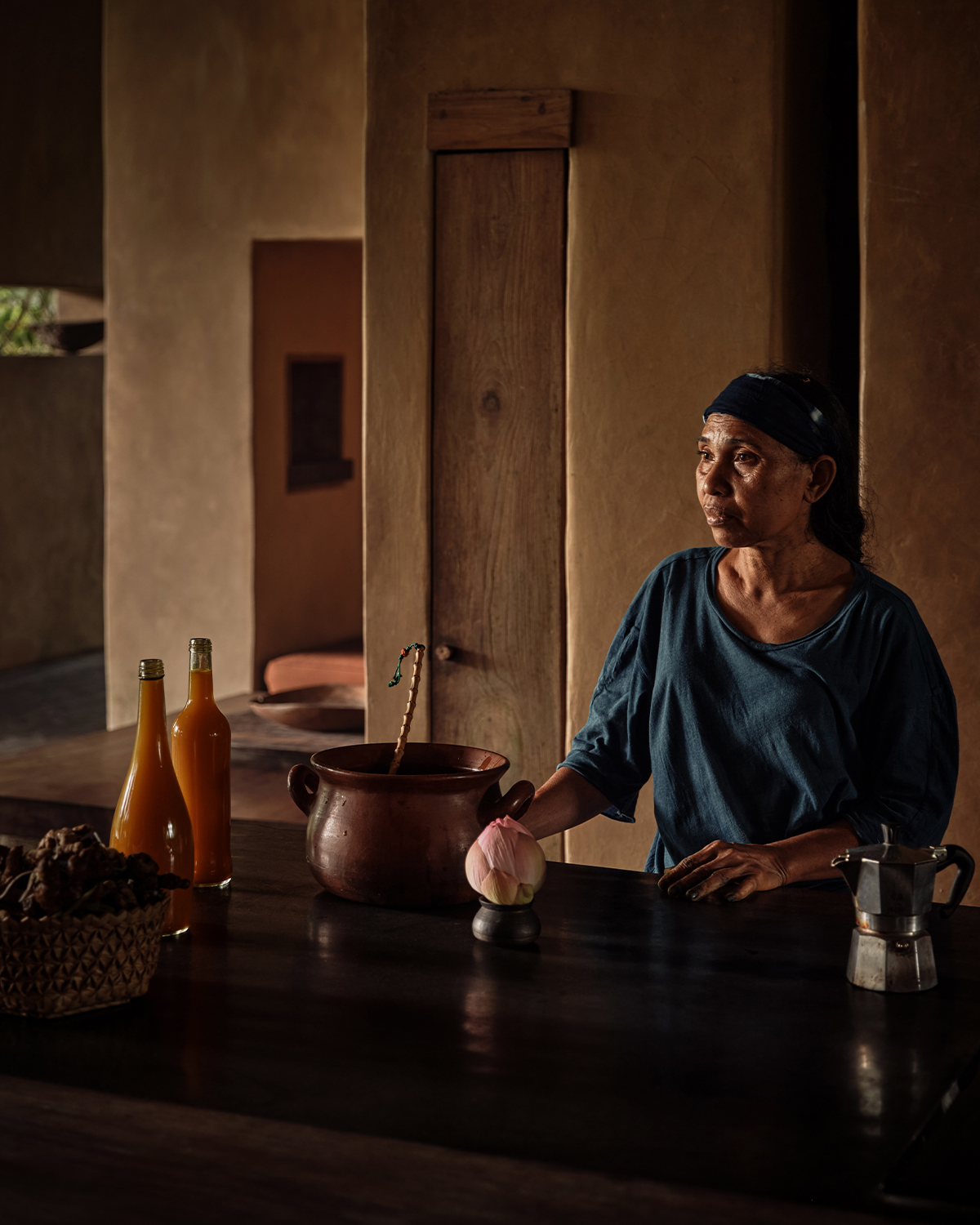
TianTaru runs a one-day introduction capped at nine people, so everyone gets attention, scheduled around the team’s other commitments and the village’s ceremonial calendar rather than a booking engine. Each session takes two to three days to prepare. Lunch is cooked by Dayu, using spices from the garden. Guests staying at Kubu Sidem are invited to join.
The studio is the second building on the property and the newer one, added around nine years ago, to a design the couple worked out between them. It is a double-height reading of a Central Javanese Limasan house: raised floor, pyramid roof, clay vats sunk into a mud floor, large windows framing the mountain, all on stilts for perfect air circulation. Downstairs is the workshop. Upstairs is a spare timber room used for plucking leaves, sorting, meditating, and putting up artists in residence. The Japanese influence is deliberate . It went up in a little over a year, led by a local builder in his 20s and his father-in-law, who lived on site while they worked.
The People Who Run It
The names worth knowing are not on any website. Ibu Kandri was born on this land and still lives on it, in a wooden Gladak hut. Each morning she prepares banten, the woven offerings of flowers and fruit, and carries them up to the temple above the plantation and then across to the studio. Her daughter Ibu Putu and Ibu Komang harvest the indigo with sickles into the baskets carried on their backs. Pak Andika, a partner in TianTaru, drives down from Singaraja two hours north, where he runs his own natural dye studio, to prepare the vats the night before.
The village has 15 families and the family has worked with at least one member of every one of them. People take days off for ceremonies without needing to ask. A shrine sits under one of the few trees that was already standing when they arrived, and villagers use it.
Staying There
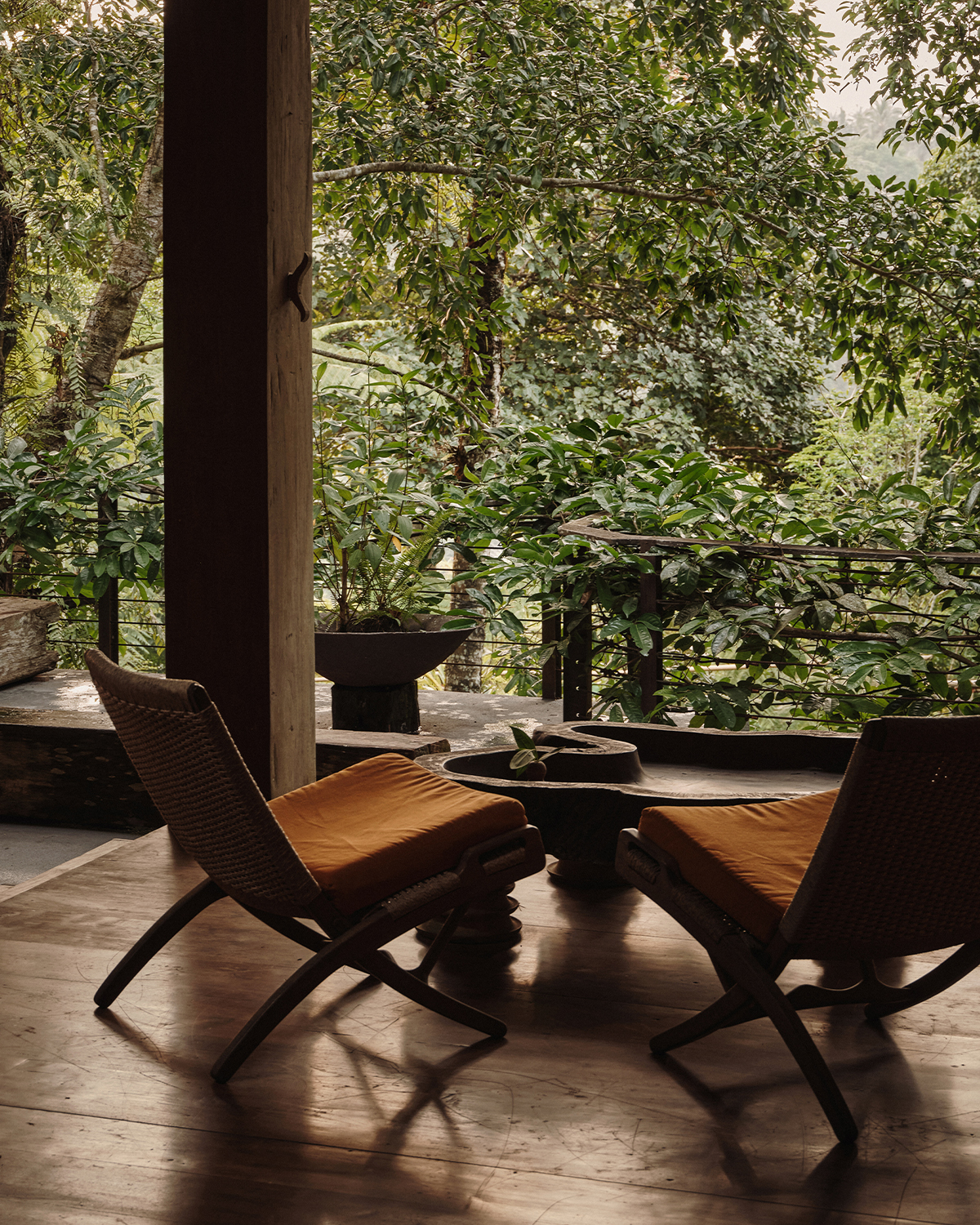
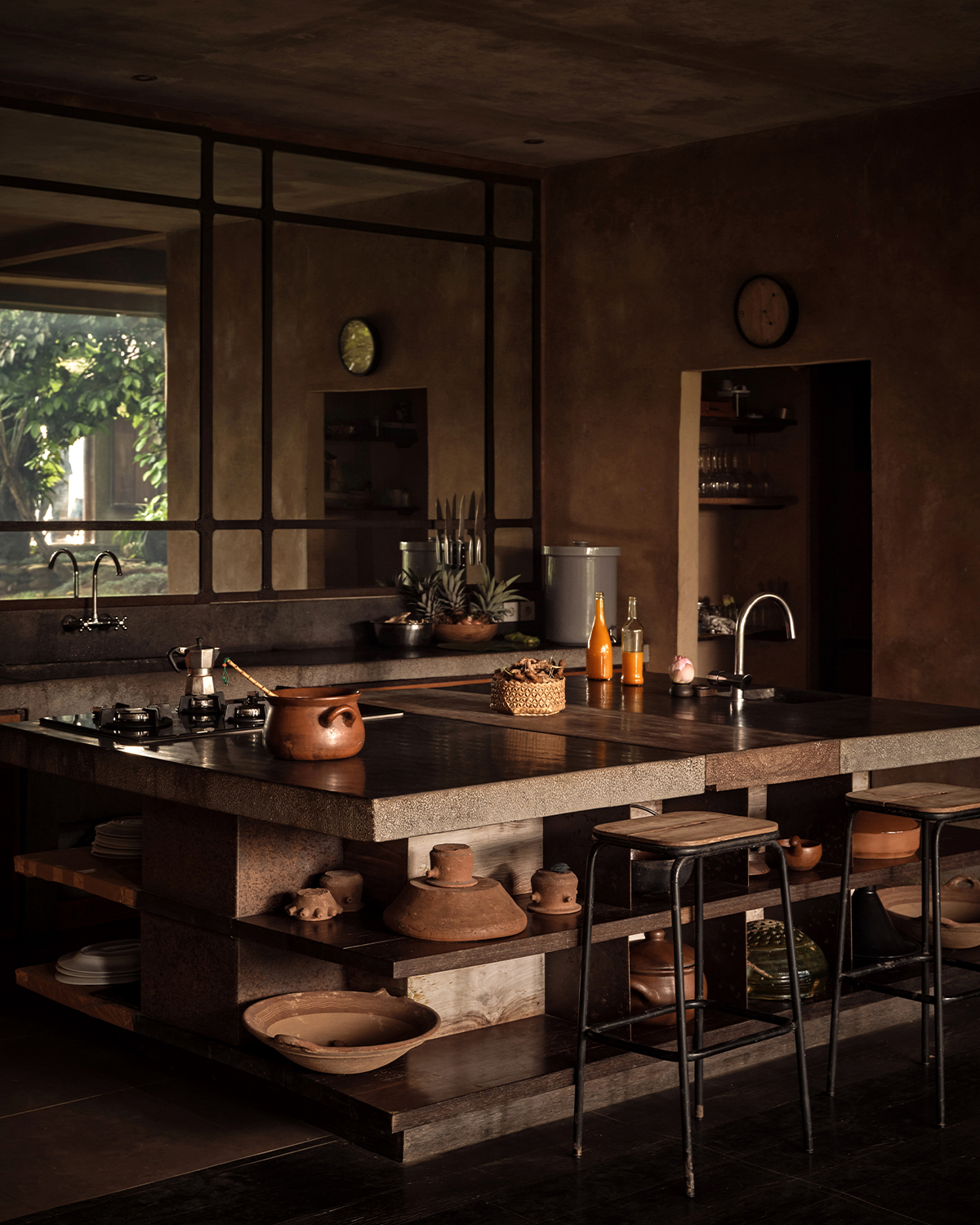
Practically: two bedrooms, both private, up to four guests. A spring-fed pool cut into the hillside beneath frangipani and coconut palms. A stone path goes down to the river. An open-air living pavilion, a kitchen set up for self-catering, and polished concrete and timber floors you walk on barefoot.
There is no air conditioning, and that is the design working rather than a corner cut. The house is built to ventilate itself. Hot water is solar-heated and takes a moment to arrive. Drinking water comes from the spring and is shared with the surrounding community, so restraint is expected over being requested. Organic waste is composted on site. The paths are steep and turn slippery after rain, the pool is unsupervised, and the plantation is a working one, so you stay on the tracks and leave the plants alone.
None of this is dressed up as an amenity list, and it would be a lie to call the place a resort. It is a house with rules, most of which come down to leaving the land as capable as you found it. The arithmetic, for anyone counting: land bought in 2003, planting started immediately, six years to raise the main house, and the studio added around nine years ago. The forest is older than either building, which is the correct order and the entire argument.
What the Land Is Actually Asking For
Seba has been blunt about the pressure Bali is under, and he is worth hearing precisely because he has been here long enough to watch it arrive. His diagnosis is not that too many people come. It is that too many arrive intending to reshape the place around their own requirements, and that the cumulative effect is an island losing the thing that drew them in the first place. He is equally clear that most visitors never leave the southern coast and so never see the version of Bali still doing what it has always done.
His counter-proposal is not preservation under glass. It is that you can build here, and build well, provided you learn the land before you touch it, employ the people already living on it, and accept that the timetable is not yours. Two decades of trees, six years of house, and a studio that waited until the shade was ready for it.
What Stays on Your Hands
The blue does not wash off for a few days. That is the souvenir, and it is a better one than anything sold along Jalan Raya, because it arrives with the memory of how slow the whole business was: the waiting, the airing, the dipping, the color showing up only when it was ready.
Kubu Sidem is not selling an escape. It is a house built to a plant’s schedule inside a forest that had to be created before the plant could survive, and it now lets a very small number of people in at a time. What lingers is not the timber or the view. It is the demonstration that something worth having can still be made inside a single lifetime, provided you are willing to spend most of that lifetime making it.
Address: Payangan, Bali
EXPLORE THE PUNCH
Celebrating Remarkable
Businesses with Impact