

THE PUNCH • STORIES
Equipoise Resort Ubud
The Water Below
Curated by The Punch Editors
Punch Commitments: 12/15
Category: Adults-Only Luxury Resort
Location: Kenderan, Tegallalang, Gianyar, Bali
Structure: 19 Private Pool Villas
Design Philosophy: Bamboo Architecture
Local Team: 100% local residents
Distance: 2 hours from Airport
In Kenderan, the holy spring was here first. Equipoise is a bet that a luxury resort can be built beside something sacred without taking it over.
Before anyone mentions a room, someone hands you water. You are greeted with Om Swastiastu, a gong is struck, and your feet are washed in a traditional cleansing ritual. Then comes a welcome elixir called Tirtha Amrita, a name that joins tirta, the Balinese word for holy water, with amrita, the nectar of immortality in Hindu myth. The paperwork happens somewhere out of sight. “Arrival is not administration,” says General Manager Pradeep Kumar Dhakal. “Arrival is transition.”
It sounds like hotel theatre. Then you walk down into the valley and find where the idea came from.
The Spring Came First
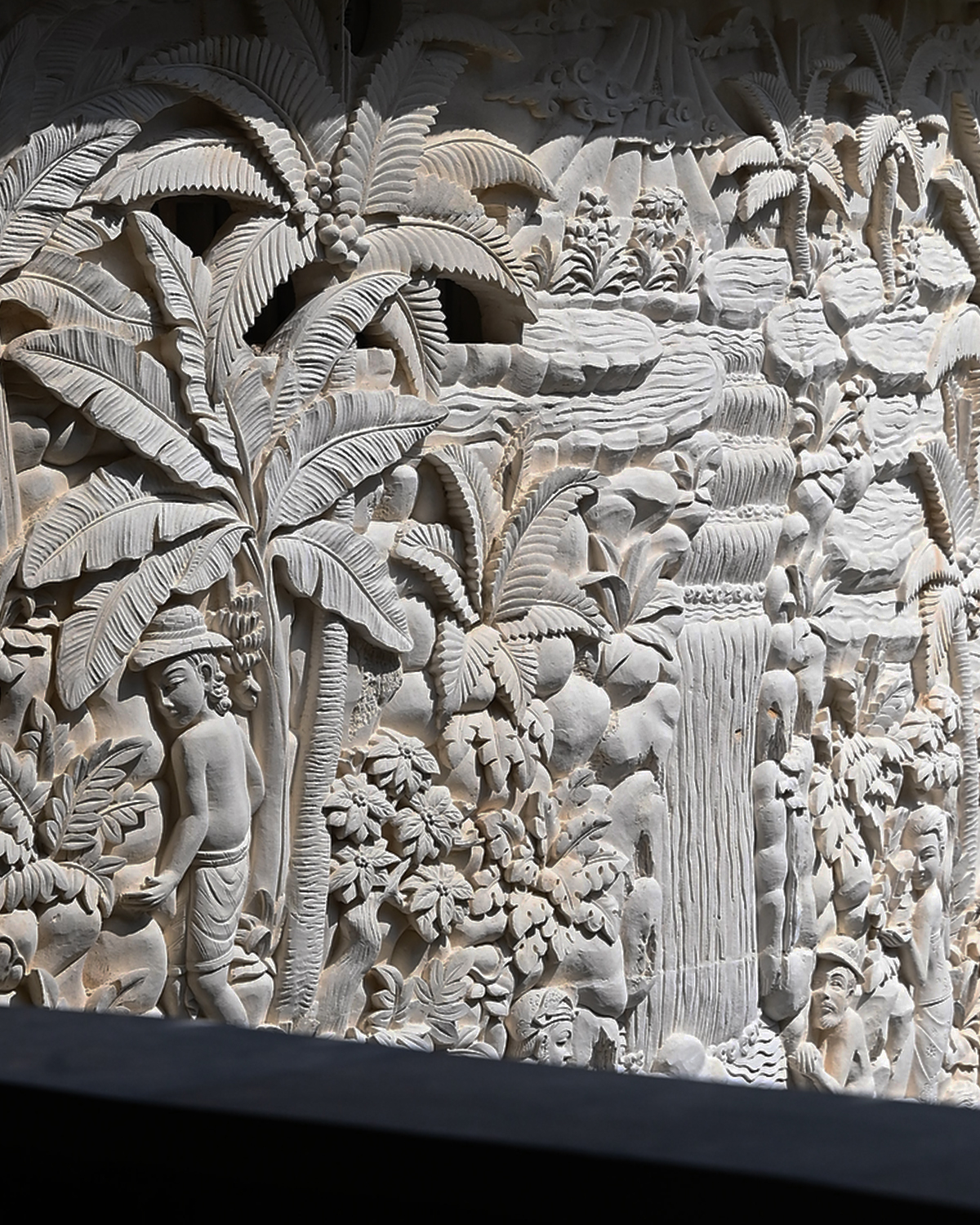
Manuaba Waterfall lies in the valley below the resort. It is said to be fed by seven springs, and its water is used for melukat, the Balinese purification rite in which holy water is poured over the head and hands. Beside it stands Pura Griya Sakti Manuaba, a temple founded in the 17th century by Pedanda Manuaba, grandson of Dang Hyang Nirartha, the high priest who arrived in Bali from Java around 1550 and reshaped Balinese Hinduism. The village keeps a story about this water. Local legend holds that the tirta once rid Kenderan of gering, an epidemic that swept through generations ago. It would be easy to treat the waterfall as a view. Equipoise's better instinct is to treat it as the reason the place exists.

Reading the Land
Equipoise did not open with a party. On 11 February 2026, it welcomed a small group of media and cultural observers to a two-day gathering called The Preamble, Chapter I: Reading the Land. In place of a grand launch there was a blessing at dusk, a rice-field walk at dawn and a trek down to Manuaba. It was a fitting start for a resort whose design philosophy carries the same name: the buildings follow the ground, not the other way around.
The resort is managed by Ini Vie Hospitality. Dhakal arrived with more than 21 years in luxury hospitality across 14 countries, from island resorts in the Maldives to Alila and Hanging Gardens of Bali, with much of that time spent on pre-openings. “Pre-opening gives you a rare responsibility,” he says. “You are not inheriting an identity. You are helping create one.”
His starting point is unsentimental. A beautiful property, in his view, only creates an impression; what guests carry home is a feeling. So his team asked a question most luxury hotels avoid: “What can we remove so the guest can feel more?” The answer became four ideas. Escape is leaving the noise behind. Exhale is releasing what you no longer need to carry. Equipoise is the return to balance. Exclusivity is hospitality that feels personal. “These are not four marketing words,” Dhakal insists. They are meant as stages of a journey.
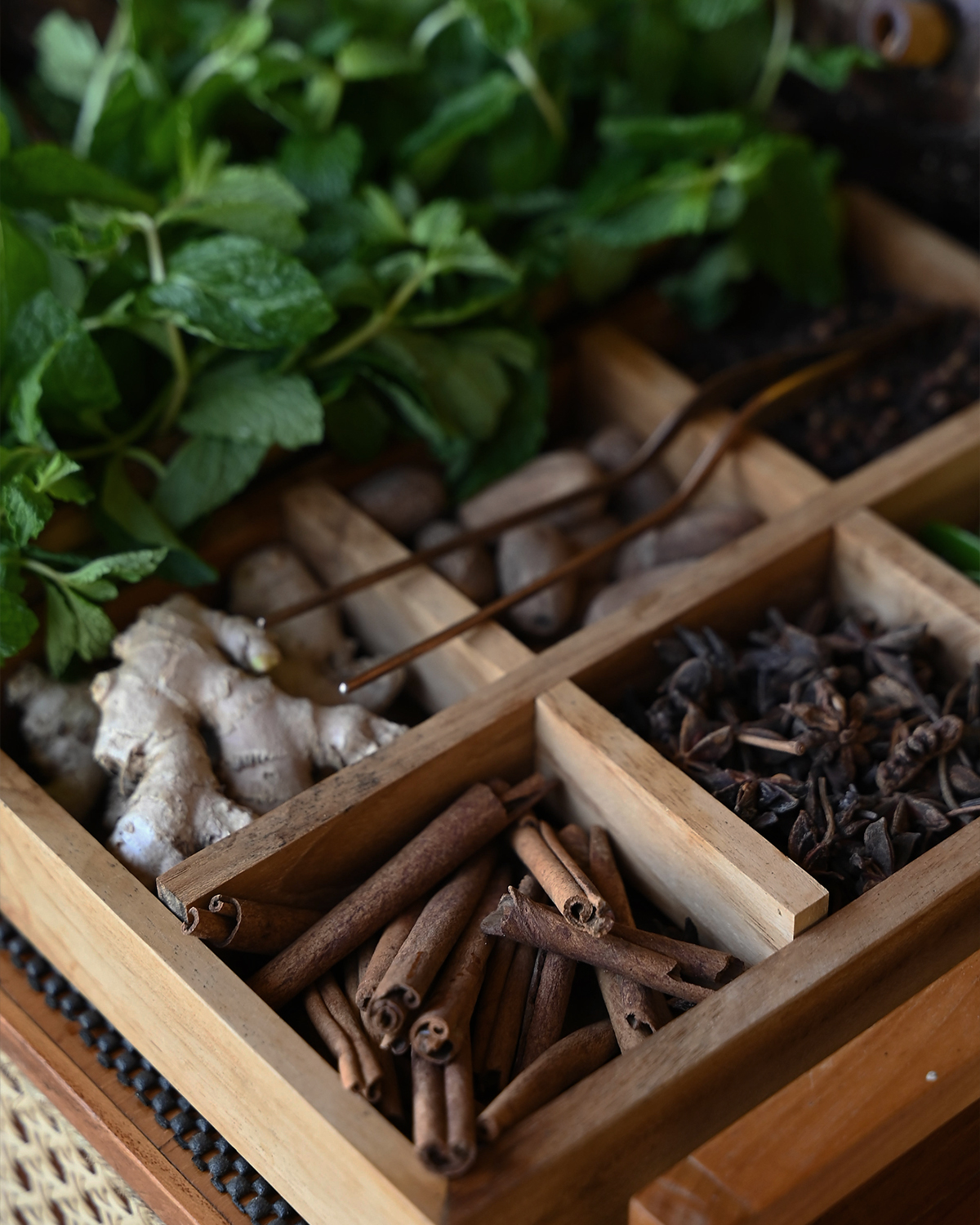
The clearest small example comes with the welcome drink. Guests are invited to smell seven fragrance profiles, the Seven Wonders of Fragrance, from the herbal brightness of Awaken to the warmth of Ember and the calm of Whisper, and choose the one that matches how they want to feel. Their choice follows them into the villa. “We are not saying, ‘This is our signature scent. Everyone receives it,’” Dhakal says. “We are saying, ‘How would you like your sanctuary to feel?’”
The Field Is Somebody's Office
The terraces that fill every Equipoise window are watered through subak, the cooperative irrigation system that has governed Balinese rice for more than a thousand years. Since 2012 it has been UNESCO World Heritage, listed as a living expression of Tri Hita Karana, the principle of harmony between people, nature and the divine.
Dhakal is firm about what that means for guests. “The rice field is not a theme park,” he says. “It is somebody's livelihood.” Walks through the paddies come with local guidance and, depending on the season, the chance to join the harvest, known as manyi, follow ducks herded through the fields in the old practice of ngangon bebek, or witness the blessing of the cattle that work the land.
There is also a deliberately modest hour the resort calls Being Balinese. No checklist, no ten things to see, just time spent at the pace of the village. The point, Dhakal says, is not to collect photographs. It is a feeling of belonging, even if only for an hour.
A Building That Takes Its Cue From the Field
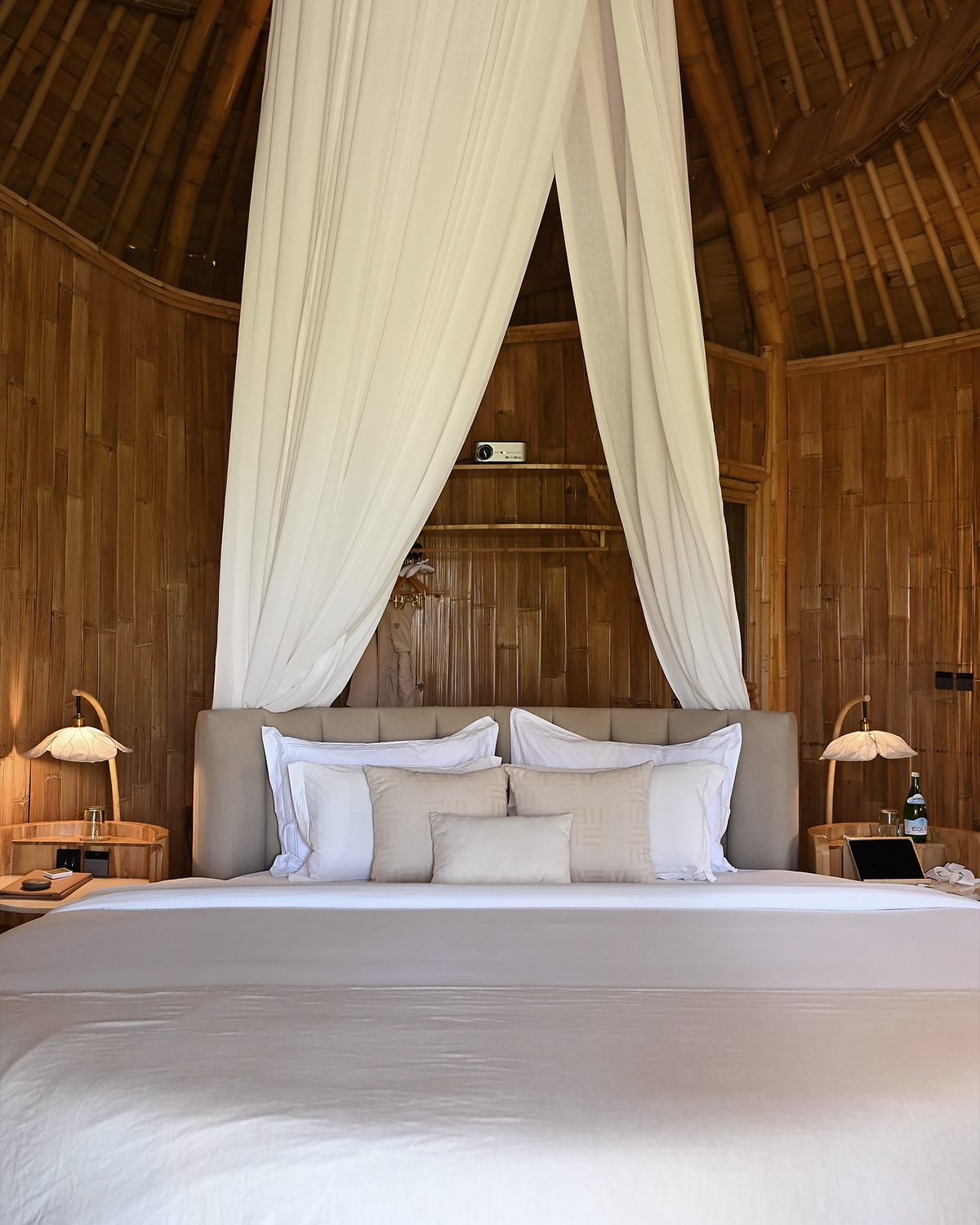
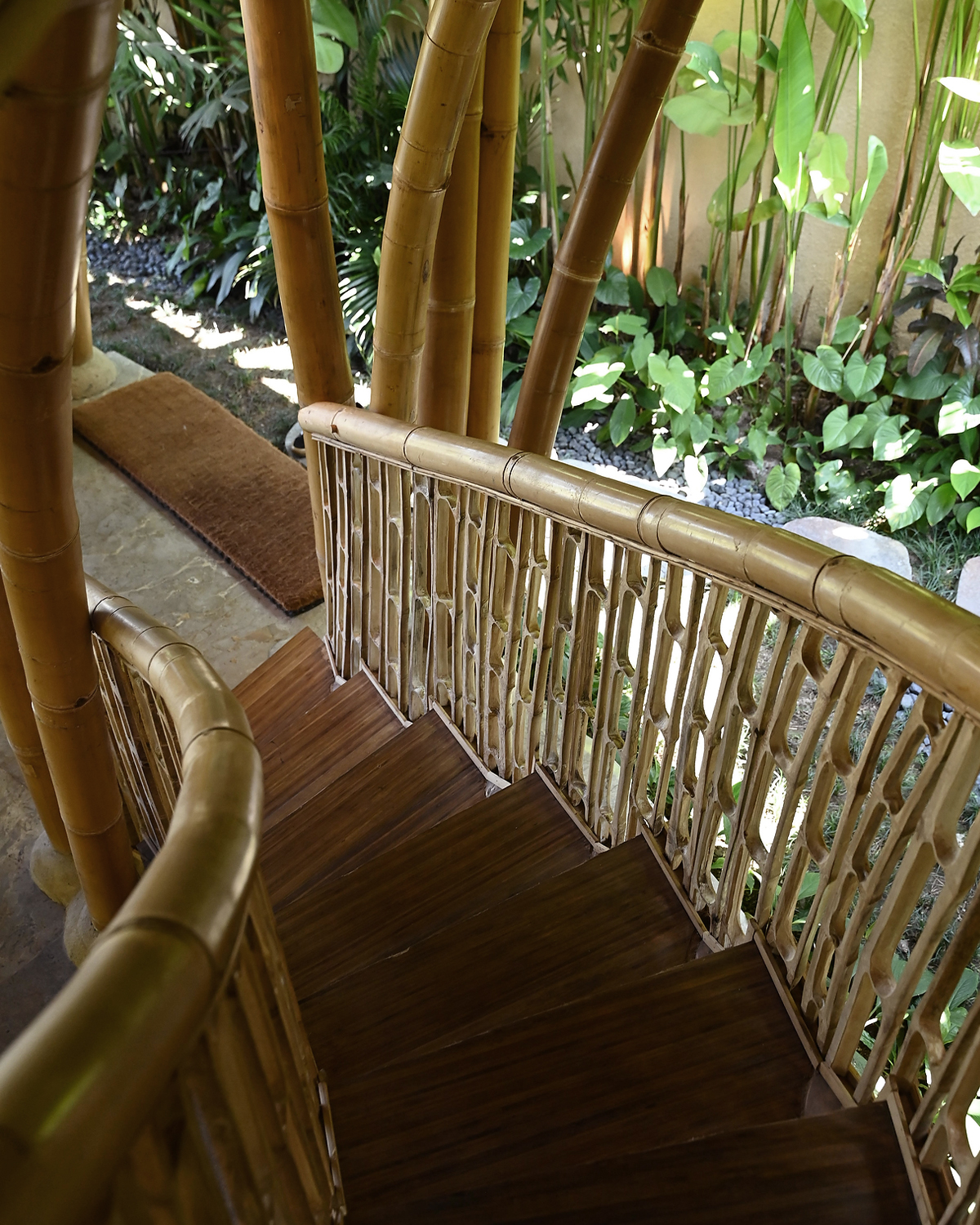
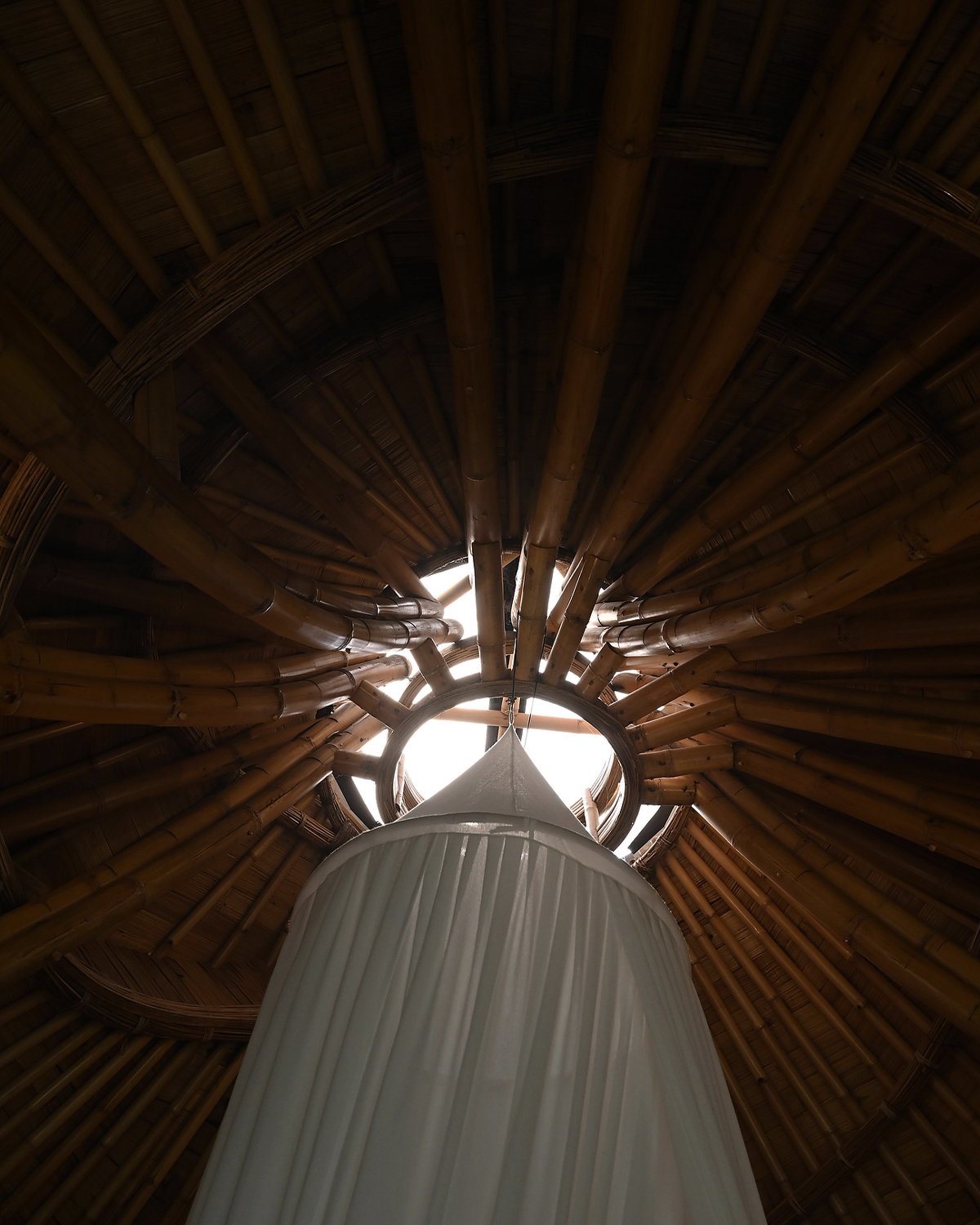
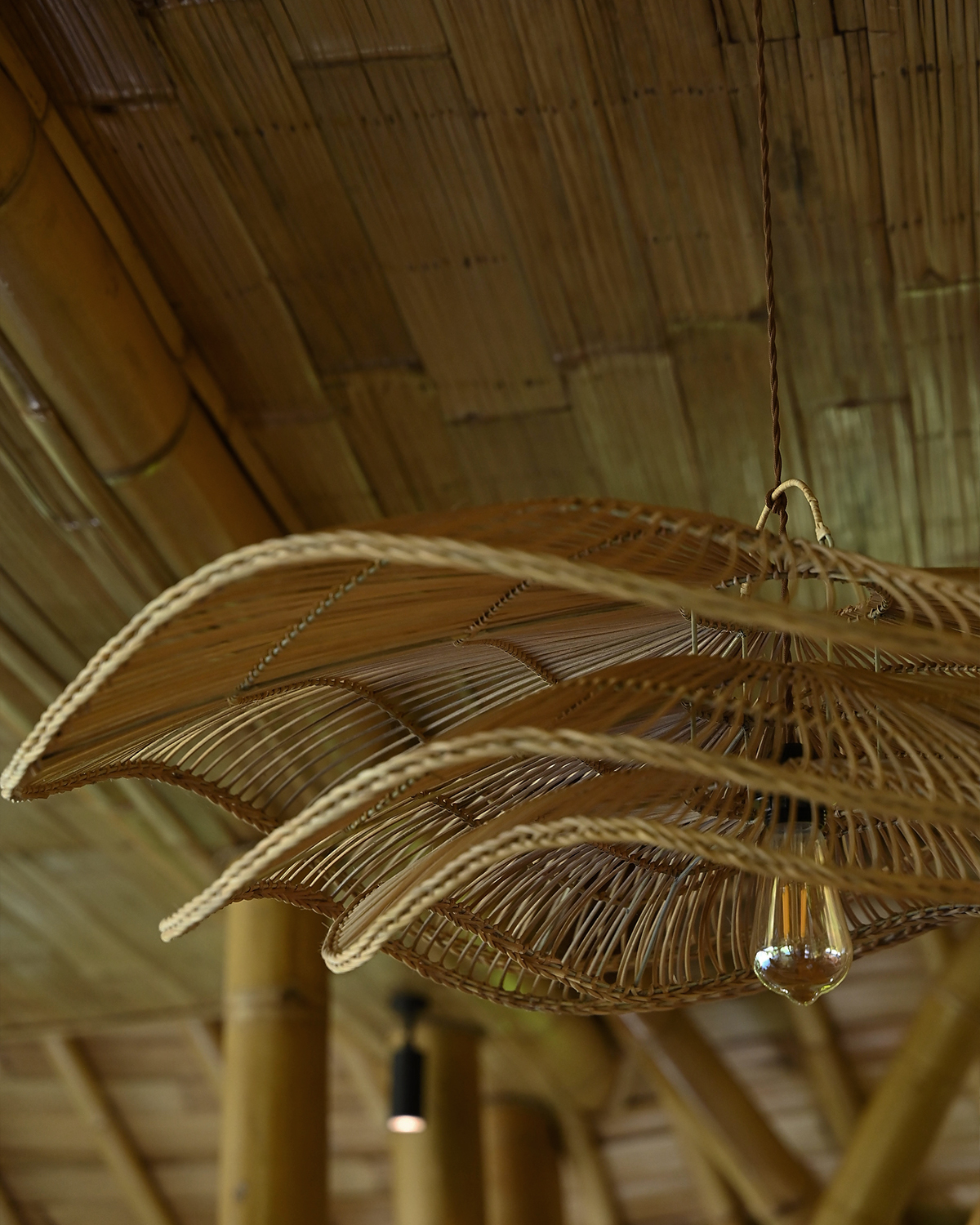
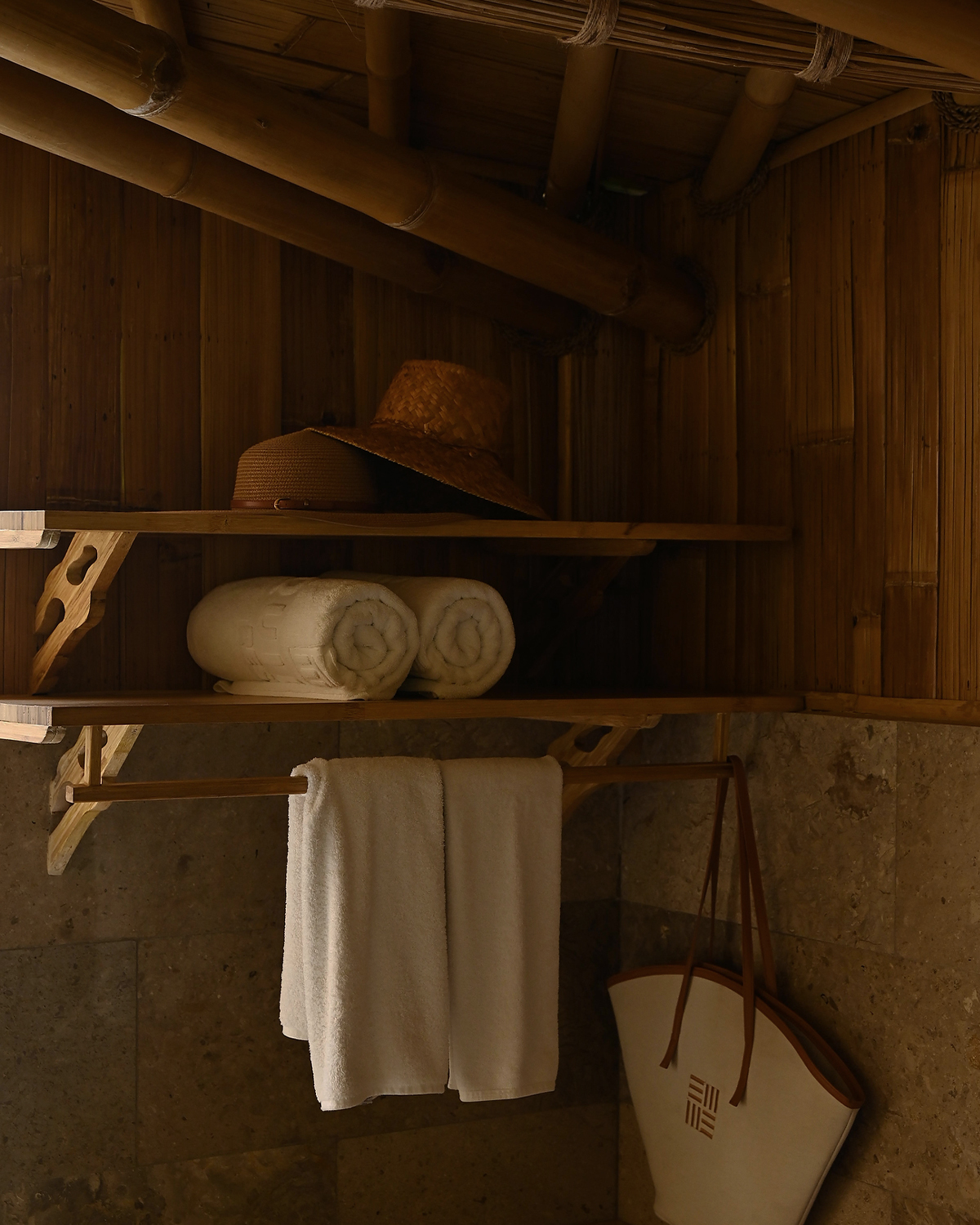
Lumbung Architect built the resort in bamboo and stone, following the contour of the ridge rather than flattening it. The plan coils like a snail, and the reference comes from the paddy. In Kenderan's fields the snail is both pest and blessing: too many and the crop is ruined, the right number and they belong to its fertility. It is Rwa Bhineda, the Balinese understanding that the world runs on opposites held in balance, and the same balance a resort has to strike with the land around it.
“The landscape is not the backdrop to Equipoise,” Dhakal says. “The landscape is part of the architecture.” The rice fields, the changing light, the sound of water, the farmers at work: none of it can be manufactured, and the buildings are arranged to let it in.
Scale is part of that balance. There are 19 villas, each with a private pool, as well as a seven-tier infinity pool. The number is small enough that the village is still the larger presence on the ridge, and small enough to protect what Dhakal calls one of the greatest luxuries left: privacy. “The highest level of service,” he says, “is sometimes knowing when not to serve.”
Taking the Water Seriously
The resort's most considered offerings lead back down to the valley. Couples can walk to the falls while the morning is still quiet and have breakfast served privately beside the water. “The waterfall becomes the restaurant,” Dhakal says. “We are not adding another facility. We are using what Bali has already given us.”There are guided cleansing rituals and meditation by the falls, and a trek for guests who want to hear the water before they see it. The resort is also developing a seven-stage blessing at the falls built around the chakras. The plainer, older rites are the ones to book; the water needs no added symbolism.
It is a privilege as much as a product. The falls belong to a living temple and to a village that has bathed there for generations, and the right way to come is as a visitor on the village's terms.
The spa follows the same logic. Hammana opens with a Wariga Birth Reading, drawing on the traditional Balinese calendrical system a village uses to choose its days for ceremony and planting. Your birth details shape the treatment, the oils, the aromas, the ritual sequence and the pace, before the steam and scrub of the hammam that gives the spa its name. “Hammana is wellness that begins with understanding who you are,” Dhakal says. Whether you take the calendar literally is your business. What you get is a treatment built from a conversation rather than a menu.

Made by Hand
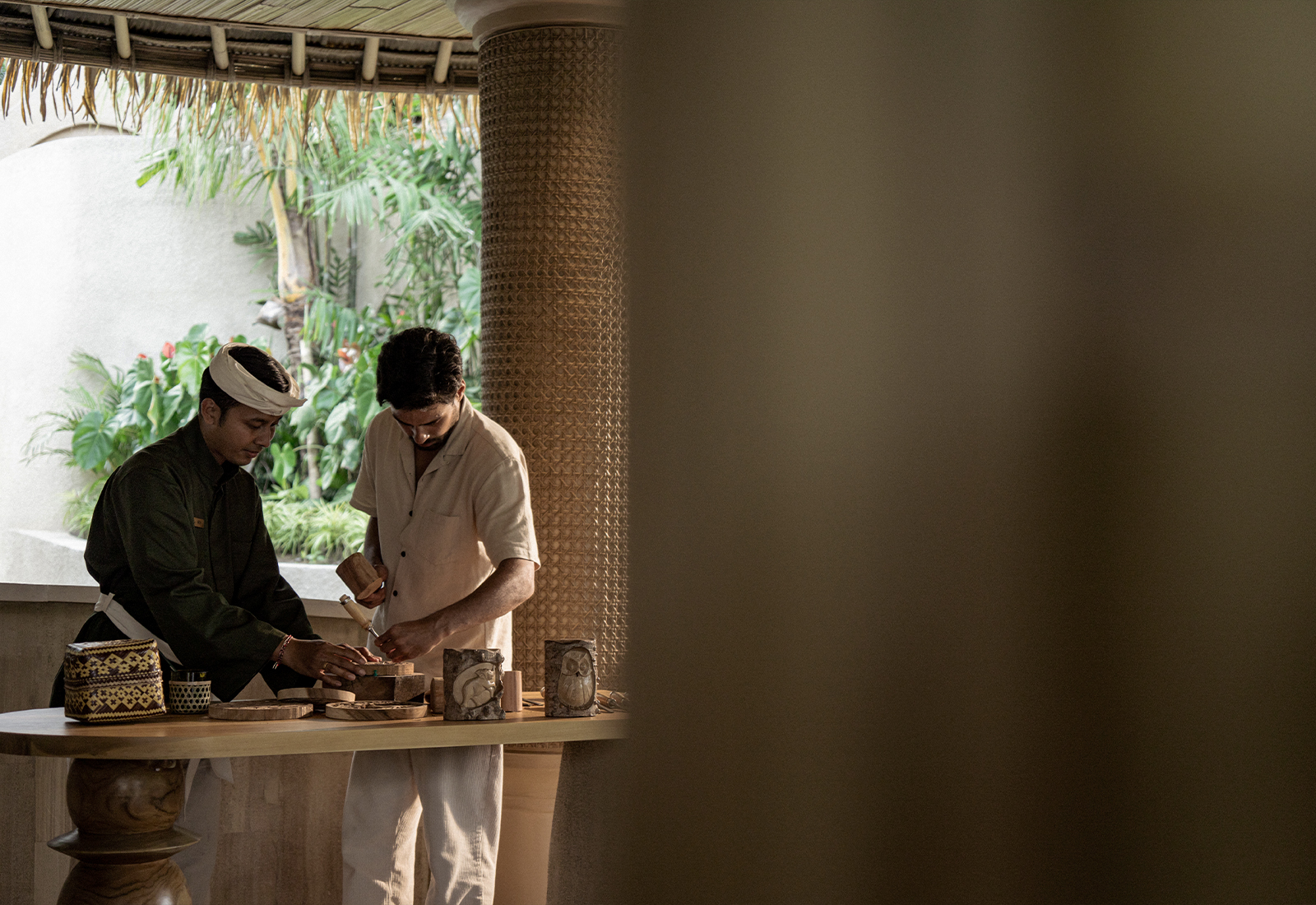
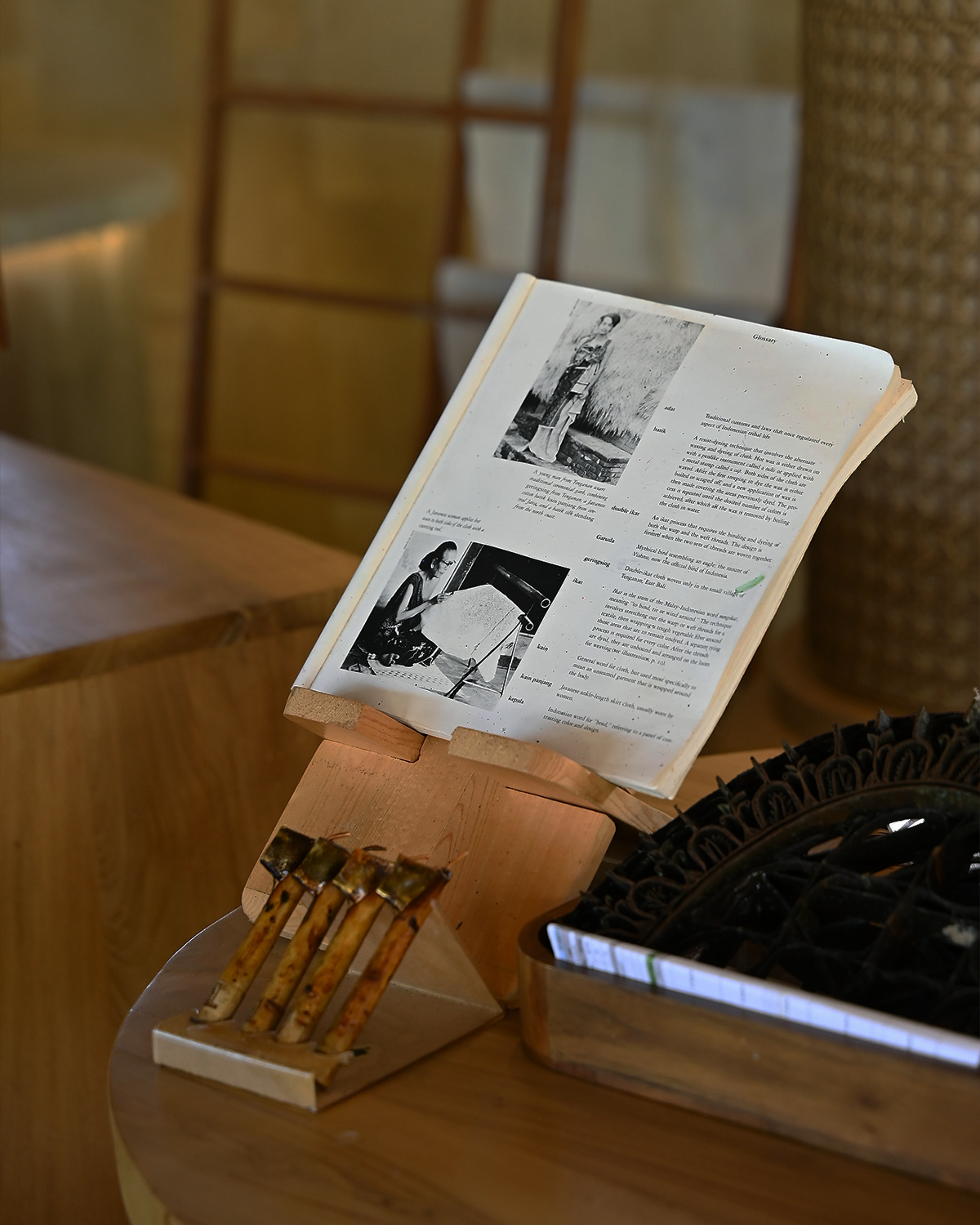
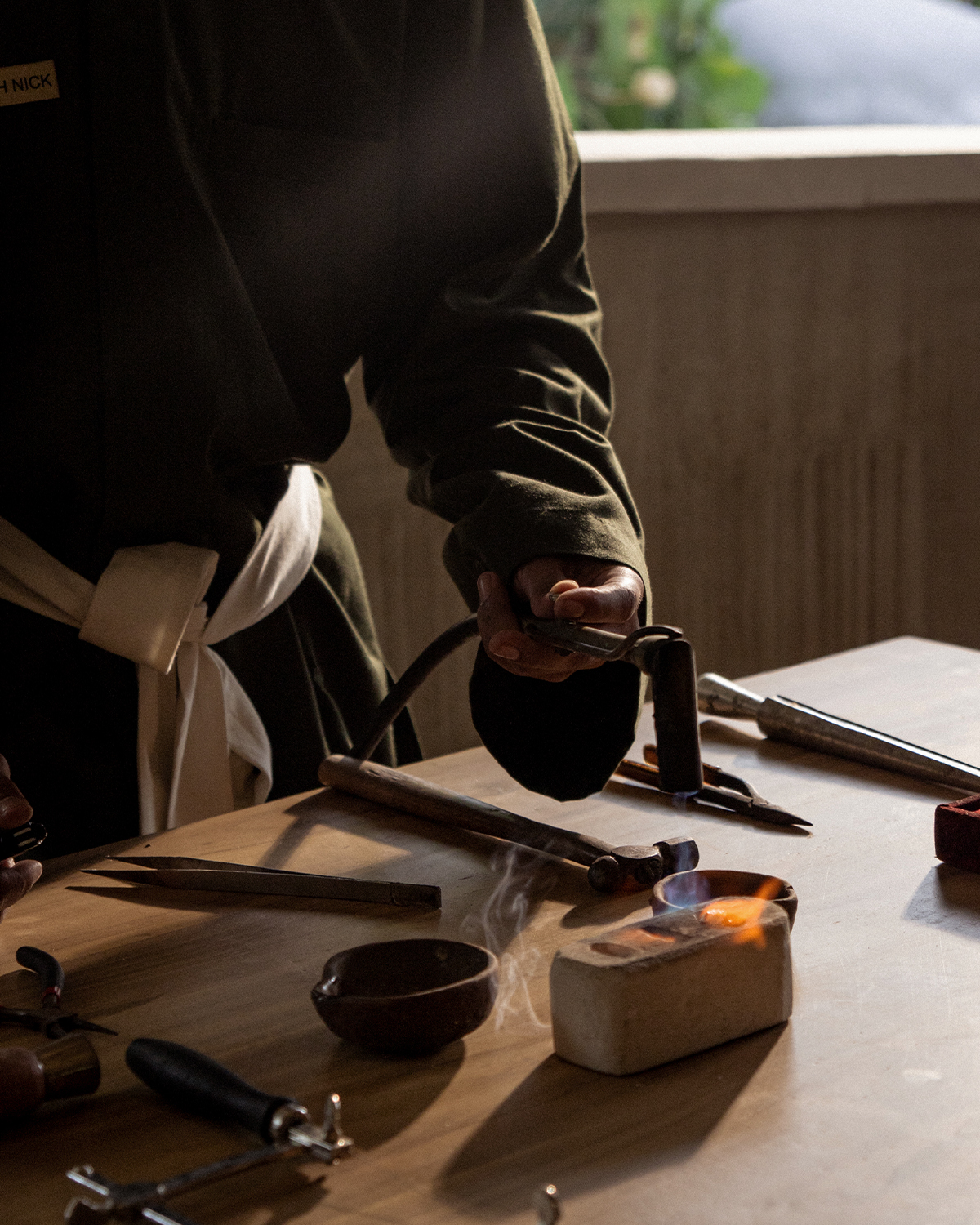
Afternoons belong to local artisans. Guests can learn batik with hot wax and dye, try pottery, or take up woodcarving, a craft with long roots in Kenderan and Manuaba. In the silver workshop for two, couples sit opposite each other with a Balinese silversmith and each makes a piece for the other, exchanging them at the end. It is sentimental, and it works. A bought souvenir is a receipt; a lopsided pot shaped on a hillside in Bali is a memory with some weight to it. “We want guests to meet the people behind the culture,” Dhakal says. “Not simply photograph the culture.”
The Promise in Writing
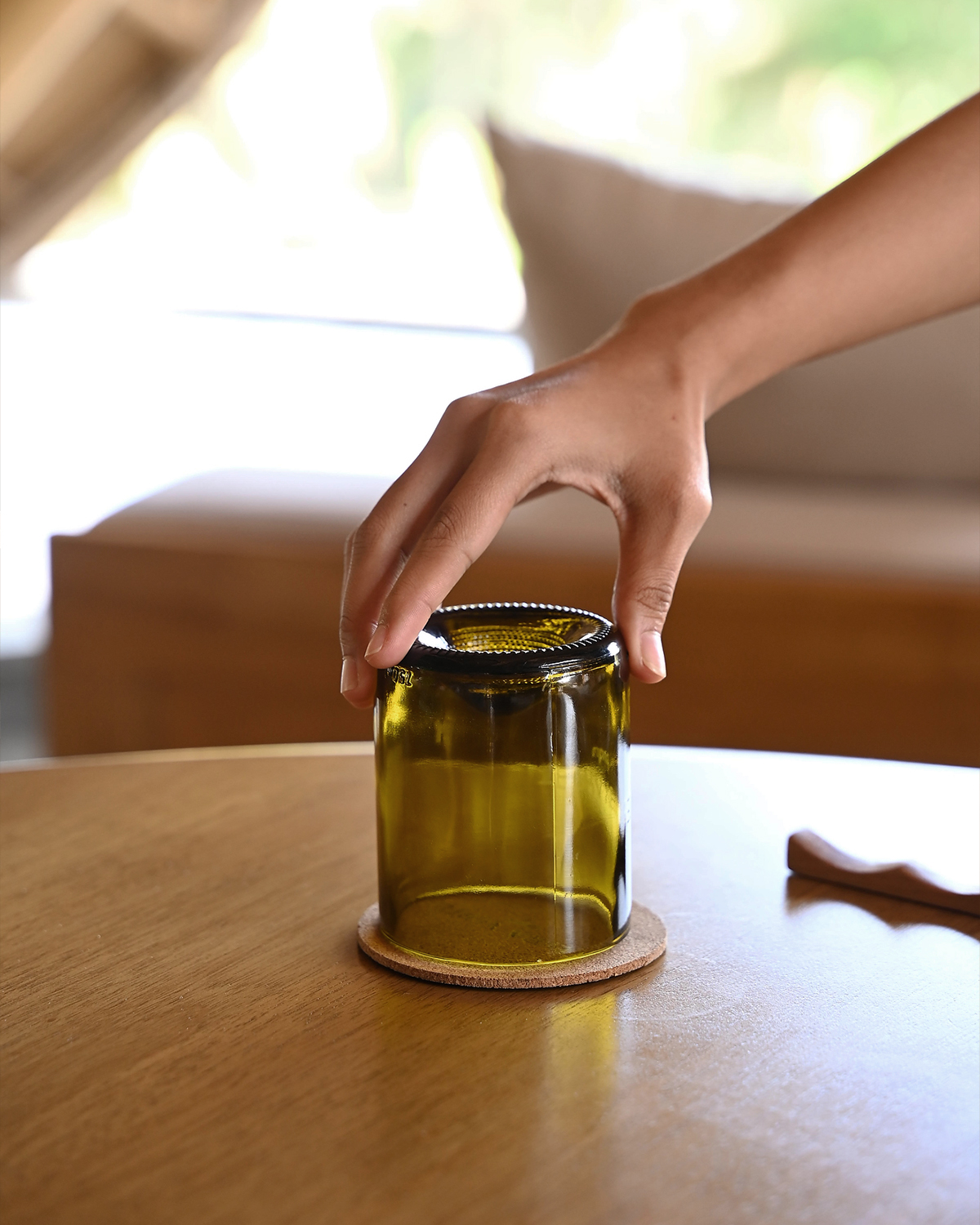
“For us, sustainability cannot be a department,” Dhakal says. “It has to be a culture.” Among Equipoise's published commitments is protection of the Manuaba watershed, alongside bamboo and recycled materials, water and energy efficiency, waste reduction, local sourcing and employment, and a tree planted for every guest, tracked by QR code. His test is a simple one: if sustainability only appears on a website, it is marketing; if it shapes decisions every day, it becomes philosophy. The watershed pledge is the one that matters most here. The resort is only months old, and it is fair to judge these promises on what they look like in a couple of years. The Punch will come back to see.
What Stays
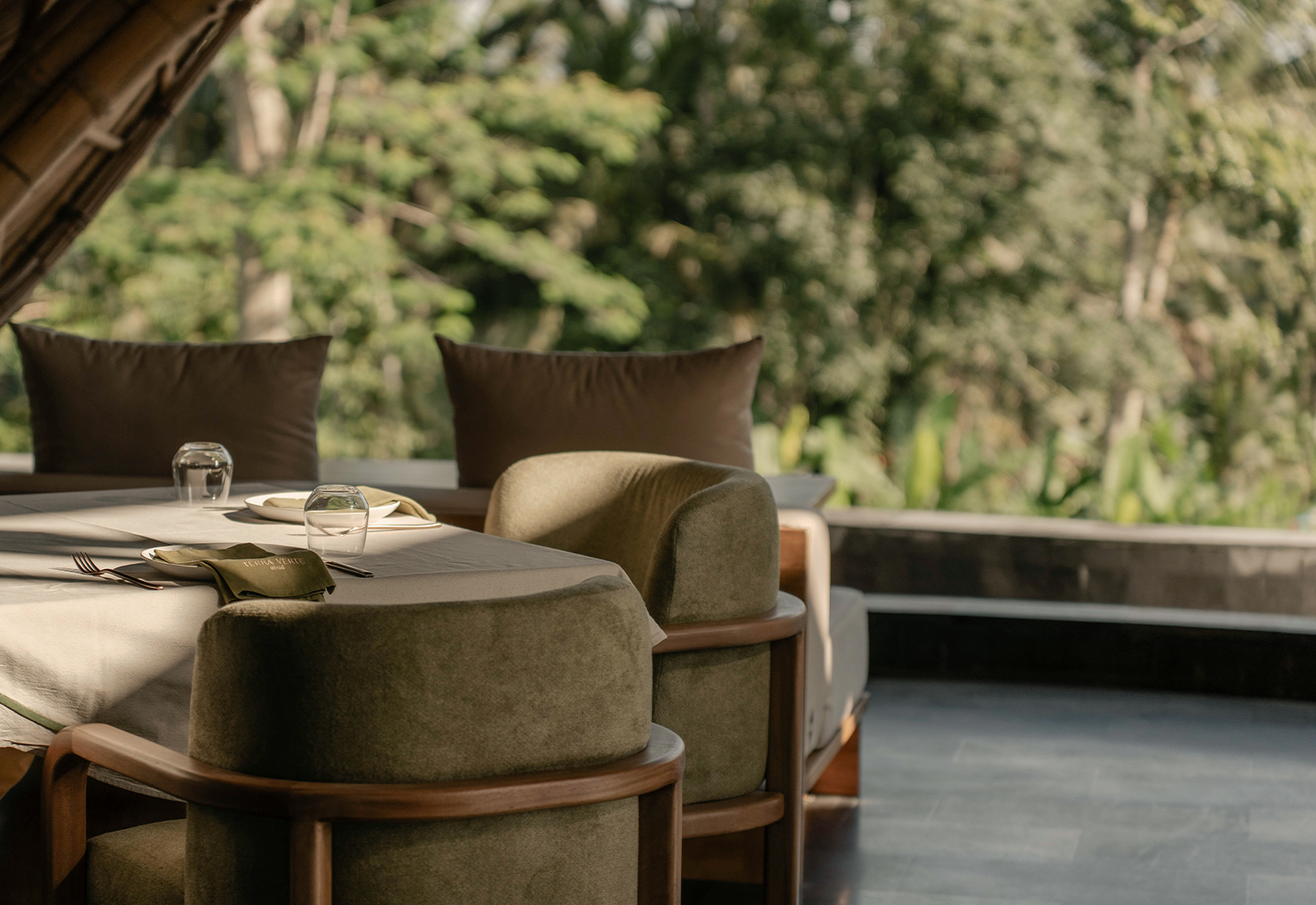
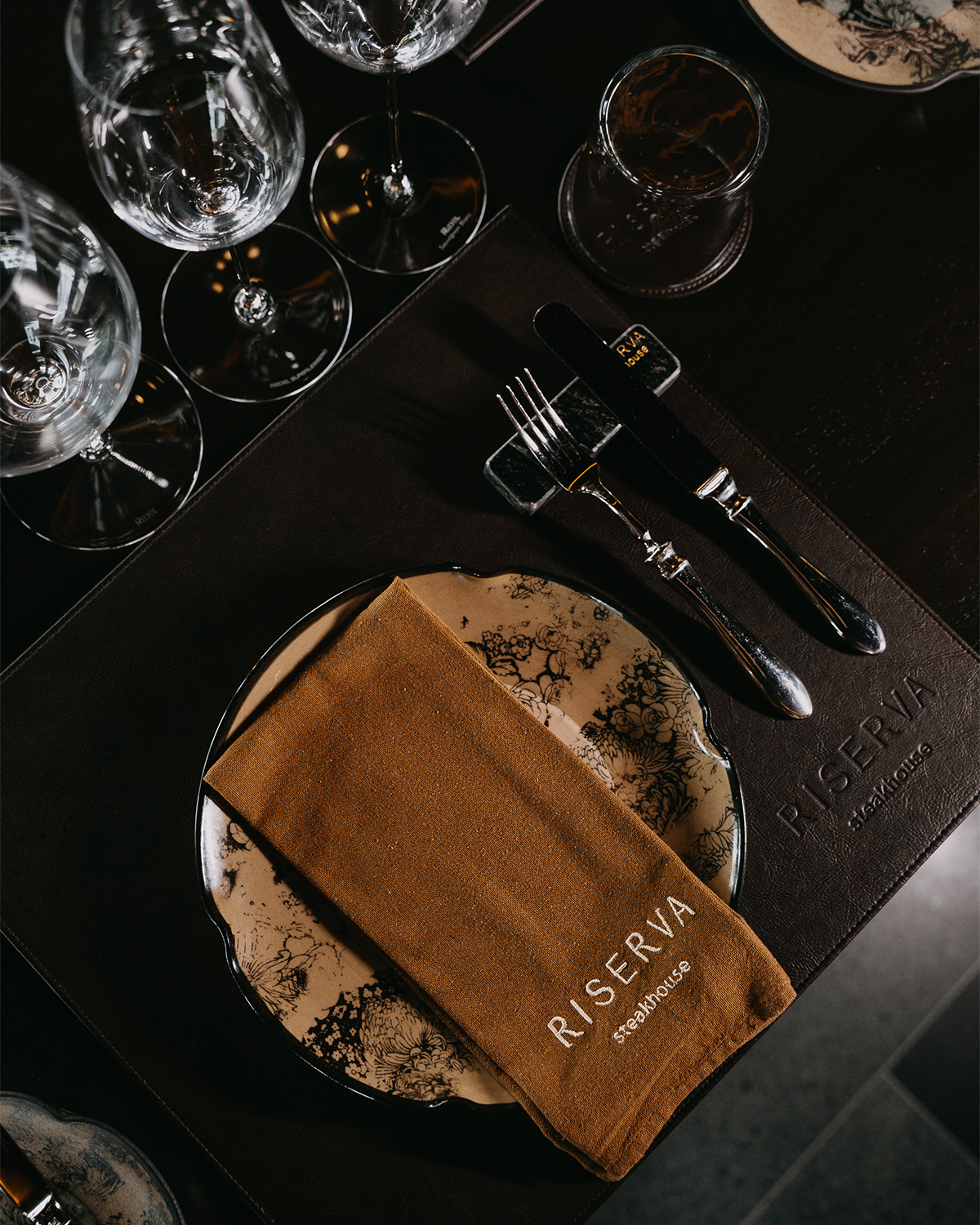
At sandikala, the Balinese name for the charged hour between day and night, the terraces turn gold and Aura Bar & Lounge fills with Balinese music and performance. Dinner can be Italian-Mediterranean cooking at Terra Verte, a bamboo pavilion wrapped in rice fields, or Riserva, a fire-and-smoke steakhouse of seven tables and no more than 16 guests, paced like a ceremony from the choosing of your knife to the salt and the wine.
A stay here can hold all of it, or none of it. You can lie by your pool with a book and ignore the lot. “Equipoise is not a place where you come to escape your life,” Dhakal says. “It is a place where you come to reconnect with it.”
On this ridge, what was there first is the water. It was holy long before the villas, and it will be running long after the opening season. The best thing Equipoise can do is behave like a guest above something older than itself. It seems to understand that.
EXPLORE THE PUNCH
Celebrating Remarkable
Businesses with Impact