

FEATURES • DESTINATIONS
Sebatu Sanctuary:
Living in Rhythm with
Nature
Words & Photography by The Punch
Tucked within the lush highlands of central Bali, Sebatu Sanctuary stands as more than an eco-resort. It’s a living experiment in harmony. Founded by Alexander Stanley, a tropical forester with three decades of experience managing rainforests across Indonesia, Vietnam, Papua, and the Solomon Islands, the sanctuary shares the wisdom of a man who has spent his life listening to the land.
Before hospitality, Alexander’s world revolved around protecting ecosystems and studying the delicate balance that allows forests to thrive. When he and his wife, Evie, began creating Sebatu Sanctuary nine years ago, they didn’t set out to build another boutique destination. They set out to prove that sustainability could be both scientific and soulful, and that design could exist in quiet partnership with the earth rather than in conquest of it.
Their philosophy is simple: lower the impact, elevate the experience. Every system, every structure, and every sensory detail at Sebatu comes from this commitment to live lightly and to create beauty that gives more than it takes.
Designing with the Land
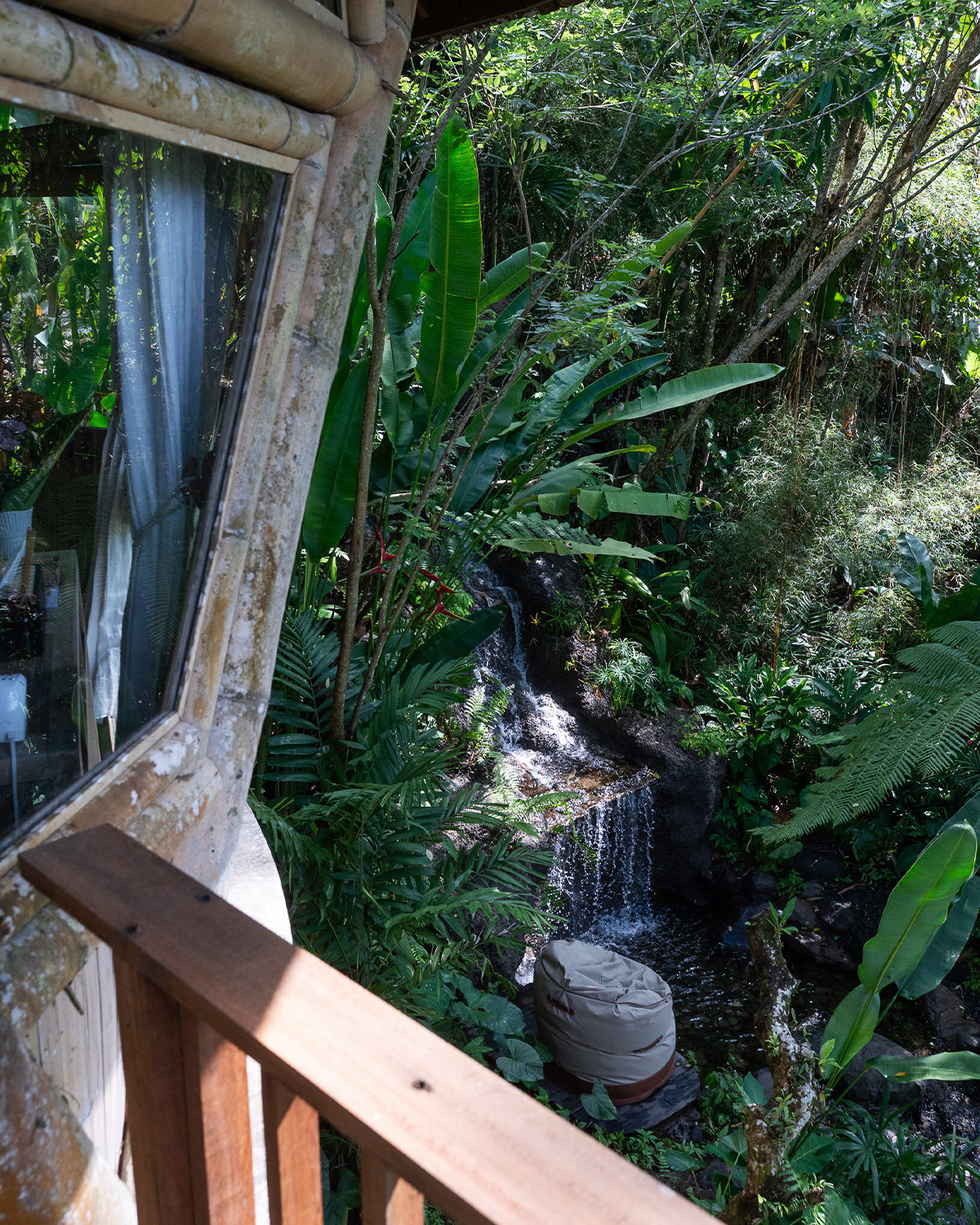
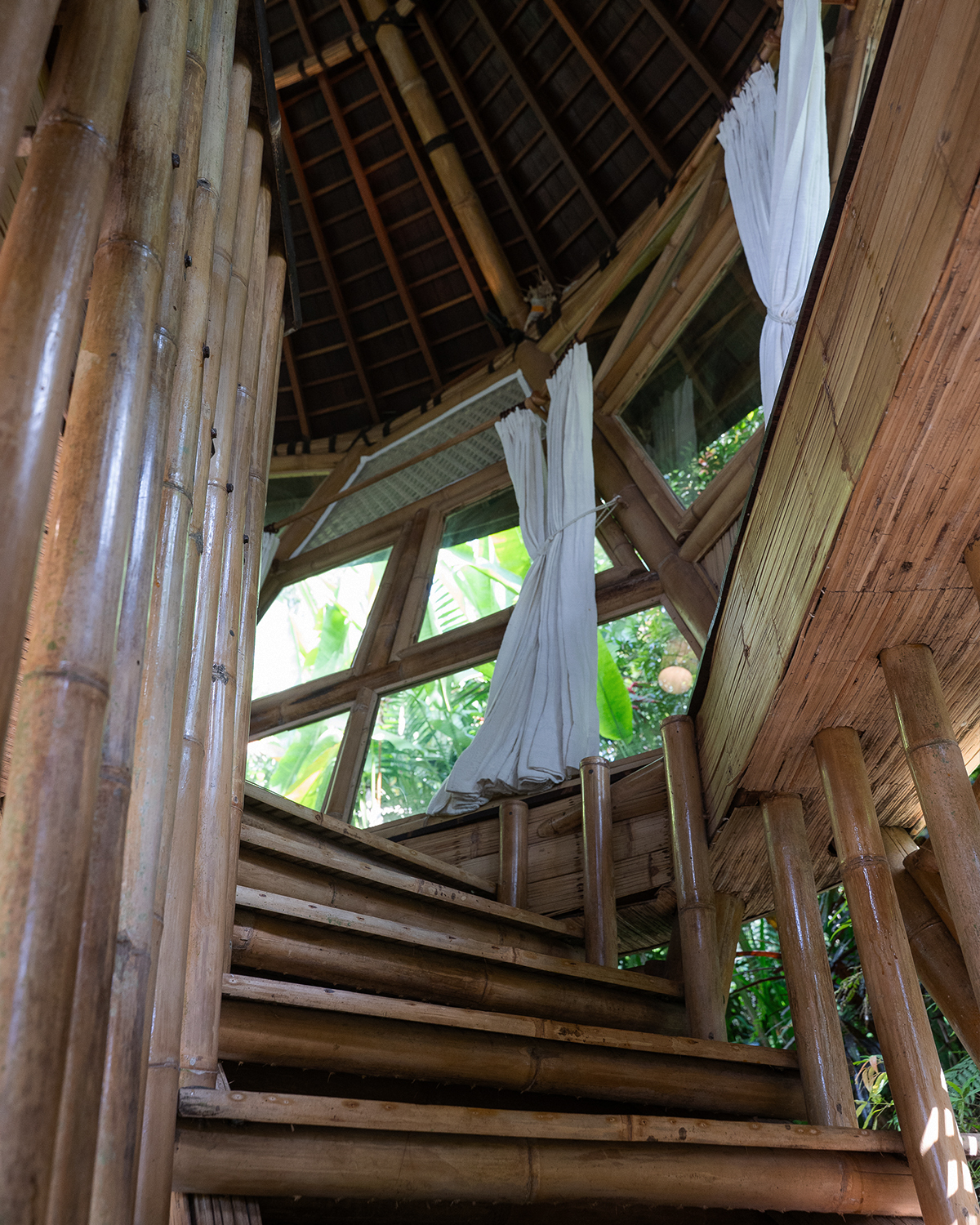
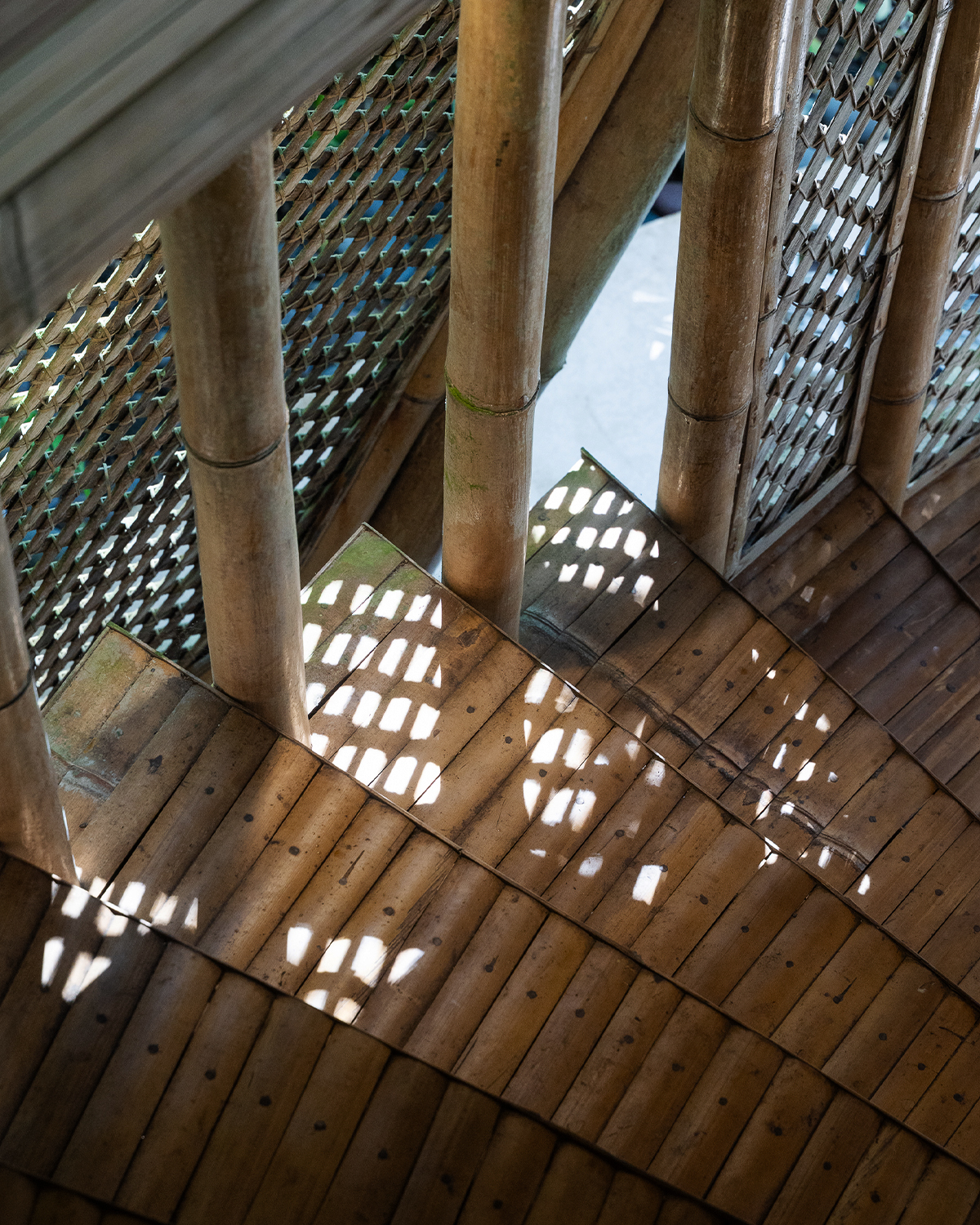
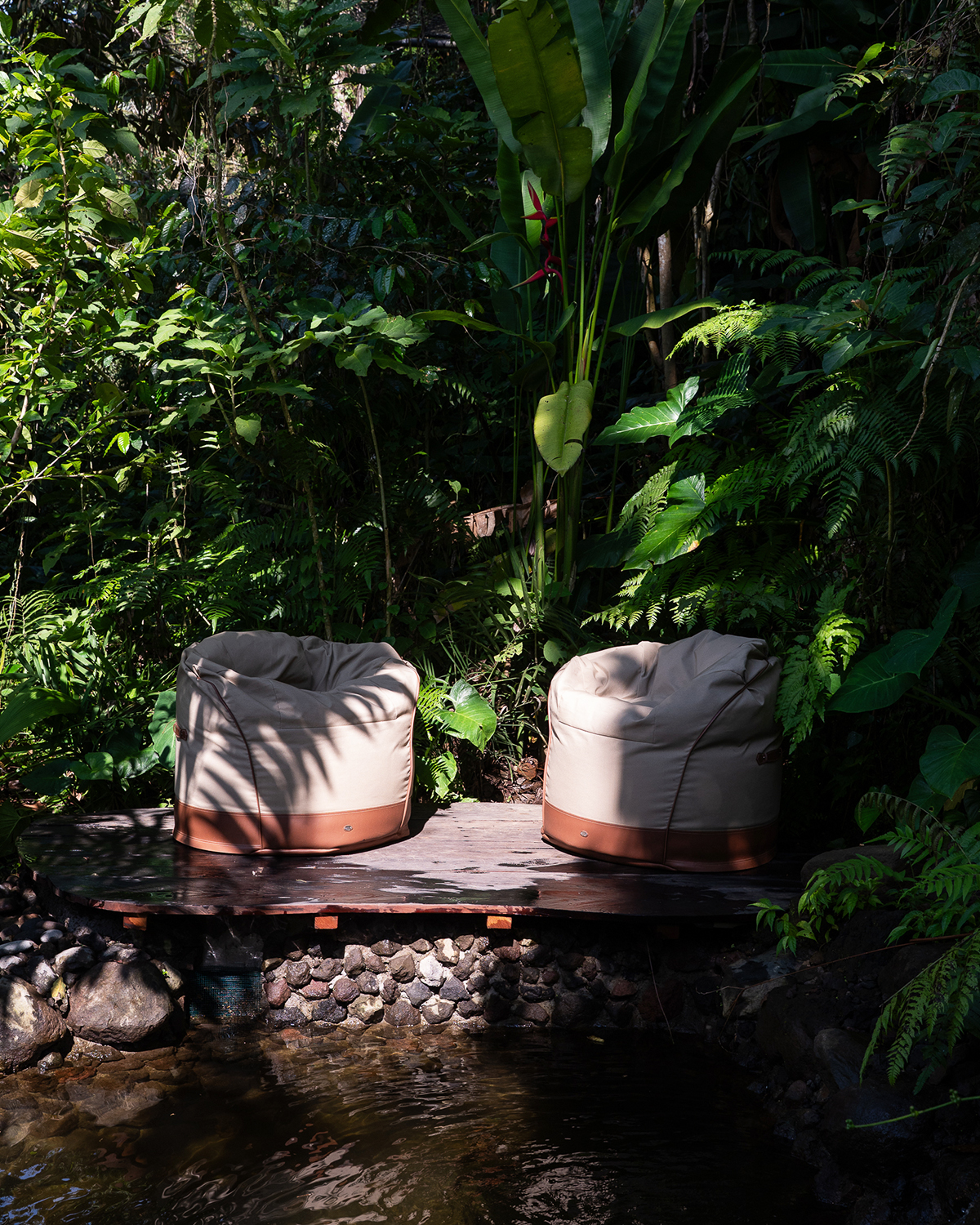
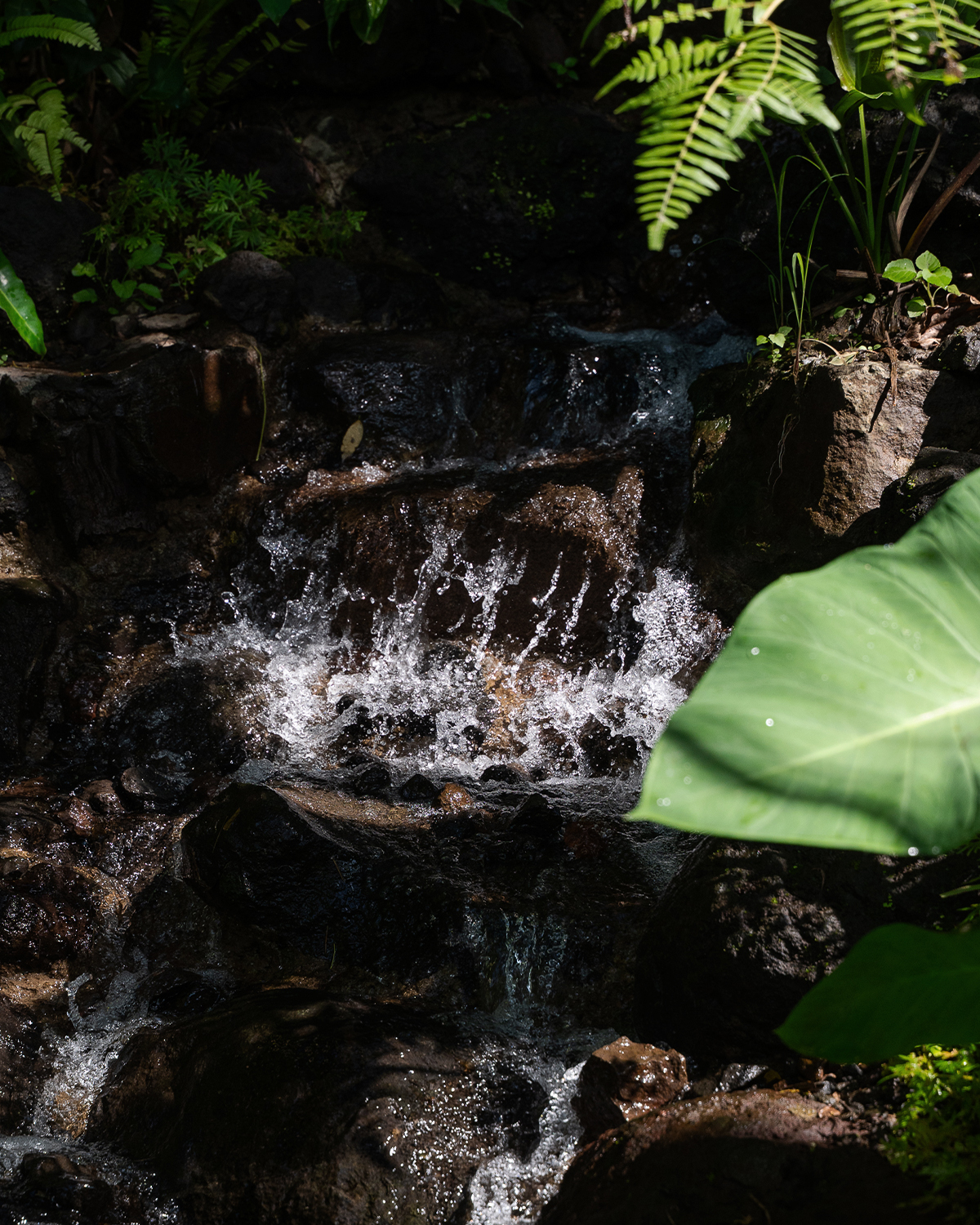
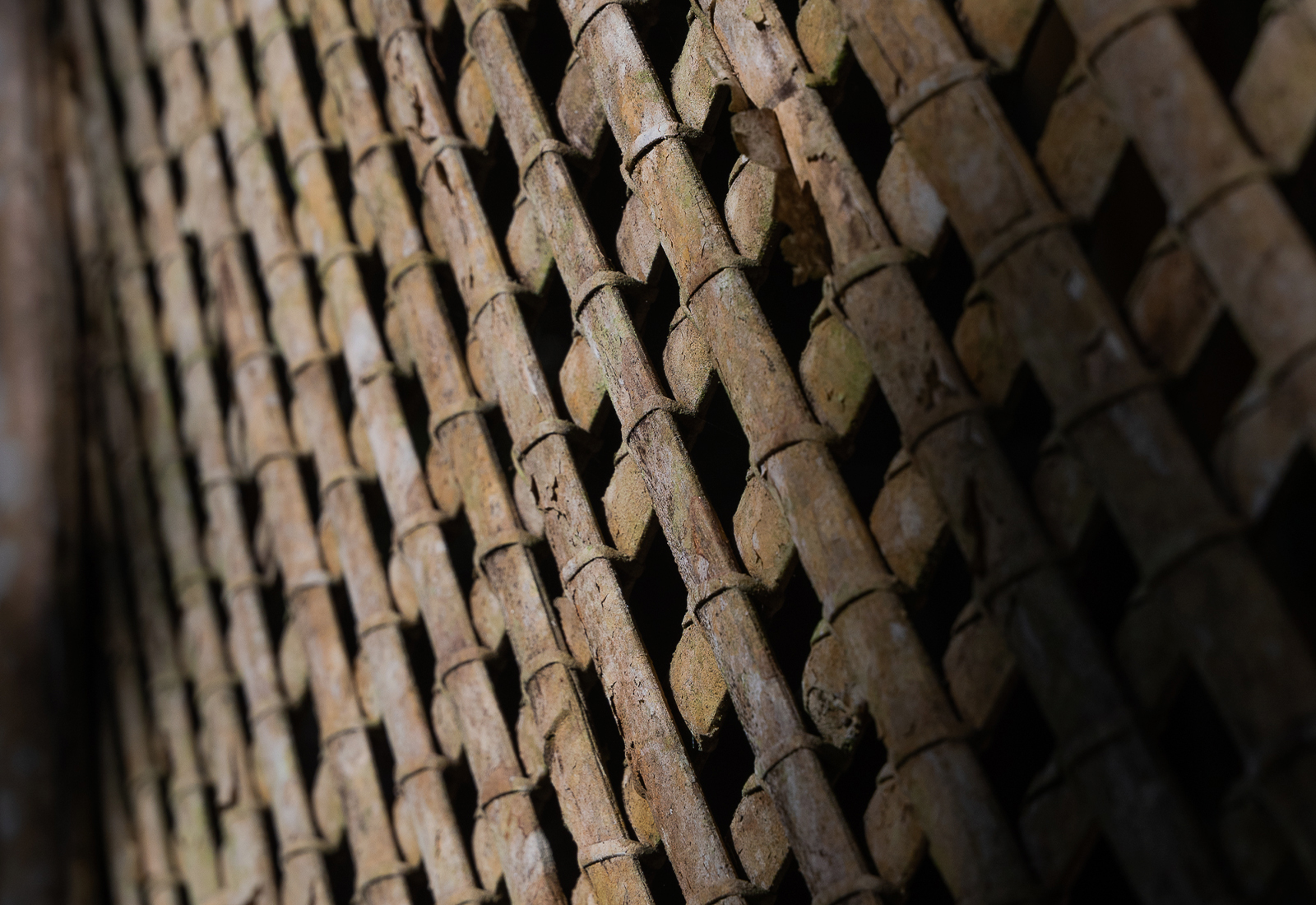
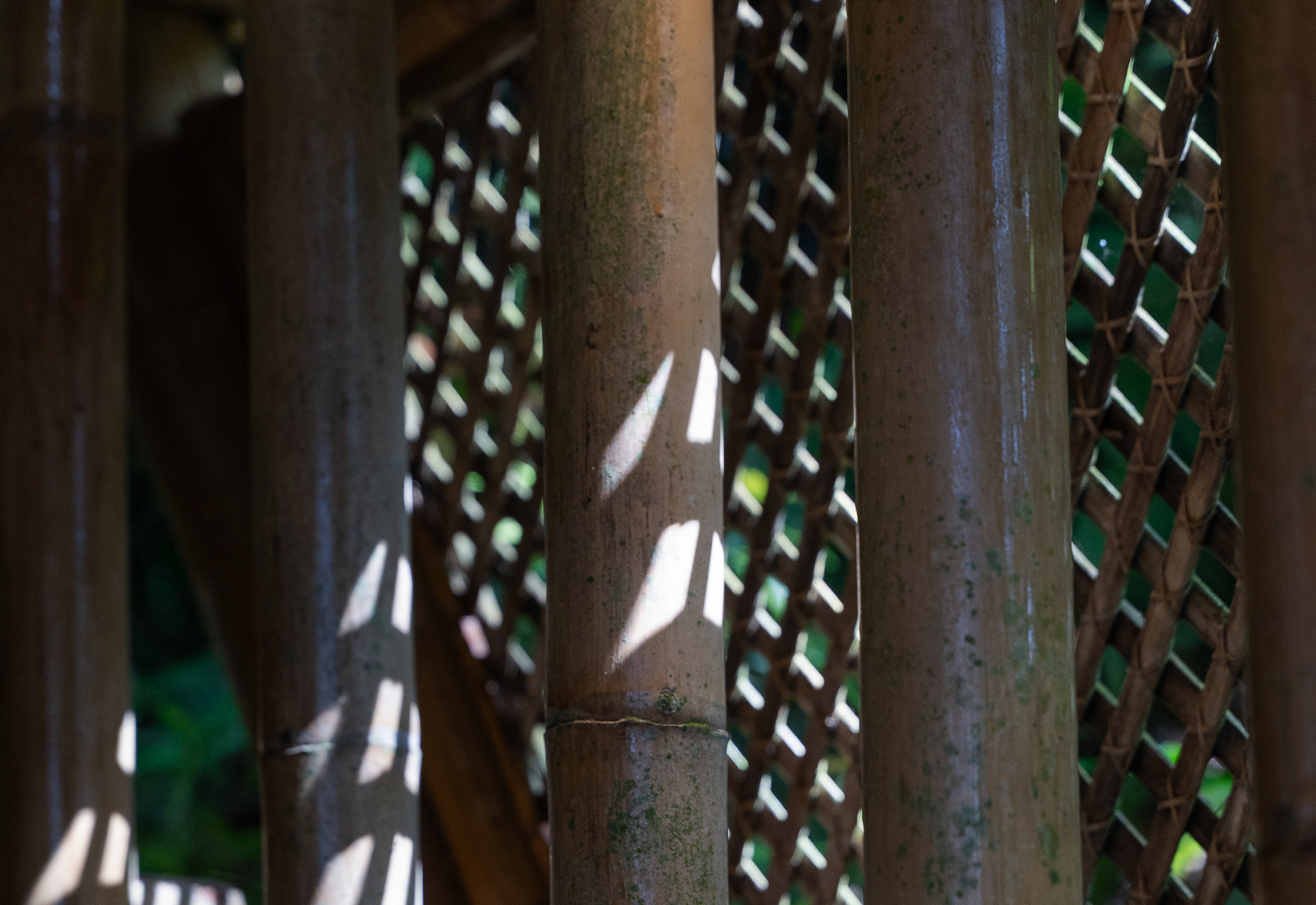
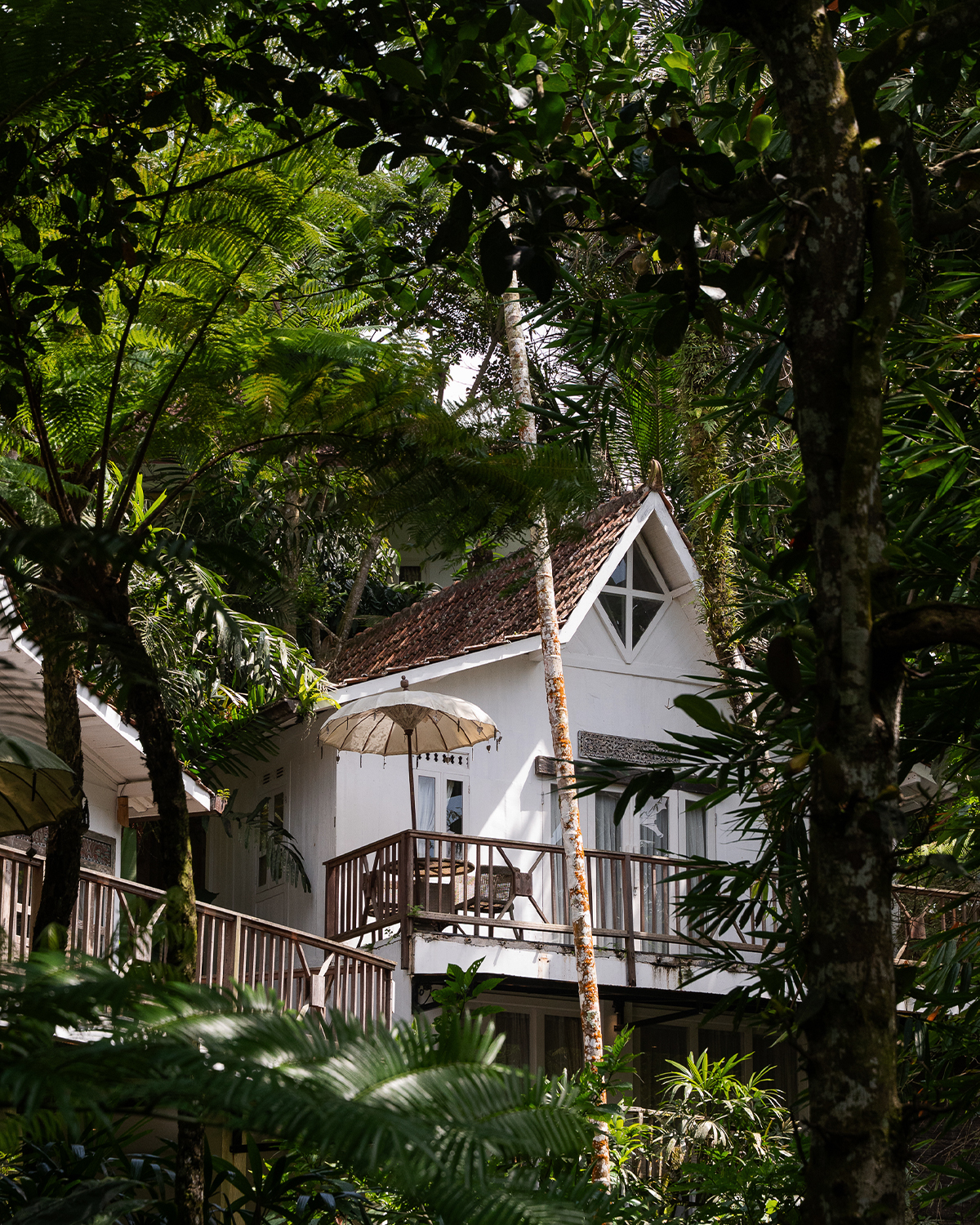
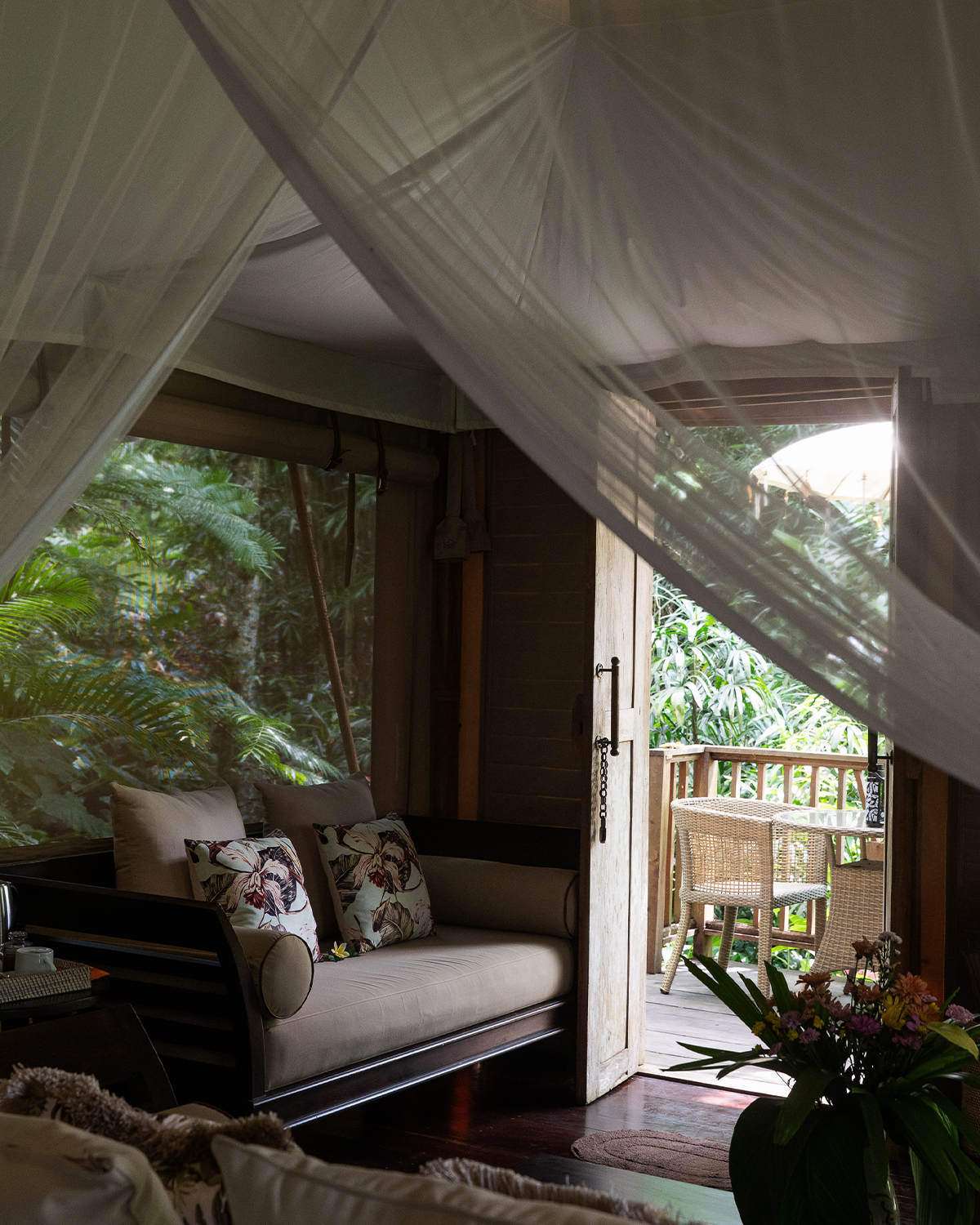
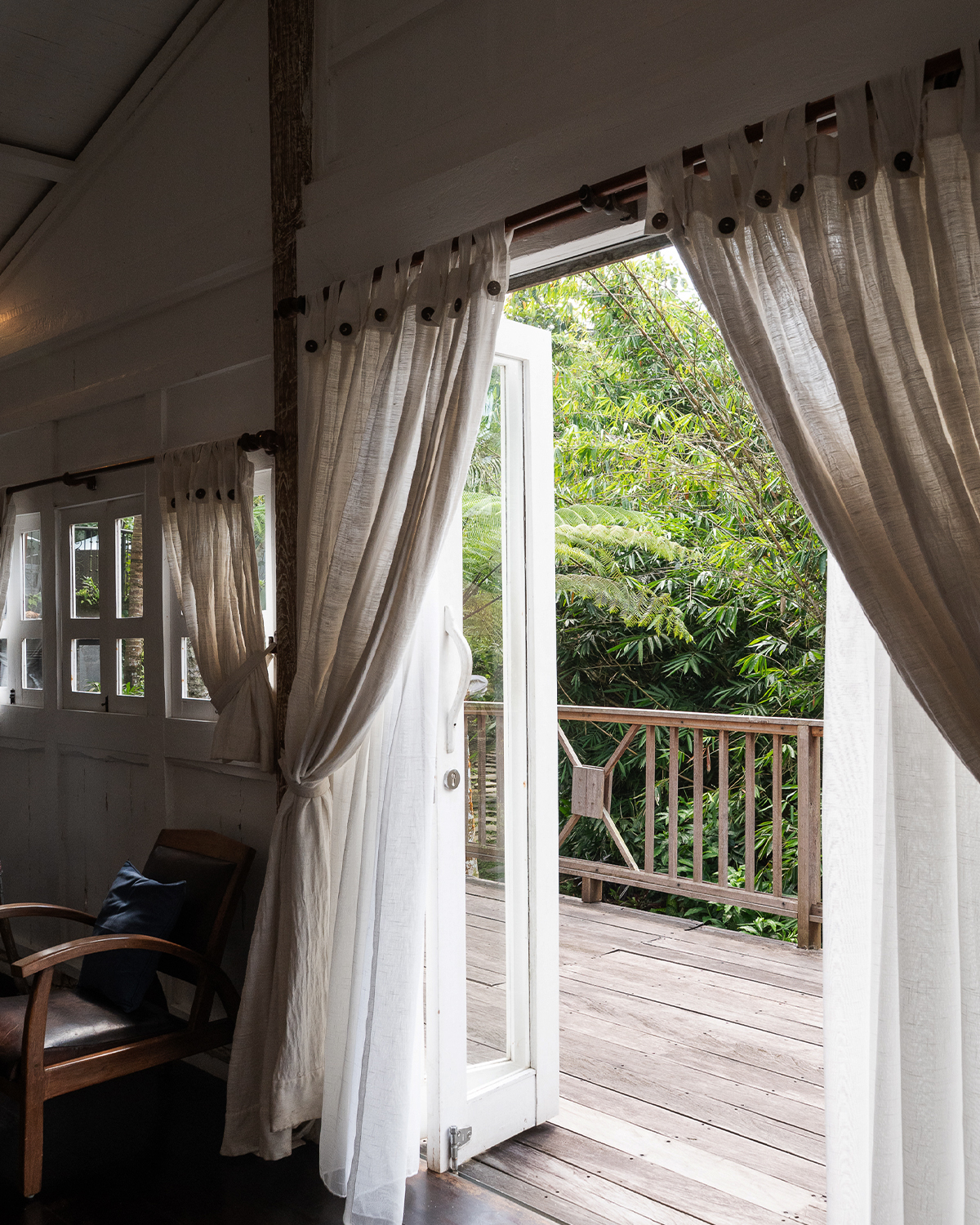
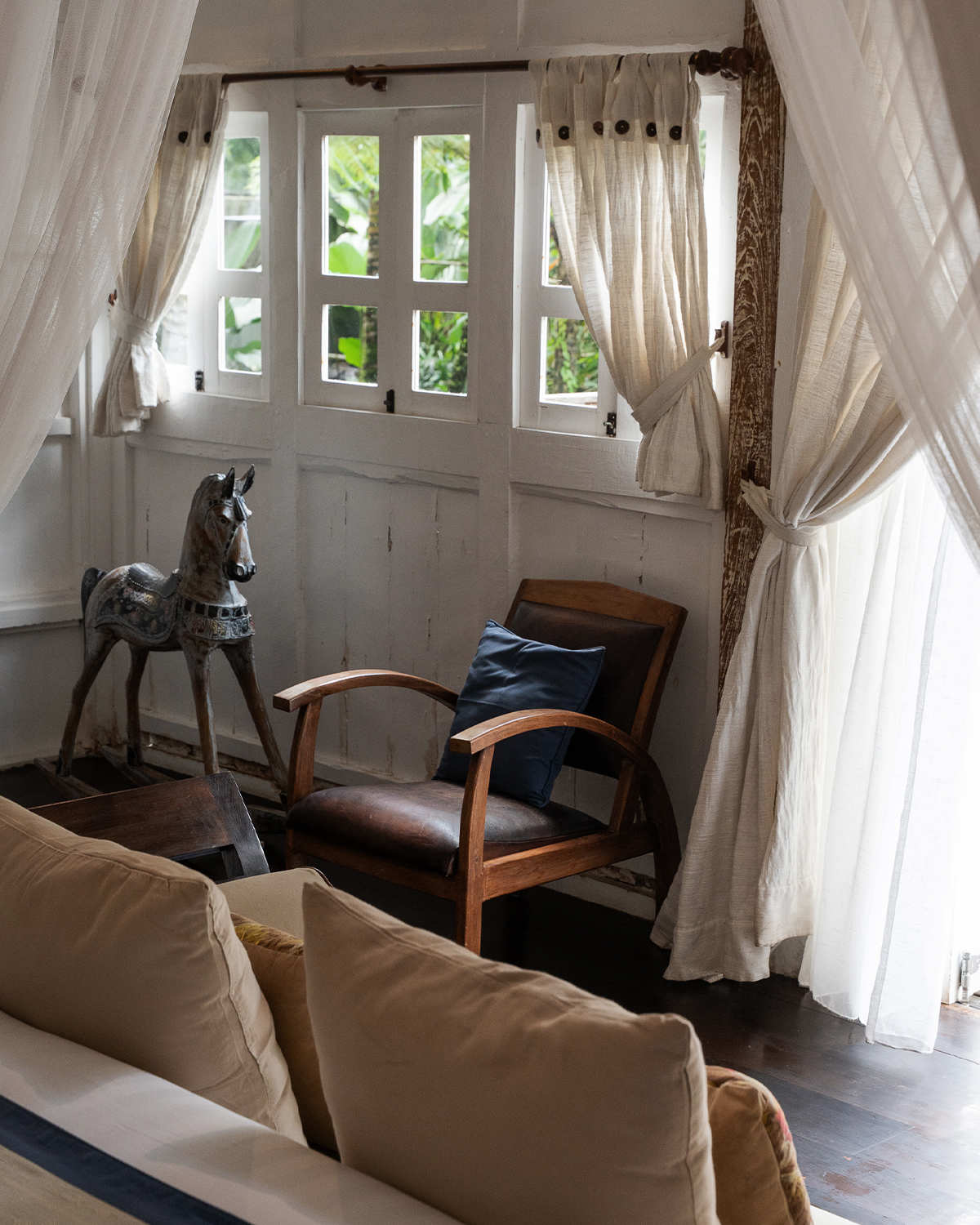
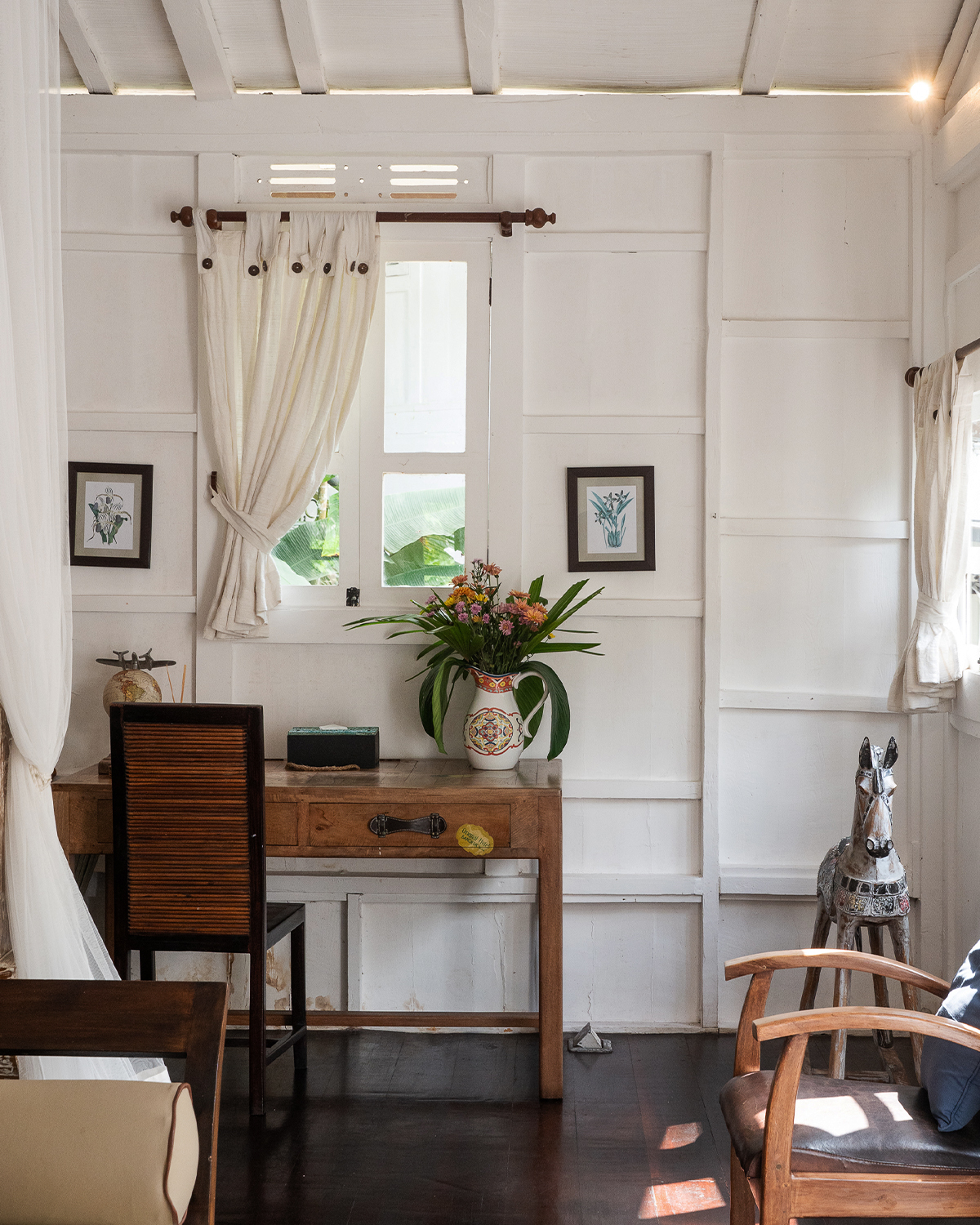
Sebatu’s architecture tells stories of adventure, adaptation, and restraint. Spread across a terraced landscape of sacred springs, waterfalls, and durian trees, the property unfolds as a collection of bamboo pods, reclaimed Javanese bungalows, treehouses, and elegant colonial-inspired lodges. Each space was built with an understanding of how materials, climate, and memory intertwine.
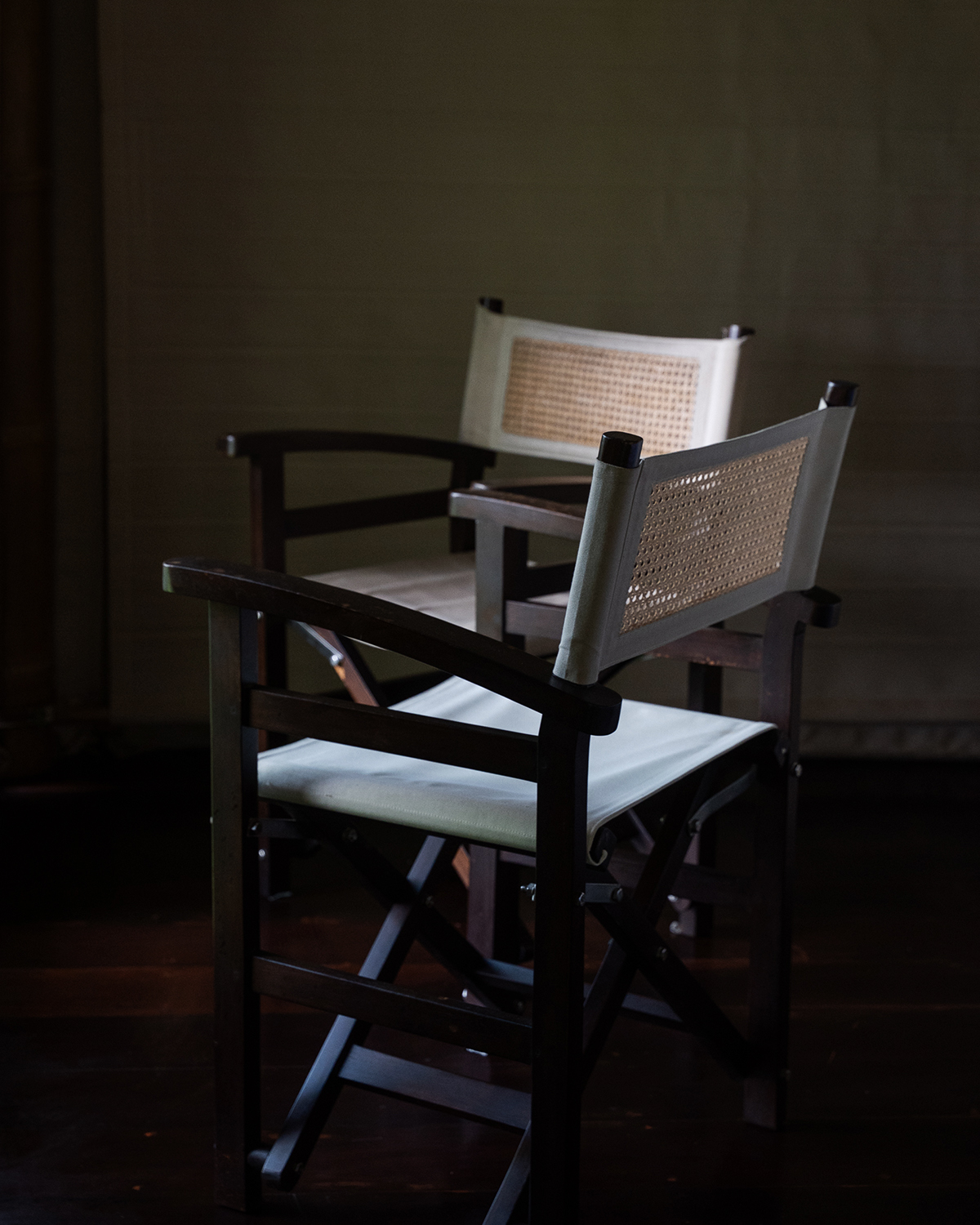
The inspiration came from Alexander’s fascination with the Age of Exploration–the era between the 15th and 19th centuries when curiosity reshaped the world. The result is a mix of tented pavilions that evoke the romance of early expeditions, bamboo structures that celebrate resourcefulness, and houses that breathe with the wisdom of Dutch colonial design.
Concrete, one of the planet’s most carbon-intensive materials, is used sparingly–less than 6% across the entire property. Instead, Sebatu relies on light, aerated cement blocks and timber architecture, reducing the carbon footprint while allowing structures to mix with the landscape. For Alexander, every decision– from salvaged wood beams to handmade fittings–shares a desire to lessen damage and be more meaningful. “To use less is to give more back to the forest,” he often says, a principle that has guided the sanctuary since its inception.

Systems that Breathe
If Sebatu Sanctuary feels alive, it’s because its systems are designed to behave like nature itself. Electricity is drawn from the sun–a rooftop solar network generates roughly 35% of the resort’s energy needs. The investment paid for itself within five years, and today, it powers not only the resort but two electric vehicles, making clean mobility part of daily life.
Water, another precious resource, is harvested through an intricate rain collection system. Each of the larger villas is equipped with specialized gutters that feed into underground tanks, making sure that guests never draw from the community’s supply. In dry months, clean spring water from the ancient temple of Sebatu supplements the system, connecting the sanctuary’s cycle to a 1000-year-old source revered by locals.
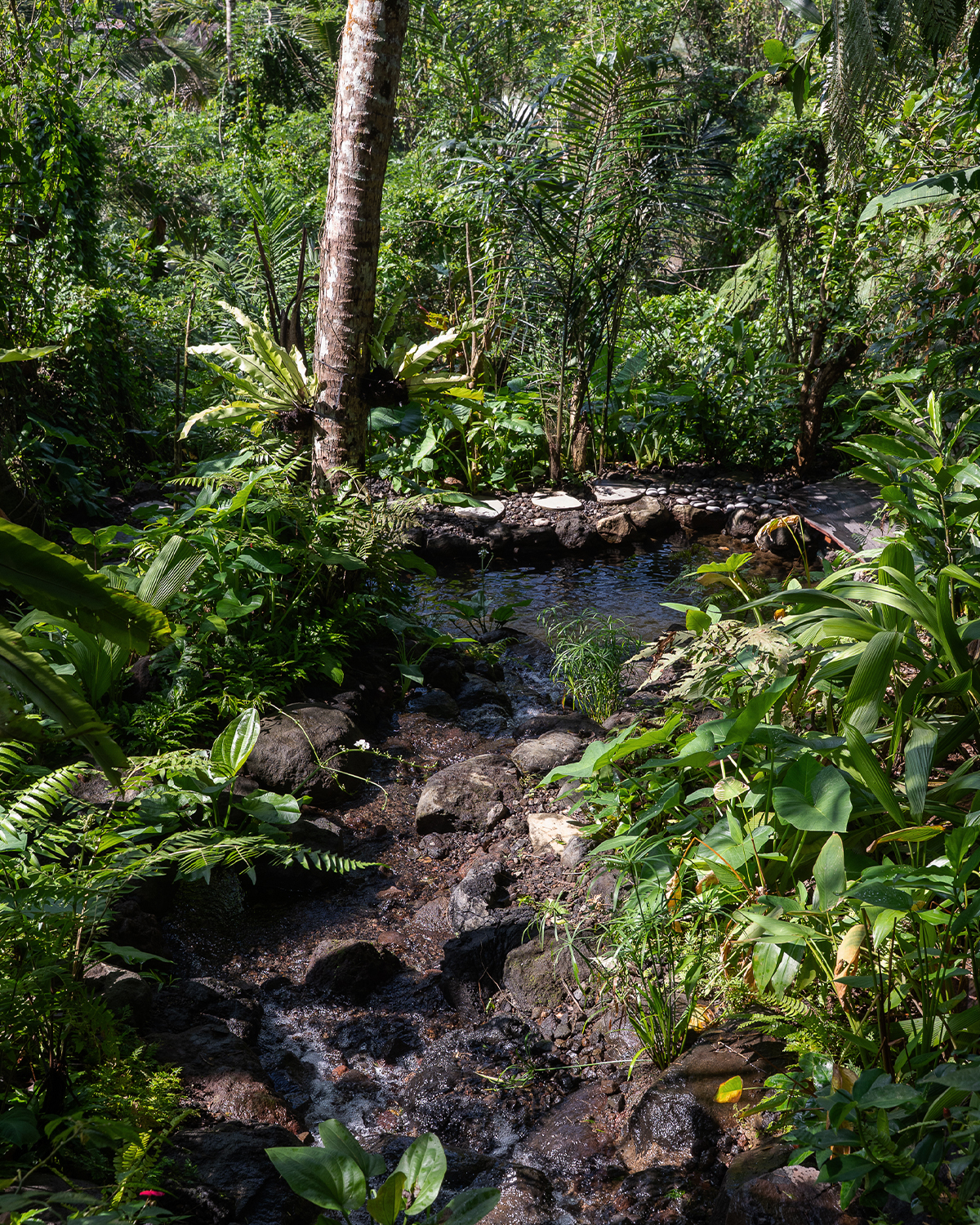
Equally thoughtful is how Sebatu handles what leaves the site. Wastewater passes through bioceramic septic tanks and into lush wastewater gardens–living filters that purify water before it returns to the soil. What emerges downstream is as clean as rain. It’s a model of ecological integration–proof that hospitality can operate not against nature, but within it.
The same philosophy extends to Sebatu’s natural swimming pool, a self-sustaining ecosystem where guests can swim alongside koi and native fish. Instead of chlorine, the pool relies on a network of beneficial bacteria, aquatic plants, and flowing streams that filter and oxygenate the water. The result is a tranquil “mountain lake” that feels alive, a sanctuary within a sanctuary.
Living Lightly
Sustainability at Sebatu isn’t performative. It’s practical, persistent, and quietly revolutionary. The sanctuary’s design challenges the norms of luxury, replacing excess with intelligence. When pool water is backwashed, it’s not wasted–it’s collected and repurposed to irrigate gardens, returning nutrients to the soil. Composting turns kitchen waste into fertilizer, feeding the same earth that nourishes the property’s organic gardens.
Alexander’s approach is all about cause and consequence. “Every time you flip a light switch, there’s an impact somewhere,” he reminds his guests–a reflection born from his years witnessing deforestation and coal pollution across Southeast Asia. By generating solar power and lessening water waste, Sebatu reduces its dependence on coal-fired electricity from Java, one of Bali’s biggest environmental challenges.
These practices might seem small, but together they make a blueprint for what hospitality can become: regenerative, not extractive. At Sebatu, sustainability is not a marketing term, it’s a daily rhythm, where sunlight powers the property, rainwater quenches the gardens, and the forest shapes the architecture itself.
A Sanctuary of Connection
More than just architecture and systems, Sebatu Sanctuary thrives on a sense of relationship between people, culture, and the natural world. The village of Sebatu, known for its woodcarvers, dancers, and gamelan musicians, is just a short walk away. Guests are invited to join local guides for morning waterfall treks, temple visits, or kite-making with village children. The sanctuary’s activities are made not for spectacle, but for understanding a way to meet the community through rhythm and rituals.
At the restaurant Evicurious, named after Alexander’s wife Evie, the same values extend to the kitchen. Ingredients are sourced locally or foraged from the surrounding forest–jackfruit from the garden, lemongrass from the footpath, and fiddle head ferns sautéed with garlic and onion, a recipe Alexander carried from his forestry days in Kalimantan. The result is cuisine that feels both grounded and alive, connecting diners to the richness of the land.
Behind the scenes, Sebatu’s team is treated as family. Every staff member receives full benefits, fair wages, and even shared rewards for five-star guest reviews–a small but meaningful gesture that helps everyone grow together. “We do everything we can to make sure they feel valued,” Alexander says. “This place works because everyone here believes in it.”
The Future of Gentle Hospitality
Nine years since it first opened, Sebatu Sanctuary is still evolving, quietly proving that sustainability is not a niche philosophy but a necessary future. Alexander hopes more resorts across Bali will adopt similar models, not as a trend, but as common sense. “It’s not fringe,” he insists. “It’s just good practice for the environment, for business, and for people.”
In a world of quick builds and faster getaways, Sebatu Sanctuary slows the pace. It reminds guests that luxury can be found within bamboo leaves, in the shimmer of fireflies above the water, or in the silence of solar-powered nights. Here, the greatest comfort lies not in what’s consumed, but in what’s preserved: a sanctuary built with nature.
EXPLORE THE PUNCH